Dripping caramel down the side of the cake pan when I realized—I’d forgotten the nutmeg. The whole kitchen smelled like a hayride in October, warm apples and cinnamon clinging to everything, and there I stood, spatula in hand, staring at a spice rack that was definitely missing its star player. It was one of those “baking by the seat of your pants” moments that either ends in disaster or something you can’t stop thinking about for weeks. This time, it was the latter.
I was testing a recipe for a friend’s apple-picking party, trying to capture that whole “donut shop on a crisp morning” feeling in cake form. You know the one—where the paper bag gets a little translucent from the grease, and you’re eating it way too fast while walking through wet leaves. I wanted that. But the cake I was building felt too polite, too perfect. It needed a little chaos. So when the nutmeg went missing, I doubled down on the apple cider reduction and threw in an extra pinch of salt. And honestly? That little moment of panic gave me the best version of this cake I’ve ever made.
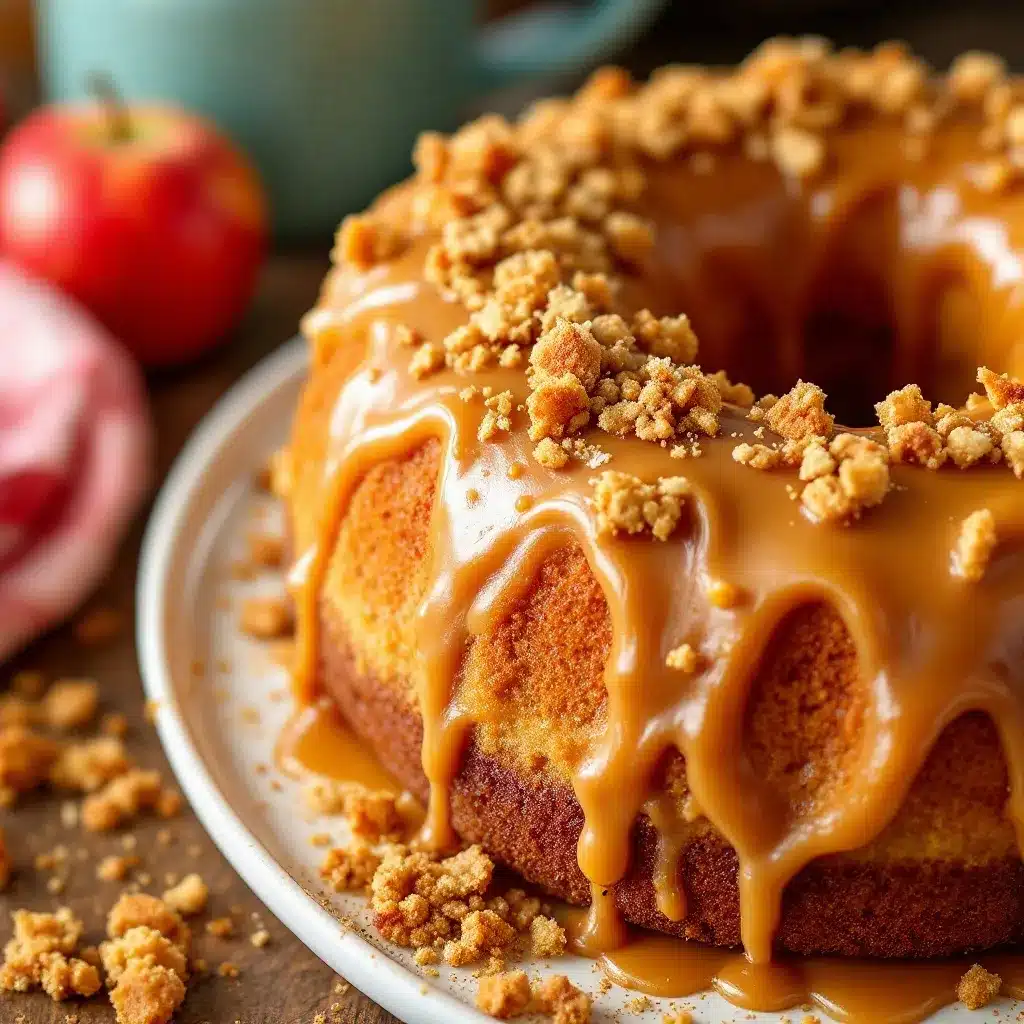
The result is this Ultimate Salted Caramel Apple Cider Donut Cake. It’s not trying to be fancy, but it will absolutely steal the show at your next fall gathering. It’s the kind of cake that makes people close their eyes after the first bite, then immediately ask for the recipe. And I’m happy to share it—because a cake this good deserves to be made in every kitchen this season.
Why You’ll Love This Recipe
This isn’t just another apple cake. After testing this recipe seven times (yes, seven—my neighbors have been very happy), I can confidently say this is the version you’ll come back to year after year. It hits every note you want in a fall dessert without any of the fuss that usually comes with it.
- Incredible Flavor in One Bowl: The batter comes together fast, and the apple cider reduction does all the heavy lifting. No stand mixer required, just a whisk and some elbow grease.
- That Donut Shop Texture: The secret is a combination of apple cider reduction and buttermilk, which gives the crumb that dense-yet-tender feel you get from a fresh apple cider donut. It’s not dry, not gummy—just right.
- Simple Ingredients, Big Impact: You probably have most of these in your pantry right now. No fancy extracts or hard-to-find flours. Just good, honest baking ingredients doing their thing.
- Perfect for Any Fall Occasion: This cake works for a casual Sunday brunch, a Thanksgiving dessert table, or just because it’s Tuesday and you deserve a slice of something warm and spiced.
- The Salted Caramel Factor: The homemade salted caramel sauce is ridiculously easy to make, and it takes this cake from “really good” to “I need this recipe immediately.” The flaky sea salt on top is non-negotiable, by the way.
What makes this recipe different from all the other apple cider cakes out there? It’s the way the flavors layer. You get the tangy sweetness from the reduced cider, the warm spice from the cinnamon and ginger, and then that hit of salt from the caramel that makes everything pop. It’s comfort food that’s been thoughtfully reimagined—familiar enough to feel like home, but surprising enough to feel special.
I’ve made this for my book club, for a neighborhood potluck, and for a quiet afternoon when I just needed something to bake. Every single time, it disappears. And every single time, someone asks for the recipe. That’s the kind of cake this is.
What Ingredients You Will Need
This recipe uses simple, wholesome ingredients to deliver that cozy fall flavor. Most of these are pantry staples, but a few deserve a little extra attention to get the best results. Here’s what you’ll need:
For the Apple Cider Reduction
- 2 cups apple cider (not apple juice—cider has more depth and a tangier flavor that works better here. I prefer fresh-pressed from a local orchard when I can get it, but store-bought works great too.)
For the Cake
- 2 ½ cups all-purpose flour (spoon and level it—don’t scoop straight from the bag or you’ll end up with a dry cake)
- 1 ½ teaspoons baking powder
- 1 teaspoon baking soda
- 1 teaspoon ground cinnamon
- ½ teaspoon ground ginger (this adds a little warmth without being overpowering)
- ¼ teaspoon ground nutmeg (freshly grated if you have it—it makes a difference)
- ½ teaspoon salt
- ½ cup unsalted butter, softened (let it sit out for at least 30 minutes—cold butter won’t cream properly)
- 1 cup granulated sugar
- ½ cup packed light brown sugar
- 2 large eggs, room temperature (if you forget to take them out, place them in a bowl of warm water for 5 minutes)
- 1 teaspoon vanilla extract
- ½ cup buttermilk, room temperature (or make your own by adding 1 tablespoon lemon juice to ½ cup milk and letting it sit for 5 minutes)
- ½ cup apple cider reduction (from above—this is where the magic happens)
For the Salted Caramel Sauce
- 1 cup granulated sugar
- 6 tablespoons unsalted butter, cut into pieces
- ½ cup heavy cream, room temperature
- 1 teaspoon flaky sea salt (plus more for finishing—I love Maldon for this)
For the Cinnamon Sugar Coating
- ¼ cup granulated sugar
- 1 teaspoon ground cinnamon
- 3 tablespoons melted butter
A few notes on ingredients: The apple cider reduction is non-negotiable here—it concentrates the apple flavor and gives the cake that authentic donut taste. Don’t skip it or try to use regular cider straight from the bottle. And for the caramel, use a heavy-bottomed saucepan. I’ve ruined more batches of caramel than I’d like to admit by using a thin pan that heated unevenly.
If you’re looking for a dairy-free option, you can substitute the butter with a high-quality vegan butter and the buttermilk with a dairy-free milk mixed with lemon juice. The texture will be slightly different, but still delicious.
Equipment Needed
You don’t need a lot of fancy equipment for this cake, which is part of why I love it. Here’s what you’ll need:
- 10-inch Bundt pan (or a 9-inch tube pan—just make sure it’s well-greased. I’ve used both and they work equally well)
- Medium saucepan (for the apple cider reduction and the caramel—a heavy-bottomed one is best for even heating)
- Large mixing bowl
- Medium mixing bowl
- Whisk
- Rubber spatula
- Wire cooling rack
- Pastry brush (for the cinnamon sugar coating—a silicone one works great)
- Candy thermometer (optional, but helpful for the caramel if you’re nervous about it)
If you don’t have a Bundt pan, you can use a 9×13-inch baking dish instead. The baking time will be shorter—start checking at 30 minutes. And if you don’t have a pastry brush, just use a spoon to drizzle the melted butter over the warm cake. It’s a little messier, but it works.
One tip I learned the hard way: make sure your Bundt pan is thoroughly greased, especially if it has intricate designs. I use a baking spray with flour (like Baker’s Joy) and it works perfectly. If you use butter, make sure to get into every nook and cranny, then dust with flour.
Preparation Method
Alright, let’s get baking. I’ve broken this down into clear steps so you can follow along without any surprises. Take your time, and don’t rush the reduction—it’s worth the wait.
Step 1: Make the Apple Cider Reduction
Pour the 2 cups of apple cider into a medium saucepan and bring it to a boil over medium-high heat. Once it’s boiling, reduce the heat to medium and let it simmer, stirring occasionally, until it’s reduced to about ½ cup. This usually takes 15-20 minutes. You’ll know it’s ready when it’s thick enough to coat the back of a spoon and smells intensely of apples. Set it aside to cool while you prep the rest.
Pro tip: Don’t walk away from this. I’ve had it boil over more times than I care to count. Keep an eye on it, especially toward the end when it thickens quickly.
Step 2: Preheat and Prep the Pan
Preheat your oven to 350°F (175°C). Grease your Bundt pan thoroughly—I cannot stress this enough. Use a baking spray with flour, or butter every surface and dust with flour. Tap out any excess flour.
Step 3: Mix the Dry Ingredients
In a medium bowl, whisk together the 2 ½ cups all-purpose flour, 1 ½ teaspoons baking powder, 1 teaspoon baking soda, 1 teaspoon cinnamon, ½ teaspoon ginger, ¼ teaspoon nutmeg, and ½ teaspoon salt. Set this aside.
Step 4: Cream the Butter and Sugars
In a large bowl, beat the ½ cup softened butter with the 1 cup granulated sugar and ½ cup brown sugar until light and fluffy, about 3 minutes. You can do this with a hand mixer or a stand mixer, but honestly, a sturdy whisk and some elbow grease works too. The mixture should look pale and a little airy.
Step 5: Add the Eggs and Vanilla
Add the 2 eggs one at a time, beating well after each addition. Then add the 1 teaspoon vanilla extract and mix until combined. The batter might look a little curdled at this point—that’s totally normal, especially if your eggs were slightly cold.
Step 6: Alternate the Dry and Wet Ingredients
With the mixer on low speed (or using a spatula if you’re doing it by hand), add the dry ingredients in three additions, alternating with the buttermilk. Start and end with the dry ingredients. So: dry, buttermilk, dry, buttermilk, dry. Mix just until combined—overmixing will make the cake tough.
Step 7: Add the Apple Cider Reduction
Gently fold in the ½ cup apple cider reduction using a rubber spatula. The batter will be thick and smell incredible at this point. Don’t overmix—just fold until you don’t see any streaks.
Step 8: Bake the Cake
Pour the batter into the prepared Bundt pan and smooth the top with the spatula. Bake for 45-55 minutes, or until a toothpick inserted in the center comes out clean or with a few moist crumbs. The top should be golden brown and the edges should be pulling away from the pan slightly.
Sensory cue: Your kitchen should smell like a fall candle factory. If you don’t smell cinnamon and apples, it’s probably not done yet.
Step 9: Cool the Cake
Let the cake cool in the pan on a wire rack for 15 minutes. Then carefully invert it onto the rack and let it cool completely, about 1 hour. Don’t rush this—if you try to flip it too soon, it might stick or break apart.
Step 10: Make the Salted Caramel Sauce
While the cake is cooling, make the caramel. In a clean, heavy-bottomed saucepan, spread the 1 cup granulated sugar in an even layer. Cook over medium heat, stirring occasionally with a whisk, until the sugar melts and turns a deep amber color. This takes about 6-8 minutes. Watch it carefully—it can go from perfect to burnt in seconds.
Once the sugar is melted and amber, remove the pan from the heat and add the 6 tablespoons butter pieces. It will bubble up violently—that’s normal. Whisk until the butter is fully melted and incorporated. Slowly pour in the ½ cup heavy cream while whisking constantly. The mixture will bubble up again, so be careful. Whisk until smooth, then stir in the 1 teaspoon flaky sea salt.
Let the caramel cool for about 10 minutes—it will thicken as it cools. You want it warm enough to pour but not so hot that it runs right off the cake.
Step 11: Apply the Cinnamon Sugar Coating
While the cake is still warm (but not hot), use a pastry brush to coat the top and sides with the 3 tablespoons melted butter. Mix the ¼ cup granulated sugar and 1 teaspoon cinnamon in a small bowl, then sprinkle it generously over the buttered cake. This gives you that classic donut coating that makes this cake so special.
Step 12: Drizzle and Serve
Once the cake is completely cool, drizzle the salted caramel sauce over the top. Let it cascade down the sides naturally—don’t try to be too neat about it. Sprinkle a little more flaky sea salt on top for that final touch. Slice and serve with a warm cup of coffee or a glass of cold milk.
Cooking Tips & Techniques
After making this cake seven times, I’ve learned a few things the hard way. Let me save you some trouble.
Don’t skip the apple cider reduction. I know it’s an extra step, but it’s the backbone of this cake. Regular apple cider has too much water and won’t give you that concentrated apple flavor. The reduction also adds natural sweetness and helps create that tender crumb you’re looking for. If you try to shortcut this, the cake will be bland and wet. Trust me, I tried it.
Room temperature ingredients matter. I used to think this was one of those “food blogger myths” until I tested it side by side. Cold butter doesn’t cream properly, cold eggs can make the batter curdle, and cold buttermilk won’t emulsify correctly. Take the extra 30 minutes to let everything come to room temperature. Your cake will thank you.
Watch the caramel like a hawk. Making caramel is one of those things that seems intimidating until you’ve done it a few times, but it’s also easy to mess up. The key is patience. Don’t stir the sugar too much while it’s melting—just swirl the pan occasionally. And when it starts to turn amber, you have about 30 seconds before it goes from perfect to burnt. I’ve had to start over more times than I’d like to admit.
Use a kitchen scale for the flour. If you have one, it’s the most reliable way to measure. 2 ½ cups of all-purpose flour is about 300 grams. If you don’t have a scale, spoon the flour into your measuring cup and level it off with a knife. Scooping directly from the bag can add up to 30% more flour, which will make your cake dry and dense.
Let the cake cool completely before adding the caramel. I know it’s tempting to pour it on while the cake is still warm, but the caramel will just soak in and disappear. You want it to sit on top and create that beautiful glossy layer. Patience, my friend.
Variations & Adaptations
One of the best things about this cake is how adaptable it is. Here are a few variations I’ve tried that turned out great:
Gluten-Free Version: Substitute the all-purpose flour with a good 1:1 gluten-free baking flour blend. I’ve used Bob’s Red Mill and King Arthur, and both worked well. The texture will be slightly more tender and a little less sturdy, but it’s still delicious. Add 1 teaspoon of xanthan gum if your blend doesn’t already include it.
Dairy-Free Version: Use vegan butter (I like Miyoko’s for baking) and substitute the buttermilk with ½ cup unsweetened almond milk mixed with 1 tablespoon lemon juice. For the caramel, use a full-fat canned coconut cream instead of heavy cream. The caramel will be slightly thinner but still delicious.
Spiced Apple Cider Donut Cake: Add ½ teaspoon of cardamom and ¼ teaspoon of allspice to the dry ingredients. This gives the cake a more complex, almost chai-like flavor that’s perfect for holiday gatherings.
Apple Cider Donut Cake with Streusel: Make a simple streusel by mixing ½ cup flour, ¼ cup brown sugar, ¼ cup cold butter, and 1 teaspoon cinnamon. Sprinkle it over the batter before baking for a crunchy top layer. This works especially well if you’re using a 9×13-inch pan.
Mini Donut Cake Muffins: Pour the batter into a greased muffin tin (about ¾ full) and bake for 18-22 minutes. Brush with melted butter and roll in cinnamon sugar while still warm. These are perfect for parties or lunchboxes.
I’ve also tried this with a maple glaze instead of the salted caramel—just whisk together 1 cup powdered sugar, 2 tablespoons maple syrup, and 1 tablespoon milk. It’s less decadent but still wonderful. And if you’re feeling extra indulgent, add a scoop of vanilla ice cream on the side. No judgment here.
Serving & Storage Suggestions
This cake is best served at room temperature, but honestly, it’s amazing at any temperature. I’ve eaten it warm from the oven, cold from the fridge the next morning, and even slightly stale (don’t judge—it was still good).
Serving Suggestions: Slice the cake and arrange it on a platter with extra caramel sauce on the side for drizzling. A sprinkle of fresh flaky sea salt right before serving makes a big difference. If you’re feeling fancy, add a dollop of lightly sweetened whipped cream or a scoop of vanilla bean ice cream. For a fall brunch, serve it alongside a hot apple cider or a spiced latte.
Storage: Store the cake in an airtight container at room temperature for up to 3 days. The caramel will soften the cinnamon sugar coating over time, so if you want to keep that crunchy texture, store the cake and caramel separately and add the caramel just before serving. I’ve found that the cake actually gets better on day two—the flavors meld together and become even more pronounced.
Freezing: This cake freezes beautifully. Wrap the cooled (un-glazed) cake tightly in plastic wrap, then in aluminum foil, and freeze for up to 3 months. When you’re ready to serve, thaw it overnight in the refrigerator, then bring it to room temperature. Make fresh caramel sauce and add it just before serving. I’ve done this for Thanksgiving and no one knew the cake wasn’t made that day.
Reheating: If you want that just-baked warmth, pop individual slices in the microwave for 15-20 seconds. For a larger portion, warm it in a 300°F oven for 10 minutes. The caramel will get a little melty and the cake will be soft and tender again.
Nutritional Information & Benefits
Let’s be real—this is a dessert, not a health food. But I think it’s worth knowing what you’re working with, especially if you’re planning around dietary needs.
Estimated Nutritional Values (per slice, based on 12 servings):
- Calories: 420
- Total Fat: 22g
- Saturated Fat: 14g
- Cholesterol: 85mg
- Sodium: 320mg
- Total Carbohydrates: 55g
- Dietary Fiber: 1g
- Sugars: 38g
- Protein: 4g
Dietary Considerations: This recipe contains dairy, eggs, and gluten. For dairy-free and gluten-free options, see the variations section above. It’s not suitable for vegan or egg-free diets as written.
Health Benefits: While this is an indulgence, the apple cider does provide some antioxidants and the cinnamon has anti-inflammatory properties. The butter and eggs add a small amount of protein and fat that helps balance the sugar rush. And honestly? Sometimes the best thing you can do for your mental health is bake a beautiful cake and share it with people you love. That counts for something.
If you’re looking for a lighter option, try serving smaller slices or pairing it with fresh fruit. But honestly, I believe in enjoying dessert without guilt. This cake is meant to be a treat, and it delivers on every level.
Conclusion
This Ultimate Salted Caramel Apple Cider Donut Cake is everything I love about fall baking. It’s warm and spiced, sweet and salty, and it fills your kitchen with the kind of smell that makes people wander in and ask “what are you making?” It’s the cake I bring to every fall gathering, the one that gets requested for birthdays, and the one I make just because I need a little comfort on a chilly afternoon.
What I love most about this recipe is how forgiving it is. Even if you mess up the caramel (and I’ve done that plenty of times), the cake itself is so flavorful and moist that it stands on its own. And once you get that caramel right? It’s magic.
I’d love to hear how this turns out for you. Did you try one of the variations? Did you add your own twist? Drop a comment below and let me know—I read every single one and I love seeing what you create. And if you share it on Instagram, tag me so I can see your beautiful cake.
Go ahead, preheat that oven. Your kitchen is about to smell amazing.
Frequently Asked Questions
Can I use apple juice instead of apple cider?
I wouldn’t recommend it. Apple juice is sweeter and less tangy than apple cider, and it won’t reduce as well. The flavor will be one-dimensional and the cake might turn out too sweet. Stick with real apple cider for the best results.
Why did my cake stick to the Bundt pan?
This happens to the best of us. Make sure you’re greasing the pan thoroughly, especially if it has intricate designs. I recommend using a baking spray with flour (like Baker’s Joy) rather than just butter. Also, let the cake cool in the pan for exactly 15 minutes—not longer, not shorter—before inverting it.
Can I make the caramel sauce ahead of time?
Absolutely. The caramel sauce can be made up to a week in advance and stored in an airtight container in the refrigerator. Let it come to room temperature before using, or warm it gently in the microwave in 10-second intervals, stirring between each.
How do I know when the apple cider is reduced enough?
You’re looking for about ½ cup of liquid from the original 2 cups. It should be thick enough to coat the back of a spoon and have a deep, concentrated apple flavor. If you tilt the pan and the liquid moves slowly, it’s ready. If it’s still runny, keep simmering.
Can I make this into cupcakes instead of a cake?
Yes! Fill lined muffin cups about ¾ full and bake at 350°F for 18-22 minutes. Brush with melted butter and roll in cinnamon sugar while still warm. Top with caramel sauce just before serving. You’ll get about 18-20 cupcakes from this recipe.
Pin This Recipe!
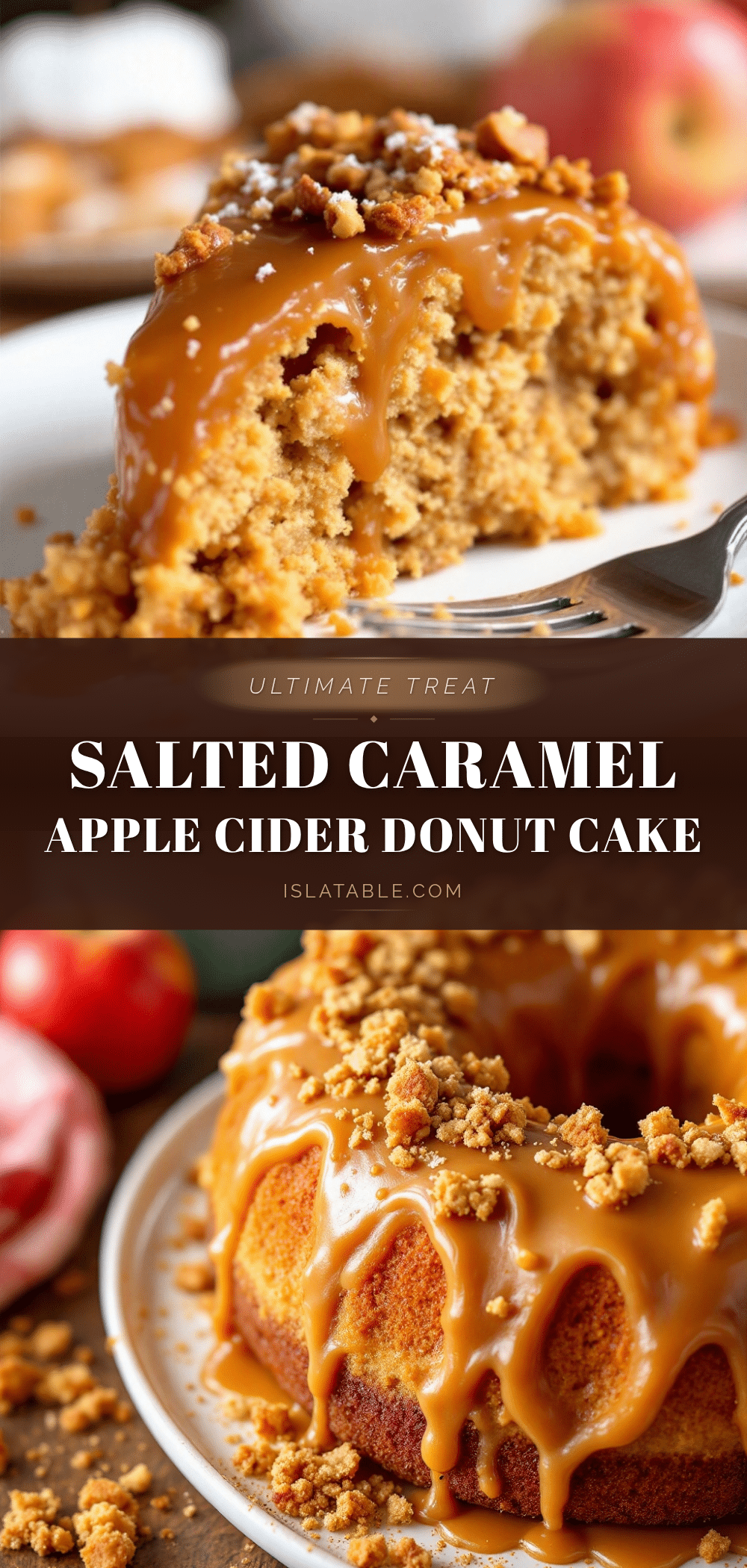
Ultimate Salted Caramel Apple Cider Donut Cake
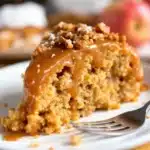
This Ultimate Salted Caramel Apple Cider Donut Cake captures the cozy flavors of fall with a moist, tender crumb, a cinnamon sugar coating, and a homemade salted caramel drizzle. It’s the perfect dessert for any autumn gathering.
- Prep Time: 30 minutes
- Cook Time: 45 minutes
- Total Time: 1 hour 15 minutes
- Yield: 12 servings 1x
- Category: Dessert
- Cuisine: American
Ingredients
- 2 cups apple cider
- 2 ½ cups all-purpose flour
- 1 ½ teaspoons baking powder
- 1 teaspoon baking soda
- 1 teaspoon ground cinnamon
- ½ teaspoon ground ginger
- ¼ teaspoon ground nutmeg
- ½ teaspoon salt
- ½ cup unsalted butter, softened
- 1 cup granulated sugar
- ½ cup packed light brown sugar
- 2 large eggs, room temperature
- 1 teaspoon vanilla extract
- ½ cup buttermilk, room temperature
- ½ cup apple cider reduction
- 1 cup granulated sugar (for caramel)
- 6 tablespoons unsalted butter, cut into pieces (for caramel)
- ½ cup heavy cream, room temperature (for caramel)
- 1 teaspoon flaky sea salt (for caramel)
- ¼ cup granulated sugar (for coating)
- 1 teaspoon ground cinnamon (for coating)
- 3 tablespoons melted butter (for coating)
Instructions
- Make the apple cider reduction: Pour 2 cups apple cider into a medium saucepan and bring to a boil over medium-high heat. Reduce heat to medium and simmer, stirring occasionally, until reduced to about ½ cup (15-20 minutes). Set aside to cool.
- Preheat oven to 350°F (175°C). Grease a 10-inch Bundt pan thoroughly with baking spray or butter and flour.
- In a medium bowl, whisk together flour, baking powder, baking soda, cinnamon, ginger, nutmeg, and salt.
- In a large bowl, beat softened butter, 1 cup granulated sugar, and brown sugar until light and fluffy (about 3 minutes).
- Add eggs one at a time, beating well after each. Add vanilla extract and mix until combined.
- With mixer on low, add dry ingredients in three additions, alternating with buttermilk, starting and ending with dry ingredients. Mix just until combined.
- Gently fold in the apple cider reduction with a rubber spatula until no streaks remain.
- Pour batter into prepared Bundt pan and smooth the top. Bake for 45-55 minutes, until a toothpick inserted in the center comes out clean or with a few moist crumbs.
- Let cake cool in pan on a wire rack for 15 minutes, then invert onto rack and cool completely (about 1 hour).
- While cake cools, make salted caramel: In a clean heavy-bottomed saucepan, spread 1 cup granulated sugar in an even layer. Cook over medium heat, stirring occasionally, until sugar melts and turns deep amber (6-8 minutes). Remove from heat, add 6 tablespoons butter pieces (it will bubble), whisk until melted. Slowly pour in heavy cream while whisking constantly. Whisk until smooth, then stir in 1 teaspoon flaky sea salt. Let cool about 10 minutes.
- While cake is still warm, brush with 3 tablespoons melted butter. Mix ¼ cup granulated sugar and 1 teaspoon cinnamon, then sprinkle generously over buttered cake.
- Once cake is completely cool, drizzle salted caramel sauce over the top. Sprinkle with additional flaky sea salt. Slice and serve.
Notes
Don’t skip the apple cider reduction—it’s key for flavor and texture. Room temperature ingredients are important for proper mixing. Watch the caramel closely to avoid burning. Let cake cool completely before adding caramel to prevent it from soaking in.
Nutrition
- Serving Size: 1 slice
- Calories: 420
- Sugar: 38
- Sodium: 320
- Fat: 22
- Saturated Fat: 14
- Carbohydrates: 55
- Fiber: 1
- Protein: 4
Keywords: apple cider donut cake, salted caramel, fall dessert, bundt cake, apple cake, cinnamon sugar