“You sure you don’t want me to just throw it on the grill like usual?” my kid asked me last Father’s Day morning, glancing skeptically at the thick ribeye resting on the counter. Honestly, I was half tempted to take the quick route. But I’d been fiddling with this reverse-sear method for weeks, trying to nail that perfect balance between a tender, juicy interior and a crust that snaps with flavor. This ribeye wasn’t just any steak—it was the kind that makes a dad pause, savor, and maybe even crack a proud smile after a long day.
That morning, with the oven warming gently and the skillet sizzling on the stove, something shifted. The aroma of searing fat and caramelized crust filled the kitchen, pulling the family together. My skepticism about the fussiness of this method quickly melted away when the first bite revealed a steak so tender and evenly cooked it almost felt like cheating. No more guessing if it’s over or underdone — this reverse-sear approach gives you control, every time.
It’s not just a recipe; it’s a quiet victory for anyone who’s ever wrestled with uneven steaks or disappointing grill results. And yeah, it’s become my go-to way to impress on special days, especially when I want to treat Dad without spending hours fussing over complicated steps.
So, if you want that juicy, flavorful ribeye that’s worth every second of the wait, this is the one you’ll trust. It’s honest, straightforward, and, well, perfect enough to make you want to keep it in your regular rotation.
Why You’ll Love This Recipe
After countless trials in my kitchen, this Perfect Reverse-Sear Ribeye Steak recipe stands out for several reasons that make it a winner in my book—and hopefully yours too:
- Quick & Easy: Though it sounds fancy, it only takes about 45 minutes from start to finish, including a gentle oven stage that does most of the work while you relax.
- Simple Ingredients: No need for exotic spices or complicated marinades—just quality ribeye, salt, pepper, and a touch of butter for finishing.
- Perfect for Special Occasions: Whether it’s Father’s Day, a birthday, or just a moment you want to make memorable, this steak fits the bill for cozy dinners or backyard celebrations.
- Crowd-Pleaser: I’ve served this to friends and family who usually prefer burgers or chicken, and it always disappears fast—no leftovers (which is rare!)
- Unbelievably Delicious: The reverse-sear technique locks in juiciness while building a crust that’s crunchy, savory, and downright addictive.
What sets this ribeye apart? It’s the low-and-slow start in the oven, which gently cooks the steak evenly, avoiding that dreaded gray band you get with high heat alone. Then, the hot skillet finish seals in flavor and texture. I’ve tweaked the timing, seasoning, and pan choice to get to this sweet spot. Honestly, it’s the kind of steak that makes you close your eyes and nod—comfort food that feels a little fancy yet fuss-free.
For those who love pairing with sides, you might enjoy the crispy freshness of my crispy broccoli salad with bacon crunch or the creamy zing of creamy chicken salad with sweet grapes, both great companions for this hearty steak.
What Ingredients You Will Need
This recipe relies on a handful of straightforward, high-quality ingredients that build bold flavor with minimal effort. Most of these are pantry staples or easy to find at any butcher or grocery store.
- Ribeye Steak – 1 thick-cut, about 1.5 to 2 inches thick (450-570g). I prefer USDA Choice or Prime for marbling that guarantees juiciness.
- Kosher Salt – Coarse salt works best; it helps form that irresistible crust.
- Freshly Ground Black Pepper – Adds just the right amount of heat and aroma.
- Unsalted Butter – 2 tablespoons, for basting (adds richness and helps crisp the edges).
- Garlic Cloves – 2 smashed, optional but highly recommended for flavor depth.
- Fresh Thyme or Rosemary – A few sprigs, optional for that herbal aroma during searing.
- Neutral Cooking Oil – Such as grapeseed or canola oil, for a high smoke point during searing.
For substitutions, if you’re looking to switch things up, try a boneless New York strip steak instead, but keep the thickness similar for best results. For a dairy-free option, skip the butter or use a plant-based alternative. And if you can’t find fresh herbs, dried versions can work, though fresh will give you that bright finish.
Equipment Needed
- Oven-safe Wire Rack and Baking Sheet: Essential for the slow, even cooking in the oven. The rack lets air circulate and prevents steaming.
- Cast Iron Skillet: Hands down the best for searing because it holds and distributes heat evenly. If you don’t have cast iron, a heavy stainless steel pan will do.
- Tongs: For flipping the steak without piercing it (which would let juices escape).
- Instant-Read Meat Thermometer: A must-have to hit the perfect doneness without cutting into the steak.
- Small Spoon: Handy for basting the steak with butter and herbs.
If you’re on a budget, you can find affordable cast iron skillets that last a lifetime with proper care. I’ve learned the hard way that a dull pan just won’t give that crust. Also, keep your thermometer clean and calibrated—nothing worse than second-guessing your steak’s doneness.
Preparation Method
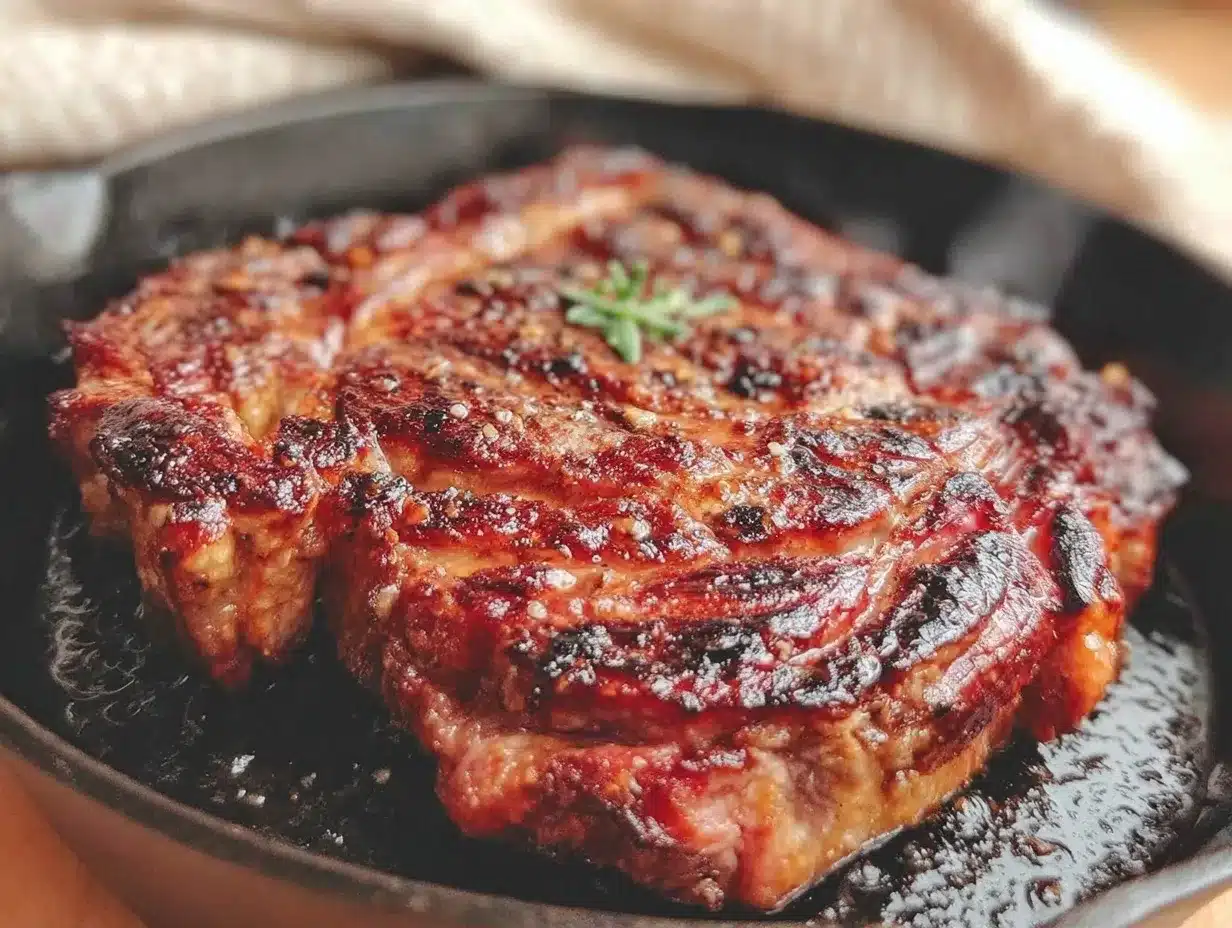
- Preheat your oven to 275°F (135°C). This low temperature is key—it slowly brings the steak up to temperature without overcooking the edges.
- Season the ribeye generously with kosher salt and freshly ground black pepper on all sides. I usually let it rest at room temperature for 30 minutes after seasoning; this helps the salt penetrate and the steak cook more evenly.
- Place the steak on a wire rack set over a rimmed baking sheet. This setup allows heat to circulate around the meat, cooking it gently. Put it in the oven and roast until the internal temperature reaches 110°F (43°C) for medium-rare—this usually takes about 20-30 minutes depending on thickness.
- While the steak is in the oven, prepare your skillet. Heat your cast iron pan over high heat until it’s just starting to smoke. Add a thin layer of neutral oil to coat the bottom.
- Remove the steak from the oven and transfer it immediately to the hot skillet. Add the butter, garlic, and herbs to the pan. As the butter melts, tilt the pan slightly and use the spoon to baste the steak continuously—this infuses flavor and helps build a golden crust.
- Sear the steak for about 1-2 minutes per side until a deep, caramelized crust forms. Don’t rush this part; the contrast between the slow-cooked interior and the crispy exterior is what makes the reverse-sear method shine.
- Check the internal temperature again—it should be about 125°F (52°C) for medium-rare. Adjust searing time slightly if needed.
- Rest the steak on a cutting board for at least 5-10 minutes before slicing. This step is crucial to let the juices redistribute, keeping every bite moist and flavorful.
Pro tip: If you want to speed things up, you can start the sear in the pan and finish in the oven, but the slow oven-first method gives you better control and a more even cook. I’ve tried both, and the results just aren’t as reliable.
Cooking Tips & Techniques
One of the trickiest parts of cooking ribeye is avoiding the dreaded gray band—a dry layer just beneath the crust. The reverse-sear method prevents this by cooking the steak gently first, so the entire piece reaches the right temperature slowly.
Here’s what I’ve learned from some early kitchen fails:
- Don’t skip the resting period after seasoning and after cooking. It might feel like extra wait time, but this patience pays off in juicy steak.
- Use a reliable instant-read thermometer. Guessing doneness is a recipe for disappointment. I like the ThermoWorks Thermapen for its speed and accuracy.
- Pat your steak dry before searing. Moisture on the surface will steam rather than sear, so a paper towel is your best friend here.
- Don’t overcrowd your pan. If you’re making multiple steaks, sear them one at a time or in batches to keep the pan hot and avoid steaming.
- Basting with butter and herbs adds layers of flavor and keeps the crust rich and aromatic.
Timing-wise, multitasking is key—while the steak is in the oven, you can prep sides or sauces. This makes the whole cooking experience smoother and less stressful.
Variations & Adaptations
This ribeye recipe is flexible for different tastes and dietary needs. Here are some ways I’ve played with it:
- Spicy Kick: Add a pinch of smoked paprika and cayenne to your seasoning mix before cooking for a subtle smoky heat.
- Herb Butter Finish: Instead of just plain butter, mix softened butter with chopped parsley, chives, and garlic powder, then dollop it on the steak during resting for a fresh finish.
- Alternative Cooking Methods: If you don’t have an oven, you can slow-cook the steak sous vide before searing—but this requires extra equipment. Or try finishing over a charcoal grill for that authentic smoky flavor.
- Allergen Substitutions: For dairy-free diets, swap butter for olive oil or a vegan butter alternative when basting.
- Personal Variation: Once, I rubbed the steak with coffee grounds and brown sugar before cooking—surprisingly, it gave a deep, caramelized crust that was a hit at a family cookout.
Serving & Storage Suggestions
Serve your perfect reverse-sear ribeye warm, sliced against the grain to maximize tenderness. It pairs beautifully with simple sides like roasted vegetables or a fresh salad, like the tangy fresh cowboy caviar salad bowl, which cuts through the richness.
Leftovers? Wrap them tightly and store in the refrigerator for up to 3 days. To reheat without drying out, I recommend warming gently in a low oven (around 250°F/120°C) or quickly tossing slices in a hot skillet with a splash of broth.
Interestingly, the flavors actually deepen after resting overnight, making the steak even more flavorful the next day. That said, nothing beats that fresh-out-of-the-pan taste.
Nutritional Information & Benefits
A 6-ounce (170g) ribeye steak contains roughly 450 calories, 35 grams of protein, and 35 grams of fat, most of it from healthy monounsaturated fats thanks to the marbling. It’s a great source of iron, zinc, and vitamin B12—nutrients essential for energy and muscle function.
For those watching carbs, this recipe is naturally low-carb and gluten-free. Just watch the sides if you want to keep it keto-friendly. And if you’re mindful of saturated fat, choosing a slightly leaner cut or trimming excess fat can help.
From a wellness perspective, I always appreciate a meal that feels indulgent yet simple, made with whole ingredients and thoughtful technique—this recipe hits that sweet spot.
Conclusion
This Perfect Reverse-Sear Ribeye Steak recipe is far from complicated, but it delivers that restaurant-quality result that feels special every single time. It’s a recipe that stuck with me because it transforms an ordinary steak dinner into a memorable occasion, especially when cooking for Dad or anyone who deserves something truly juicy and flavorful.
Don’t hesitate to tweak the herbs, seasoning, or cooking times to suit your taste. After all, the best meals are the ones that fit your kitchen rhythm and your family’s preferences.
If you try this method, I’d love to hear how it turns out or what variations you’ve made! Sharing those little tweaks is what keeps recipes alive and personal.
Here’s to many delicious meals and moments around the table.
Frequently Asked Questions
What is the reverse-sear method?
It’s a two-step cooking technique where you slowly cook the steak in a low oven first, then finish with a high-heat sear to develop a crust. This results in evenly cooked, juicy meat with a flavorful exterior.
How thick should the ribeye be for reverse searing?
Ideally, choose a steak at least 1.5 inches (about 4 cm) thick. Thinner steaks cook too quickly and don’t benefit as much from the slow oven stage.
Can I use this method for other cuts of steak?
Yes! It works great on thick-cut New York strip, filet mignon, and even strip loin. Adjust cooking times based on thickness and desired doneness.
Do I need a special pan to sear the steak?
A cast iron skillet is best because it holds high heat well, but a heavy-bottomed stainless steel pan works too. Avoid non-stick pans as they don’t produce as good a crust.
How do I know when the steak is done?
Use an instant-read thermometer. For medium-rare, pull the steak at about 125°F (52°C) after searing, as it will continue to cook slightly while resting.
Pin This Recipe!
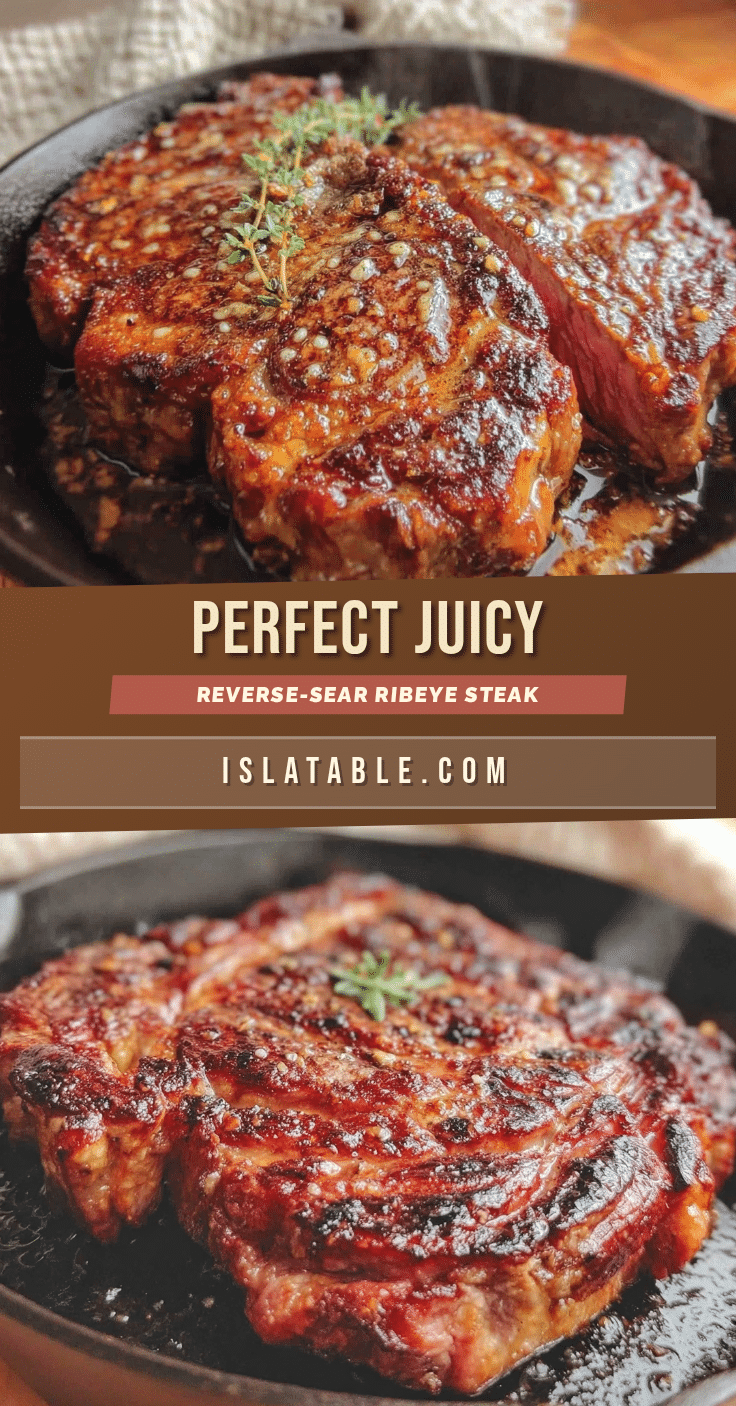
Perfect Reverse-Sear Ribeye Steak Recipe Easy Juicy Flavorful for Dad
This reverse-sear ribeye steak recipe delivers a tender, juicy interior with a flavorful crust, perfect for special occasions and easy enough for regular rotation.
- Prep Time: 35 minutes
- Cook Time: 10 minutes
- Total Time: 45 minutes
- Yield: 1 serving 1x
- Category: Main Course
- Cuisine: American
Ingredients
- 1 thick-cut ribeye steak, about 1.5 to 2 inches thick (450-570g / approx. 1 to 1.25 lbs)
- Kosher salt, coarse
- Freshly ground black pepper
- 2 tablespoons unsalted butter
- 2 garlic cloves, smashed (optional)
- A few sprigs fresh thyme or rosemary (optional)
- Neutral cooking oil (such as grapeseed or canola oil)
Instructions
- Preheat your oven to 275°F (135°C).
- Season the ribeye generously with kosher salt and freshly ground black pepper on all sides. Let it rest at room temperature for 30 minutes.
- Place the steak on a wire rack set over a rimmed baking sheet. Roast in the oven until the internal temperature reaches 110°F (43°C) for medium-rare, about 20-30 minutes depending on thickness.
- While the steak is in the oven, heat a cast iron skillet over high heat until just starting to smoke. Add a thin layer of neutral oil to coat the bottom.
- Remove the steak from the oven and transfer it immediately to the hot skillet. Add butter, garlic, and herbs to the pan. Tilt the pan and baste the steak continuously with melted butter using a spoon.
- Sear the steak for about 1-2 minutes per side until a deep, caramelized crust forms.
- Check the internal temperature again; it should be about 125°F (52°C) for medium-rare. Adjust searing time if needed.
- Rest the steak on a cutting board for at least 5-10 minutes before slicing to allow juices to redistribute.
Notes
Pat steak dry before searing to avoid steaming. Use a reliable instant-read thermometer for perfect doneness. Rest steak after seasoning and after cooking for juiciness. Avoid overcrowding the pan when searing multiple steaks. Butter and herb basting adds flavor and crust richness.
Nutrition
- Serving Size: 6 ounces (170g) cook
- Calories: 450
- Sodium: 600
- Fat: 35
- Saturated Fat: 14
- Protein: 35
Keywords: reverse sear, ribeye steak, steak recipe, juicy steak, easy steak recipe, Father's Day steak, cast iron skillet steak