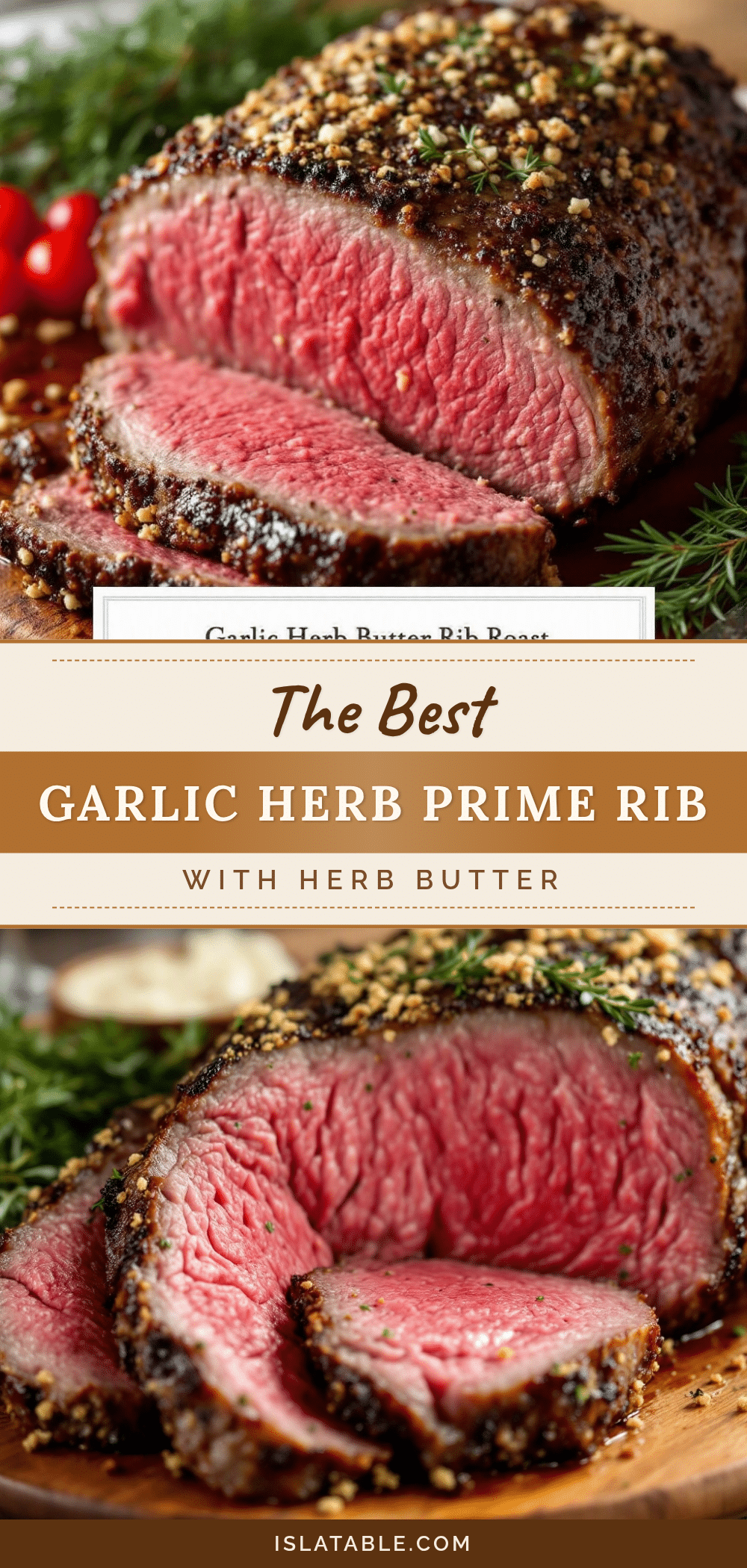
That crackling, salt-studded, herb-flecked crust. That’s what I made this for. Everything else—the tender, pink interior, the pool of jus on the plate—is just the happy consequence. I remember standing in my tiny apartment kitchen three Christmases ago, staring at a five-pound rib roast like it was a live grenade. I had spent $80 I didn’t really have, convinced I was about to ruin the centerpiece of my family’s holiday dinner. But then I pulled it out of the oven, and the sound of that crust crackling under my knife—honestly, I almost cried. It wasn’t just dinner. It was proof that I could do this.
This Perfect Garlic Herb Butter Prime Rib Roast for the Holidays isn’t just a recipe. It’s the one that made my mom stop mid-chew and say, “Okay, you’re officially the cook now.” That moment stuck with me. Not because of the praise, but because for once, the pressure of the holidays didn’t crush me. This roast handled it. And it can handle yours too.
Why You’ll Love This Recipe
Let’s be real for a second. Prime rib is expensive. It’s the kind of dish you save for the big moments—Christmas dinner, New Year’s Eve, an anniversary where you really want to impress. That pressure alone can make you want to order takeout. But this recipe takes all that anxiety and just… melts it away.
- Foolproof Method: No fancy techniques, no guessing games. Just a simple low-temp roast followed by a high-heat sear. It works every single time.
- Incredible Garlic Herb Crust: The butter mixture creates a savory, golden shell that locks in every drop of juice. It’s the kind of crust you’ll fight over the last piece of.
- Perfectly Pink Every Time: Medium-rare throughout, from edge to center. No gray bands, no raw spots. Just even, juicy perfection.
- Make-Ahead Friendly: The herb butter can be prepped days in advance. On the big day, you just slather and roast. Less stress, more wine.
- Crowd-Pleasing Centerpiece: This isn’t just dinner. It’s the thing everyone gathers around the table for. The oohs and ahhs are guaranteed.
I’ve tested this method at least a dozen times—for my in-laws, for a New Year’s party, and once just for myself on a random Tuesday because I felt like it. It never fails. And honestly, that’s the kind of trust you need when you’re serving something this special.
What Ingredients You Will Need
This recipe uses surprisingly few ingredients, but each one plays a crucial role. No weird specialty items here—just good, honest staples that come together to create something spectacular.
For the Garlic Herb Butter
- 1/2 cup unsalted butter, softened to room temperature (this is key for easy spreading)
- 6 cloves garlic, minced (fresh only—don’t even think about the jarred stuff)
- 2 tablespoons fresh rosemary, finely chopped
- 2 tablespoons fresh thyme leaves
- 1 tablespoon fresh parsley, chopped
- 1 teaspoon kosher salt
- 1/2 teaspoon black pepper, freshly cracked
- 1 teaspoon Dijon mustard (adds a subtle tang that cuts through the richness)
For the Prime Rib Roast
- 1 (5-7 pound) bone-in prime rib roast (look for good marbling—that’s where the flavor lives)
- 1 tablespoon kosher salt (for the initial seasoning)
- 1 teaspoon black pepper
- 1 cup beef broth (for the pan, optional but recommended for au jus)
A note on the meat: I always recommend buying from a trusted butcher or a high-quality grocery store. Just like with ribeye steaks, the quality of the beef makes a huge difference here. Look for Prime grade if your budget allows—it has the most marbling and will be incredibly tender. Choice grade works beautifully too, just be careful not to overcook it.
The garlic herb butter is where the magic happens. I use unsalted butter so I can control the salt level myself. Fresh herbs are non-negotiable here—dried rosemary just doesn’t have the same punch. And that little bit of Dijon mustard? It’s my secret weapon. It doesn’t make the roast taste like mustard. It just adds a layer of savory depth that makes everyone ask, “What’s in this?”
Equipment Needed
- Roasting pan with a rack (a V-rack is ideal for even heat circulation)
- Instant-read thermometer (this is your most important tool—don’t guess the temperature)
- Chef’s knife (for trimming any excess fat and carving later)
- Cutting board (a large one with a groove to catch juices)
- Small bowl (for mixing the herb butter)
- Aluminum foil (for tenting the roast while it rests)
- Kitchen twine (if your roast isn’t already tied—ask your butcher to do it)
If you don’t have a roasting rack, you can use a makeshift one by placing thick carrot and celery chunks in the pan. It works in a pinch, and you get flavorful vegetables for the pan drippings. I’ve done this more times than I’d like to admit.
Preparation Method
Alright, let’s get to it. This method is designed to be stress-free, but there are a few critical steps you absolutely cannot skip. Trust me, I learned the hard way.
- Take the chill off the roast. Remove your prime rib from the refrigerator at least 2 hours before cooking. I know it sounds like a long time, but a cold roast straight from the fridge will cook unevenly. Let it sit on the counter, still wrapped, until it comes close to room temperature. Pat it dry with paper towels—moisture is the enemy of a good crust.
- Make the garlic herb butter. In a small bowl, combine the softened butter, minced garlic, rosemary, thyme, parsley, salt, pepper, and Dijon mustard. Mash it all together with a fork until it’s well combined and smells absolutely intoxicating. Set it aside at room temperature. (You can make this up to 3 days ahead and keep it in the fridge—just let it soften again before using.)
- Season the roast. Generously season the entire roast with kosher salt and black pepper. Don’t be shy—you want that crust to be flavorful. If you have time, do this step the night before and let the roast sit uncovered in the fridge overnight. It helps dry out the surface for an even better sear.
- Preheat your oven to 250°F (120°C). Yes, that low. Low and slow is the secret to even cooking throughout.
- Slather on the herb butter. Using your hands (yes, get in there), spread the garlic herb butter all over the roast. Make sure every nook and cranny is covered. This isn’t a delicate pat—it’s a full-on butter massage.
- Place the roast in the roasting pan. Set it bone-side down on the rack. The bones act as a natural roasting rack, keeping the meat elevated. If your roast is boneless, place it fat-side up on the rack.
- Roast low and slow. Insert your instant-read thermometer into the thickest part of the meat, avoiding the bone. Roast until the internal temperature reaches 115°F (46°C) for rare, 120°F (49°C) for medium-rare, or 130°F (54°C) for medium. This usually takes about 25-30 minutes per pound. For a 6-pound roast, expect about 2.5 to 3 hours. Start checking the temperature about 30 minutes before you think it’ll be done.
- The final sear. Once the roast hits your target temperature, remove it from the oven. Increase the oven temperature to 500°F (260°C). While it’s heating up, tent the roast loosely with foil. Once the oven is screaming hot, remove the foil and return the roast to the oven for 5-10 minutes, until the crust is deeply golden and crackling. Watch it carefully—it can go from perfect to burnt in seconds.
- Rest, rest, rest. This is the hardest part. Remove the roast from the oven and tent it loosely with foil. Let it rest for at least 20-30 minutes. I know you want to carve it immediately, but don’t. The resting period allows the juices to redistribute throughout the meat. If you cut into it too soon, all those beautiful juices will end up on the cutting board instead of in your mouth.
- Carve and serve. Remove the kitchen twine if there is any. Slice the meat off the bones in one piece, then cut into thick slices (about 1/2 to 3/4 inch thick). Serve immediately with the pan juices or a simple au jus made from the drippings.
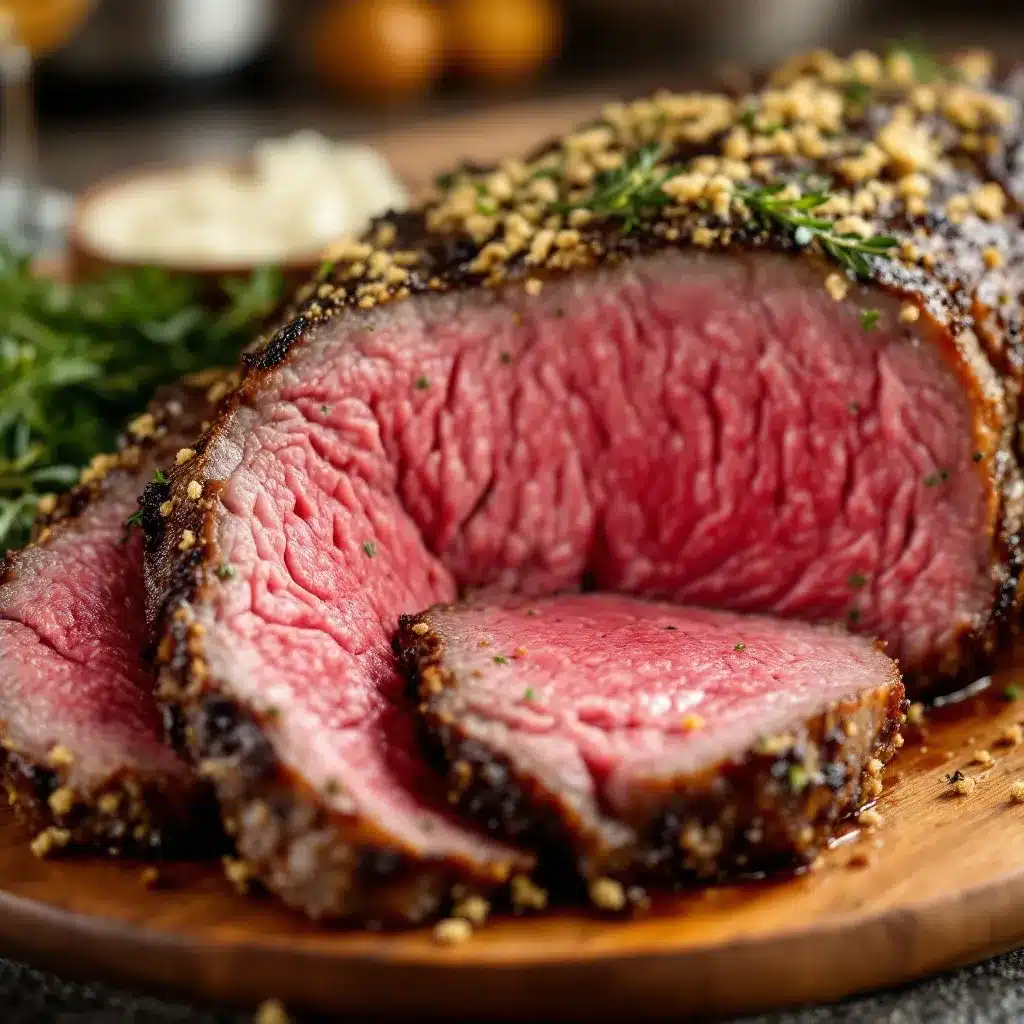
Sensory cue: When you pull that roast out of the oven after the final sear, the kitchen should smell like a steakhouse and a herb garden had a beautiful baby. The crust should look almost lacquered—deep brown with visible flecks of green herbs. When you slice into it, you should see a thin pink line at the edge, giving way to a rosy, even center. That’s perfection.
Cooking Tips & Techniques
I’ve made every mistake in the book with prime rib. I’ve overcooked it (dry and sad). I’ve undercooked it (chewy and unappetizing). I’ve forgotten to rest it (a puddle of juice on the board). Here’s what I’ve learned so you don’t have to make the same errors.
- Invest in a good thermometer. I cannot stress this enough. The difference between a perfect medium-rare and a well-done disaster is about 10 degrees. An instant-read thermometer is your best friend. I use a Thermapen, but any reliable digital thermometer will do.
- Don’t skip the low-temp step. I know it’s tempting to crank the oven to 350°F and hope for the best. But high heat from the start will give you a gray band of overcooked meat around the edges. Low and slow ensures even cooking from edge to center.
- Let the butter breathe. When you’re making the herb butter, don’t overmix it. You want distinct flecks of herbs and garlic, not a uniform paste. The visual contrast on the finished crust is part of the appeal.
- Use the pan drippings. After the roast is resting, place the roasting pan on the stovetop over medium heat. Add a cup of beef broth and scrape up all the browned bits from the bottom. Let it simmer for a few minutes, then strain it. That’s your au jus. It’s liquid gold.
- Slice against the grain. This is crucial for tenderness. Look at the direction the muscle fibers run, and cut perpendicular to them. If you’re not sure, make a small cut and see how the meat pulls apart.
One time, I forgot to take the roast out of the fridge early enough. It went into the oven cold, and the center was still raw when the edges were already medium. I had to slice off the outer portions and pop the center back in. It was a mess. Learn from my laziness.
Variations & Adaptations
This recipe is incredibly versatile. Here are a few ways to make it your own.
- Herb Swap: Not a fan of rosemary? Use sage or tarragon instead. Both pair beautifully with beef. I once made a version with fresh oregano and lemon zest, and it was surprisingly bright and fresh.
- Spicy Kick: Add 1/2 teaspoon of red pepper flakes or a minced chipotle pepper in adobo to the herb butter. The heat cuts through the richness of the beef beautifully. If you like a little heat like I do in my bacon-wrapped jalapeño poppers, this is the variation for you.
- Dairy-Free Option: Swap the butter for a high-quality vegan butter or olive oil. The texture won’t be quite as rich, but it still creates a lovely crust. Just add an extra tablespoon of olive oil to help everything stick.
- Garlic Lover’s Version: Roast a whole head of garlic until soft and squishy, then mash it into the butter. It adds a sweet, mellow garlic flavor that’s less sharp than raw garlic.
- Wine-Infused Au Jus: Instead of beef broth, deglaze the pan with 1/2 cup of red wine (something you’d actually drink). Let it reduce by half, then add 1/2 cup of beef broth. The wine adds incredible depth.
I once made a version with a coffee rub mixed into the herb butter for a friend who loves bold flavors. It was weirdly amazing—the coffee didn’t make it taste like coffee, just added this deep, earthy richness. Don’t be afraid to experiment.
Serving & Storage Suggestions
This roast is the star of the show, so keep the sides simple. I love serving it with roasted potatoes (they soak up the au jus beautifully), a simple green salad with a sharp vinaigrette to cut through the richness, and maybe some roasted carrots or asparagus. For a fun starter, a creamy dairy-free queso dip with tortilla chips is always a hit before the main event.
For leftovers: Prime rib is almost better the next day. Store any leftover slices in an airtight container in the refrigerator for up to 4 days. To reheat, place slices in a low oven (275°F) with a splash of beef broth, covered with foil, for about 10 minutes. This prevents them from drying out. Leftover prime rib also makes incredible sandwiches—thinly sliced on a crusty roll with horseradish cream and arugula. Yes, please.
Freezing: Cooked prime rib freezes beautifully. Wrap individual slices tightly in plastic wrap, then foil, and place in a freezer bag. They’ll keep for up to 3 months. Thaw in the refrigerator overnight before reheating.
Nutritional Information & Benefits
Let’s be honest—prime rib isn’t a health food. It’s a special occasion indulgence, and that’s okay. But here’s the good news: beef is actually packed with nutrients. A 4-ounce serving of prime rib provides about 35 grams of protein, plus significant amounts of iron, zinc, and B vitamins. The fat content is higher than leaner cuts, but it’s also what makes it so tender and flavorful.
If you’re watching your intake, stick to a 4-ounce portion (about the size of a deck of cards) and load up on vegetables on the side. The garlic and herbs in the butter also offer antioxidants and anti-inflammatory benefits—small wins in a decadent dish.
This recipe is naturally gluten-free and low-carb, making it suitable for keto and paleo diets. Just skip the au jus if you’re using store-bought broth that may contain gluten, or make your own.
Conclusion
This Perfect Garlic Herb Butter Prime Rib Roast for the Holidays isn’t just a recipe. It’s the centerpiece of memories—the thing everyone gathers around, the dish that makes a holiday feel special. It’s the roast that made my mom hand over the title of family cook, and it’s the one I turn to whenever I need to impress without stress.
The first time you pull this out of the oven, with that crackling, herb-flecked crust and the smell of garlic and rosemary filling your kitchen, you’ll understand. This isn’t just dinner. It’s a moment. And you absolutely deserve to have that moment.
So go ahead. Buy the good roast. Make the butter. Invite the people you love. And when they ask how you did it, just smile and say, “It’s easier than it looks.” Because it really is.
I’d love to hear how yours turns out! Drop a comment below and let me know if you tried any variations. Did you add the chipotle? Swap the herbs? Serve it with something unexpected? Share your story—I read every single comment.
Frequently Asked Questions
How long should I cook a prime rib roast per pound?
At 250°F, plan on about 25-30 minutes per pound for medium-rare. But always rely on your thermometer, not the clock. Every oven is different, and the shape of the roast matters too.
Should I cook prime rib covered or uncovered?
Uncovered. You want that herb butter crust to develop and brown. Covering it would trap steam and make the crust soggy instead of crackling.
Can I use dried herbs instead of fresh?
You can, but I really don’t recommend it. Dried herbs have a more concentrated, almost dusty flavor. Fresh herbs give the crust that bright, aromatic punch that makes this dish special. If you must use dried, use about 1/3 of the amount listed.
What temperature should prime rib be for medium-rare?
Pull the roast out of the oven when the internal temperature reaches 120°F (49°C). It will continue to rise another 5-10 degrees during the resting period, landing you right at 125-130°F (52-54°C) for perfect medium-rare.
Can I prepare the herb butter ahead of time?
Absolutely. Make the herb butter up to 3 days in advance and store it in the refrigerator. Just let it come to room temperature for about 30 minutes before spreading it on the roast so it’s soft and easy to work with.
Pin This Recipe!
Perfect Garlic Herb Butter Prime Rib Roast for the Holidays
A foolproof prime rib roast with a crackling garlic herb crust, perfectly pink medium-rare interior, and simple low-temp then high-heat method. The ultimate holiday centerpiece that impresses every time.
- Prep Time: 20 minutes
- Cook Time: 2 hours 45 minutes
- Total Time: 3 hours 35 minutes
- Yield: 8 servings 1x
- Category: Main Course
- Cuisine: American
Ingredients
- 1/2 cup unsalted butter, softened
- 6 cloves garlic, minced
- 2 tablespoons fresh rosemary, finely chopped
- 2 tablespoons fresh thyme leaves
- 1 tablespoon fresh parsley, chopped
- 1 teaspoon kosher salt
- 1/2 teaspoon black pepper, freshly cracked
- 1 teaspoon Dijon mustard
- 1 (5-7 pound) bone-in prime rib roast
- 1 tablespoon kosher salt (for initial seasoning)
- 1 teaspoon black pepper
- 1 cup beef broth (optional, for au jus)
Instructions
- Remove prime rib from refrigerator at least 2 hours before cooking. Pat dry with paper towels.
- In a small bowl, combine softened butter, minced garlic, rosemary, thyme, parsley, 1 teaspoon salt, 1/2 teaspoon pepper, and Dijon mustard. Mash together with a fork until well combined.
- Generously season the entire roast with 1 tablespoon kosher salt and 1 teaspoon black pepper.
- Preheat oven to 250°F (120°C).
- Using your hands, spread the garlic herb butter all over the roast, covering every nook and cranny.
- Place the roast bone-side down on a rack in a roasting pan.
- Insert an instant-read thermometer into the thickest part of the meat, avoiding bone. Roast until internal temperature reaches 120°F (49°C) for medium-rare, about 25-30 minutes per pound (2.5-3 hours for a 6-pound roast).
- Remove roast from oven. Increase oven temperature to 500°F (260°C). Tent roast loosely with foil while oven heats.
- Once oven is hot, remove foil and return roast to oven for 5-10 minutes until crust is deeply golden and crackling. Watch carefully.
- Remove from oven and tent loosely with foil. Rest for at least 20-30 minutes.
- Remove kitchen twine if present. Slice meat off bones in one piece, then cut into 1/2 to 3/4 inch thick slices against the grain.
- Serve immediately with pan juices or au jus made from drippings.
Notes
For best results, season the roast the night before and let it sit uncovered in the fridge overnight to dry out the surface for a better sear. Let the roast come to room temperature before cooking for even cooking. Always use a thermometer—don’t guess the temperature. Rest the roast for at least 20-30 minutes before carving to allow juices to redistribute. The herb butter can be made up to 3 days ahead and refrigerated; let it soften before using.
Nutrition
- Serving Size: 4 ounces
- Calories: 450
- Sodium: 800
- Fat: 35
- Saturated Fat: 15
- Carbohydrates: 2
- Protein: 35
Keywords: prime rib, garlic herb butter, holiday roast, Christmas dinner, prime rib roast, beef roast, medium-rare roast, holiday centerpiece