“I wasn’t expecting much when I threw together that little pouch of trail food before heading out on a last-minute weekend hike. Honestly, it was more of a “use-what-I-have” moment than a planned meal. But by the time I hit the summit, I realized those lightweight backpacking meals under 500 calories were exactly what my body needed—fuel without the bulk. You know how it goes: you want something that won’t weigh you down but still gives you enough energy to keep going. That simple mix of dehydrated veggies, lean protein, and whole grains ended up being a quiet game-changer for my outdoor adventures.
There’s something oddly satisfying about having a meal that’s both easy to pack and nourishing enough to power you through miles of trail. The crunch of dried kale, the subtle spice of chili flakes, and a little squeeze of olive oil all blended into a satisfying bite that felt just right. It reminded me of why I love hiking so much in the first place—the balance of challenge and reward, the slow moments of quiet, and the small victories like finishing a meal that’s good for you and your pack.
Later, I started tweaking the combinations, swapping ingredients here and there to keep things fresh but still lightweight. It turns out, eating well on the trail doesn’t mean lugging around heavy, calorie-dense bars or greasy snacks. Instead, these healthy lightweight backpacking meals under 500 calories became my go-to for any trip, whether it’s a day hike or a multi-day trek. And honestly, once you find your rhythm with these meals, it’s hard to go back to anything else. They just work—simple, reliable, and surprisingly tasty.
Why You’ll Love This Recipe
Having spent years experimenting with trail food, I can tell you these healthy lightweight backpacking meals under 500 calories are a keeper for several reasons:
- Quick & Easy: Most of these recipes come together in under 15 minutes, perfect for those moments when you want to prep fast and hit the trail.
- Simple Ingredients: No need for specialty stores—these meals use pantry staples and easily sourced items, so no panic before your trip.
- Perfect for Hiking & Camping: Designed specifically for outdoor activities, each meal balances calories and weight, helping you stay energized without the heavy pack.
- Crowd-Pleaser: Whether you’re with friends or solo, these meals get nods of approval for flavor and convenience.
- Unbelievably Delicious: The combination of fresh herbs, spices, and thoughtful ingredient pairings means you’re not just eating to survive—you’re enjoying every bite.
What sets these meals apart is the focus on freshness and balance. Instead of overly processed bars or bland freeze-dried options, these recipes bring together real food you can customize. Whether it’s a pinch of smoked paprika or a sprinkle of toasted nuts, the little tweaks make a big difference. Plus, using ingredients like quinoa for protein and fiber or dehydrated veggies for crunch helps maintain energy levels without weighing you down.
After a few tries, you realize these meals aren’t just practical—they’re a small ritual on the trail that makes hiking more enjoyable. That moment when you pause, unwrap your meal, and take that first bite? It’s worth every step you took to get there.
What Ingredients You Will Need
This recipe uses simple, wholesome ingredients to deliver bold flavor and satisfying texture without the fuss. Most are pantry staples or easy to find at your local grocery store, making it simple to pack for your next outdoor excursion.
- Grains & Base:
- Quinoa, rinsed and dried (1 cup / 170g) – great source of protein and light on the pack
- Instant brown rice or couscous (optional for variety, 1 cup / 185g)
- Protein:
- Dehydrated cooked chicken breast, chopped (½ cup / 50g) – choose lean, low-fat for lightweight energy
- Roasted chickpeas (½ cup / 60g) – adds crunch and plant-based protein
- Vegetables & Flavor:
- Dehydrated kale or spinach flakes (¼ cup / 10g) – packed with vitamins, lightweight and easy to rehydrate
- Sun-dried tomatoes, chopped (2 tbsp / 15g) – concentrated flavor punch
- Freeze-dried bell peppers (2 tbsp / 10g) – adds color and crunch
- Minced garlic powder (1 tsp) and onion powder (1 tsp) for seasoning
- Fats & Extras:
- Olive oil (1 tbsp / 15ml) – for healthy fats and smooth texture
- Chopped nuts or seeds (2 tbsp / 20g) – for crunch and extra calories
- Fresh herbs like dried parsley or thyme (1 tsp) for an herbal note
- Salt and cracked black pepper to taste
- Optional Boosters:
- Chili flakes for a little heat
- Parmesan cheese powder (1 tbsp) if you want a cheesy twist
When picking dehydrated ingredients, I like to go with trusted brands that focus on minimal additives—keeps the flavor pure and the weight down. You can swap quinoa for couscous or instant rice depending on preference or availability. For a gluten-free option, stick with quinoa and rice. If you need dairy-free, leave out the cheese powder or substitute with nutritional yeast.
Equipment Needed
- Lightweight camping pot or small saucepan – I recommend a titanium or aluminum one for fast heating and minimal weight.
- Portable stove or campfire setup – small backpacking stoves work great for quick boiling.
- Reusable silicone or collapsible bowl – saves space and is easy to clean on the trail.
- Spork or lightweight utensil – a must-have for eating on the go.
- Measuring cups and spoons – for accurate portioning, especially important when balancing calories.
- Food storage bags or lightweight containers – to pack ingredients separately and keep them fresh.
If you don’t have a camp stove, you can even prepare some meals ahead and eat cold, like a no-cook trail salad using similar ingredients. I’ve used simple plastic containers and ziplock bags when in a pinch, but investing in good-quality lightweight gear really makes a difference for multi-day trips. Keeping your equipment light but functional is key to enjoying the hike without extra burden.
Preparation Method
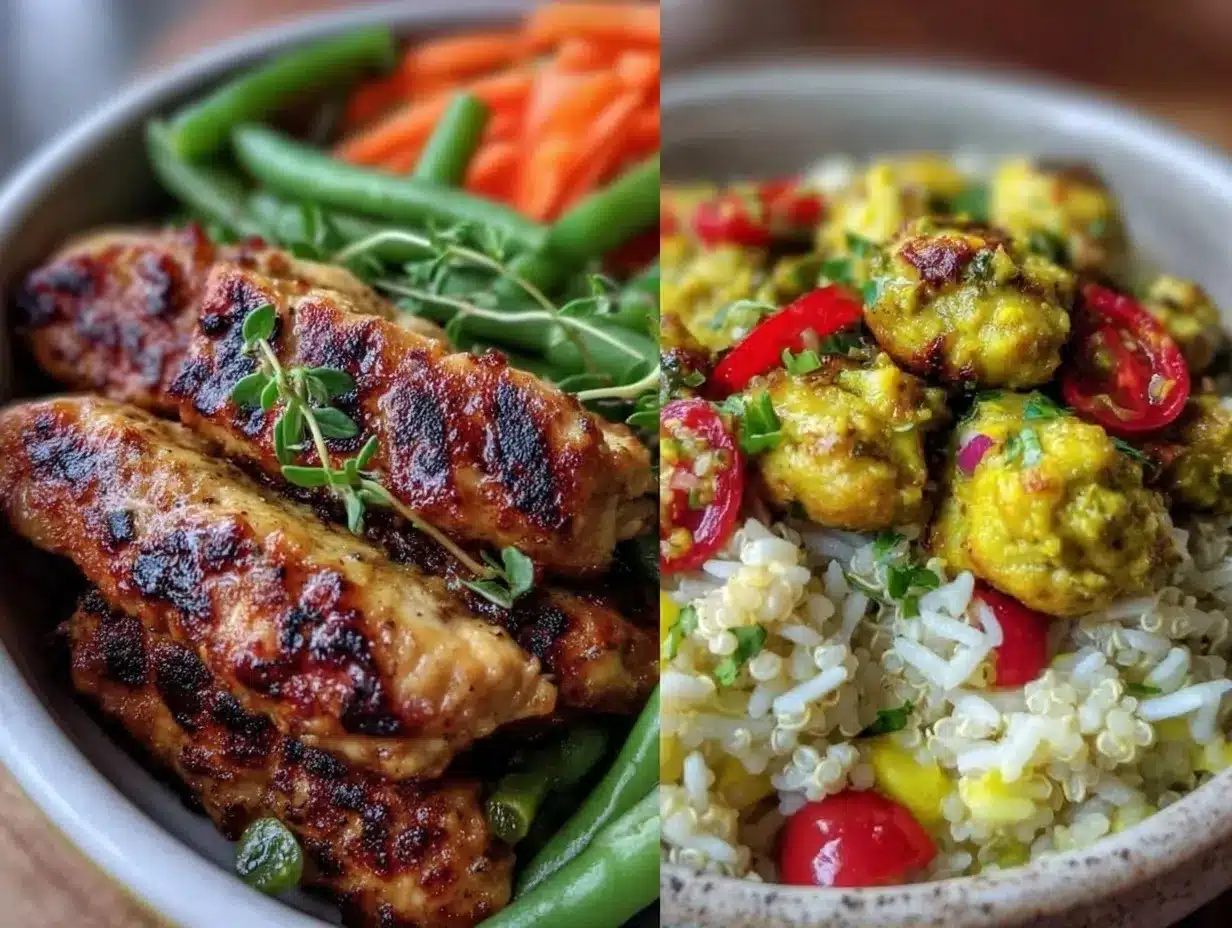
- Prepare the grain base: Rinse 1 cup (170g) of quinoa under cold water to remove bitterness. In your camping pot, bring 2 cups (480ml) of water to a boil. Add quinoa, reduce heat, cover, and simmer for about 15 minutes or until water is absorbed. Fluff with a fork and set aside. (Tip: If you want to speed things up, use pre-cooked or instant quinoa.)
- Rehydrate vegetables: While quinoa cooks, place ¼ cup (10g) dehydrated kale, 2 tbsp (15g) sun-dried tomatoes, and 2 tbsp (10g) freeze-dried bell peppers in a bowl. Pour hot water over them (about ½ cup / 120ml) and let soak for 5-7 minutes until softened. Drain excess water.
- Mix protein: Add ½ cup (50g) dehydrated cooked chicken breast and ½ cup (60g) roasted chickpeas to the rehydrated vegetables. Stir to combine evenly.
- Season the mix: Sprinkle in 1 tsp garlic powder, 1 tsp onion powder, salt, pepper, and optional chili flakes. Add 1 tsp dried parsley or thyme for an herbal touch.
- Add fats and extras: Drizzle 1 tbsp (15ml) olive oil over the mixture. Toss in 2 tbsp (20g) chopped nuts or seeds for crunch. If you like, stir in 1 tbsp Parmesan cheese powder or nutritional yeast for extra flavor.
- Combine with quinoa: Gently fold the seasoned protein-vegetable mix into the cooked quinoa. Taste and adjust seasoning if needed. (Pro tip: a little squeeze of fresh lemon juice brightens everything up perfectly.)
- Pack and eat: If preparing ahead, divide into portioned bags or containers. On the trail, enjoy warm or at room temperature. The meal should be filling but light—perfect for keeping your energy steady.
Keep an eye on the texture of your vegetables during rehydration; over-soaking can make them mushy, under-soaking leaves them tough. Also, using olive oil adds moisture and richness without heaviness, which I learned after a few dry trial runs. The balance of crunch from nuts and softness from quinoa makes this meal feel satisfying, not just fuel.
Cooking Tips & Techniques
From personal experience, here are some tips that really help when making healthy lightweight backpacking meals under 500 calories:
- Hydration control: Don’t overdo the water when rehydrating veggies and protein. You want them soft but not soggy—this keeps the texture appealing.
- Pre-toast nuts and grains: Toasting quinoa or nuts lightly at home adds flavor and reduces moisture, which helps with shelf life and taste on the trail.
- Use airtight containers: Moisture is the enemy of dehydrated ingredients. I once had a ruined batch of dried kale because my bag wasn’t sealed properly. Learn from me and double-seal those bags!
- Season generously: Flavor fades when dehydrated. Don’t be shy with spices and herbs to keep the meal lively.
- Batch prep: Making several servings ahead saves time and lets flavors meld. I usually prep enough for a weekend trip and stash them in labeled bags.
- Multitask efficiently: While the grains cook, soak veggies and prep seasonings. This little trick shaves minutes off your meal prep.
- Test at home first: Before relying on a recipe in the wild, make it at home to adjust flavors and portions. Trail appetite can be unpredictable!
One common mistake I’ve seen (and made) is underestimating how much water you need to rehydrate. Better to have a little extra than dry, tough bites. Also, a little olive oil goes a long way in preventing dryness. These techniques make the difference between a meal you look forward to and one you just tolerate.
Variations & Adaptations
Healthy lightweight backpacking meals under 500 calories can be customized easily to suit different tastes and dietary needs:
- Vegetarian/Vegan: Swap dehydrated chicken for extra roasted chickpeas or add textured vegetable protein (TVP). Use nutritional yeast instead of cheese powder for a cheesy flavor without dairy.
- Spicy Kick: Add crushed red pepper flakes, smoked paprika, or a dash of hot sauce powder to awaken your taste buds during chilly hikes.
- Seasonal Freshness: In warmer months, toss in some fresh cherry tomatoes or snap peas at the last minute for crunch and freshness.
- Low-carb: Replace quinoa with cauliflower rice (pre-packaged dehydrated) and increase nuts and seeds for added fats and protein.
- Different Cooking Methods: If you prefer cold meals, prepare everything in advance with soaked grains and veggies, then pack chilled for a refreshing midday bite.
I once tried a variation using creamy chicken salad with sweet grapes ingredients as a trail salad base, swapping heavy mayo for Greek yogurt powder. It was surprisingly light and kept well in my pack. Experimenting with flavors keeps the routine from getting dull, especially when you’re on back-to-back hikes.
Serving & Storage Suggestions
These meals are best enjoyed warm but work just as well at room temperature—perfect for when you want to take a break without lighting a stove. Portion into single-servings to make grabbing them on the trail hassle-free.
For sides, lightweight options like dried fruit, nut bars, or a small piece of dark chocolate complement the meal nicely. Pair with plenty of water or electrolyte drinks to stay hydrated.
Store prepared meals in airtight bags or vacuum-sealed pouches to keep moisture out. In a cool, dry place, they can last several days. For longer trips, freeze-dried versions extend shelf life dramatically.
Reheating can be done by adding hot water directly into the pouch and letting it sit for 10-15 minutes or warming gently over a stove. Flavors tend to deepen after sitting a bit, so if you have time, let the meal rest before eating.
Keeping your meals organized and properly sealed not only protects flavor but also prevents unwanted critters from sniffing around your pack—trust me, that’s a lesson learned the hard way!
Nutritional Information & Benefits
Each serving of these healthy lightweight backpacking meals typically contains around 400-480 calories, balanced to fuel your hike without weighing you down. The quinoa and chickpeas provide a good mix of plant-based protein and fiber, which helps keep you full longer.
Dehydrated vegetables contribute essential vitamins and minerals, including vitamin C, iron, and antioxidants, which support endurance and recovery. Olive oil adds heart-healthy fats, while nuts and seeds offer additional protein and micronutrients.
These meals are naturally gluten-free if you stick to quinoa or rice, and low in added sugars or preservatives. They fit well within low-carb or vegan diets with simple substitutions, making them versatile for many outdoor enthusiasts.
From a wellness perspective, eating nutrient-dense, balanced meals on the trail helps maintain energy, focus, and mood—something I’ve learned firsthand after tiring days of hiking with inadequate snacks.
Conclusion
Choosing healthy lightweight backpacking meals under 500 calories is more than just a practical decision—it’s a way to respect your body and the trail. These meals pack just the right punch of nutrients and flavor without extra weight, so you can enjoy the journey without feeling bogged down.
Feel free to tweak the ingredients and seasonings to fit your taste buds and dietary needs. Over time, you’ll find your perfect trail combo that makes every hike a little easier and a lot tastier. For me, these meals became a trusted part of every adventure—reliable, nourishing, and surprisingly satisfying.
Next time you’re planning your outdoor menu, consider these recipes your secret weapon for a light pack and a happy belly. And if you’re curious about other easy, flavorful dishes, you might enjoy the savory Italian beef sandwiches or the crispy broccoli salad with bacon crunch—both crowd-pleasers that bring flavor without fuss.
Happy trails and happy cooking!
FAQs
What makes a good backpacking meal under 500 calories?
A good backpacking meal under 500 calories balances protein, healthy fats, and carbohydrates to provide sustained energy while staying lightweight and easy to prepare.
Can I prepare these meals in advance for multi-day trips?
Yes, these meals store well in airtight containers or vacuum-sealed bags and can last several days, especially if kept cool and dry.
Are these meals suitable for vegan diets?
Absolutely. By swapping out animal proteins for plant-based options like roasted chickpeas or TVP and using nutritional yeast instead of cheese, these meals can easily be vegan-friendly.
How do I keep dehydrated ingredients fresh while backpacking?
Use airtight containers or resealable bags and keep them in a cool, dry place. Avoid exposure to moisture to prevent spoilage and maintain texture.
Can I eat these meals cold if I don’t have a stove?
Yes, many components rehydrate well with just water and taste fine at room temperature, making them convenient when cooking isn’t an option.
Pin This Recipe!
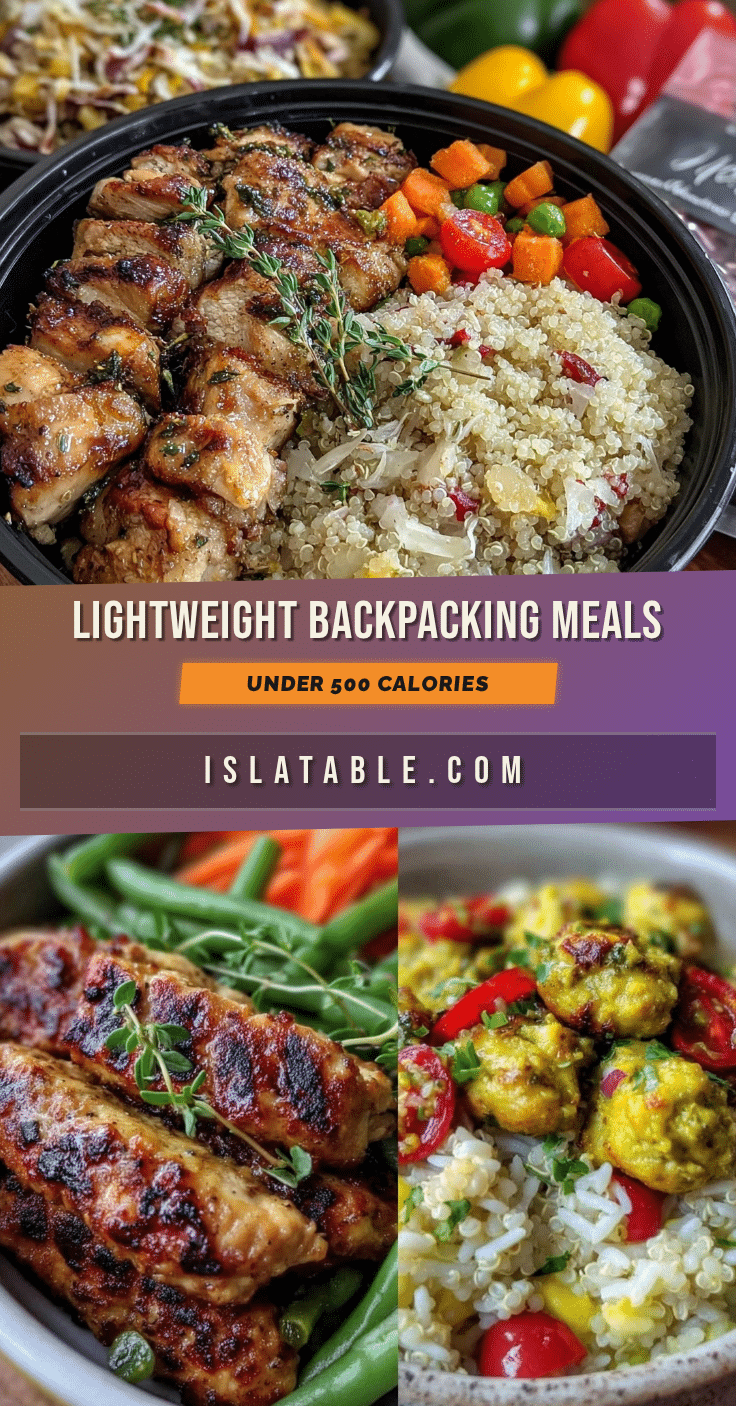
Healthy Lightweight Backpacking Meals Under 500 Calories
A simple, nourishing backpacking meal combining dehydrated veggies, lean protein, and whole grains, designed to provide energy without weighing you down on the trail.
- Prep Time: 10 minutes
- Cook Time: 15 minutes
- Total Time: 25 minutes
- Yield: 2 servings 1x
- Category: Main Course
- Cuisine: Outdoor / Hiking
Ingredients
- 1 cup (170g) quinoa, rinsed and dried
- 1 cup (185g) instant brown rice or couscous (optional)
- ½ cup (50g) dehydrated cooked chicken breast, chopped
- ½ cup (60g) roasted chickpeas
- ¼ cup (10g) dehydrated kale or spinach flakes
- 2 tbsp (15g) sun-dried tomatoes, chopped
- 2 tbsp (10g) freeze-dried bell peppers
- 1 tsp garlic powder
- 1 tsp onion powder
- 1 tbsp (15ml) olive oil
- 2 tbsp (20g) chopped nuts or seeds
- 1 tsp dried parsley or thyme
- Salt and cracked black pepper to taste
- Optional: chili flakes
- Optional: 1 tbsp Parmesan cheese powder or nutritional yeast
Instructions
- Rinse 1 cup (170g) of quinoa under cold water to remove bitterness. In a camping pot, bring 2 cups (480ml) of water to a boil. Add quinoa, reduce heat, cover, and simmer for about 15 minutes or until water is absorbed. Fluff with a fork and set aside.
- While quinoa cooks, place ¼ cup (10g) dehydrated kale, 2 tbsp (15g) sun-dried tomatoes, and 2 tbsp (10g) freeze-dried bell peppers in a bowl. Pour hot water (about ½ cup / 120ml) over them and let soak for 5-7 minutes until softened. Drain excess water.
- Add ½ cup (50g) dehydrated cooked chicken breast and ½ cup (60g) roasted chickpeas to the rehydrated vegetables. Stir to combine evenly.
- Sprinkle in 1 tsp garlic powder, 1 tsp onion powder, salt, pepper, and optional chili flakes. Add 1 tsp dried parsley or thyme for an herbal touch.
- Drizzle 1 tbsp (15ml) olive oil over the mixture. Toss in 2 tbsp (20g) chopped nuts or seeds for crunch. If desired, stir in 1 tbsp Parmesan cheese powder or nutritional yeast for extra flavor.
- Gently fold the seasoned protein-vegetable mix into the cooked quinoa. Taste and adjust seasoning if needed. Optionally, add a squeeze of fresh lemon juice to brighten flavors.
- Divide into portioned bags or containers if preparing ahead. Enjoy warm or at room temperature on the trail.
Notes
Do not over-soak dehydrated vegetables to avoid mushiness. Toast nuts and grains lightly at home for better flavor and shelf life. Use airtight containers to keep dehydrated ingredients fresh. Adjust seasoning generously to compensate for flavor loss in dehydration. Meals can be eaten cold if no stove is available.
Nutrition
- Serving Size: 1 serving (half of t
- Calories: 440
- Sugar: 4
- Sodium: 350
- Fat: 15
- Saturated Fat: 2
- Carbohydrates: 50
- Fiber: 8
- Protein: 25
Keywords: backpacking meals, lightweight meals, low calorie, hiking food, trail food, healthy backpacking, dehydrated meals, quinoa, chickpeas