“You seriously made this in under $2?” That’s the question my roommate threw at me one rainy Tuesday evening, as I set down a steaming bowl of a hearty vegan stew. Honestly, I didn’t expect it to be such a hit myself. Truth be told, it all started because I was broke, tired, and didn’t want to waste time or money on complicated meals. I grabbed what I had in the pantry—canned beans, a few veggies, and some rice—and just started throwing things together. The smell that filled the kitchen slowly turned my skepticism into curiosity.
What surprised me most wasn’t just how easy it was, but how satisfying and comforting it felt after a long day. No frills, no fancy ingredients—just wholesome, simple food that didn’t break the bank. And after making versions of this meal multiple times in a week, tweaking spices and swapping ingredients, I realized that eating healthy on a budget wasn’t just possible—it could be downright delicious.
These healthy budget vegan meals under $2 per serving are the kind of wins that sneak up on you. They’re perfect when you’re juggling work, life, and trying to eat well without losing your mind or your wallet. So if you’ve ever wondered if it’s possible to eat nutritious, plant-based meals without splurging, here’s some proof that it is—and it’s pretty tasty too.
Sometimes, the simplest meals are the ones that stick with you, not because they’re fancy, but because they fill your belly and your soul. That’s why I keep coming back to these recipes, and I’m betting you will too.
Why You’ll Love These Healthy Budget Vegan Meals Under $2 Per Serving
I’ve spent more than a few weeks testing, adjusting, and honestly—eating these meals multiple times a week. The goal? To create vegan dishes that are nourishing, affordable, and don’t require hunting down obscure ingredients. Here’s why these recipes stand out:
- Quick & Easy: Most recipes come together in under 30 minutes, making them perfect for busy weeknights or when you’re craving something homey without the fuss.
- Simple Ingredients: No need for specialty stores or pricey organic aisles—these meals rely on pantry staples like lentils, rice, canned tomatoes, and seasonal veggies.
- Perfect for Meal Prep: They store well, so you can cook once and eat a few times, saving both time and money.
- Crowd-Pleaser: Vegan or not, these dishes get rave reviews because they’re hearty, flavorful, and satisfying.
- Unbelievably Delicious: Don’t let the budget fool you—balancing spices, textures, and simple cooking tricks makes these meals taste anything but basic.
What makes these recipes different? A couple of the dishes use a little trick I picked up from my favorite fresh cowboy caviar salad bowl recipe: layering simple ingredients to build complex flavors without extra cost. Plus, I’ve leaned on no-fail seasoning combos and smart ingredient swaps to keep things interesting yet affordable.
These meals aren’t about sacrificing taste for price—they’re about finding that sweet spot where health, budget, and flavor all meet. Honestly, after one bite, you might just close your eyes and savor how good simple food can be.
What Ingredients You Will Need
This collection of healthy budget vegan meals uses straightforward, wholesome ingredients to deliver bold, comforting flavors. Most of these are pantry staples or inexpensive produce you can find year-round. Here’s a rundown grouped by their role in the recipes:
- Legumes & Grains
- Dried or canned lentils (brown or green) – a protein powerhouse and budget-friendly
- Brown rice or white rice – for hearty, filling bases
- Quinoa (optional, slightly pricier but nutrient-dense)
- Canned black beans or chickpeas – great for texture and fiber
- Vegetables
- Onions (yellow or white) – add sweetness and depth
- Garlic cloves – essential for flavor punch
- Carrots – inexpensive, add natural sweetness and bulk
- Bell peppers – colorful and packed with vitamins (optional, can substitute with other veggies)
- Frozen spinach or kale – affordable way to add greens
- Potatoes or sweet potatoes – versatile and filling
- Tomato Base & Flavorings
- Canned diced tomatoes – provides acidity and umami
- Tomato paste – concentrated flavor booster
- Vegetable broth (low sodium preferred) – for simmering and extra flavor
- Spices: cumin, smoked paprika, chili powder, dried oregano, black pepper – these pantry staples build layers of flavor
- Salt – to taste
- Extras
- Olive oil or neutral oil – for sautéing
- Lemon or lime juice – brightens dishes (optional)
- Fresh herbs like cilantro or parsley (optional but freshens up meals)
For substitutions, using canned beans instead of dried cuts down cooking time but may add a few cents to the cost. If you want gluten-free, stick to rice and quinoa bases and avoid any pre-made broths with gluten additives. I tend to buy brands like Goya for canned beans and Hunt’s for tomatoes because the quality stays consistent, and they’re often on sale.
Seasonally, swapping in fresh tomatoes or zucchini in summer can refresh the meals without changing the budget drastically. Plus, frozen veggies are lifesavers when fresh produce prices spike.
Equipment Needed
Keeping things simple, you don’t need fancy gadgets for these healthy budget vegan meals. A few basic kitchen tools will do the job:
- Large saucepan or pot with lid – ideal for simmering stews, soups, and rice
- Skillet or sauté pan – for browning veggies or lentils if the recipe calls for it
- Measuring cups and spoons – accuracy helps keep portions consistent and budget on track
- Wooden spoon or spatula – for stirring and scraping
- Colander or sieve – for rinsing beans and grains
- Knife and cutting board – trusty tools for prepping fresh ingredients
If you’re on a tight budget, don’t worry about splurging on specialty items like rice cookers or high-end pans. A simple non-stick skillet and a sturdy pot will serve you well. I’ve had my favorite pot for years, and honestly, the quality of your ingredients and seasoning matters way more than the fancy gear.
For maintenance, just make sure to clean your pans promptly to avoid stuck-on bits that can be a pain later. A little olive oil can go a long way in keeping your skillet happy.
Preparation Method
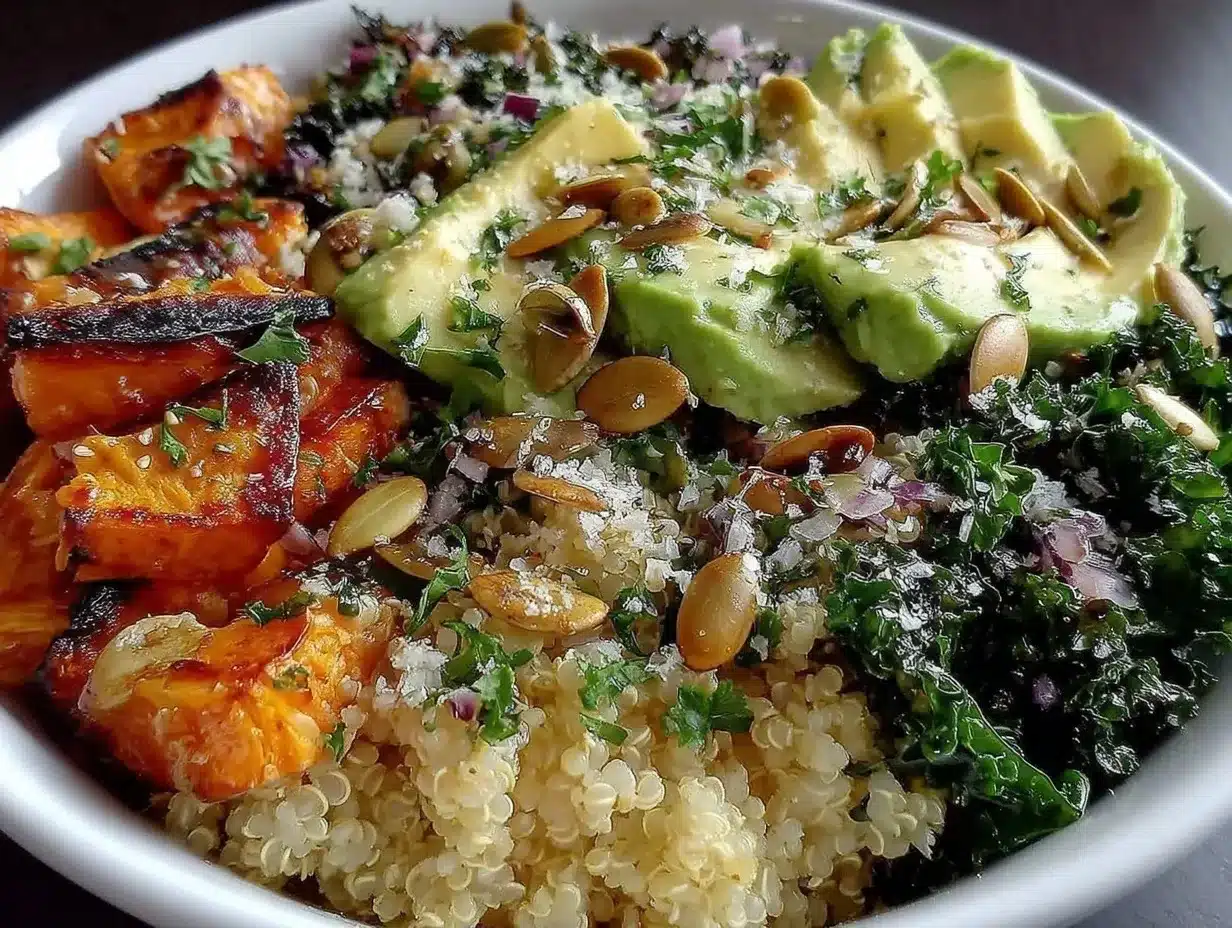
- Rinse and Prep: Start by rinsing 1 cup (200 g) of dried lentils or beans under cold water. If using canned beans, drain and rinse thoroughly. Chop 1 medium onion, 2 cloves of garlic, 2 carrots, and 1 bell pepper (if using) into small, even pieces. This step takes about 10 minutes.
- Sauté the Base: Heat 1 tablespoon (15 ml) of olive oil in a large pot over medium heat. Add the chopped onions and garlic, cooking until softened and fragrant—about 5 minutes. Toss in the carrots and bell peppers, stir well, and cook for another 4 minutes until veggies start to soften.
- Add Spices: Sprinkle in 1 teaspoon (2 g) cumin, 1 teaspoon (2 g) smoked paprika, ½ teaspoon (1 g) chili powder, ½ teaspoon (1 g) dried oregano, and a pinch of black pepper. Stir constantly for 1 minute to toast the spices and release their flavors.
- Combine Main Ingredients: Pour in 1 can (14.5 oz / 411 g) diced tomatoes, 2 tablespoons (30 g) tomato paste, and 2 cups (480 ml) vegetable broth. Stir to combine. Add the rinsed lentils or beans and bring to a simmer. This should take about 5 minutes.
- Simmer Until Tender: Lower heat, cover, and let simmer gently for 25-30 minutes, stirring occasionally. Lentils should be tender but not mushy. If using dried beans, soak overnight and adjust cooking time accordingly (usually 45 minutes to 1 hour). Add water or broth if mixture gets too thick.
- Prepare Grain Base: While the stew simmers, cook 1 cup (185 g) of rice or quinoa according to package instructions. Generally, simmer in 2 cups (480 ml) water for 15-20 minutes until fluffy.
- Final Touches: Once the stew is done, taste and adjust salt and pepper. Stir in a handful of chopped fresh herbs if you have them. A squeeze of lemon or lime juice brightens the flavors right before serving.
- Plate and Serve: Spoon the stew over the cooked rice or quinoa. Enjoy warm, maybe with a side of steamed greens or a simple salad.
Pro tip: If the stew tastes a bit flat, a dash of soy sauce or a teaspoon of nutritional yeast adds umami without extra cost. Also, when reheating leftovers, add a splash of water or broth to loosen things up—it thickens as it sits.
Cooking Tips & Techniques
Getting these meals right is more about timing and layering flavors than complicated steps. One thing I learned the hard way is that under-seasoning is the biggest culprit for dull vegan dishes. Don’t be shy with spices and salt—they bring life to simple ingredients.
When cooking lentils or beans, keep an eye on texture. Overcooked legumes can turn mushy, which some like, but I prefer a bit of bite for texture contrast. If you’re short on time, canned beans are a lifesaver, but always rinse them well to reduce sodium and improve taste.
Sautéing onions and garlic slowly before adding other ingredients creates a flavor base that’s richer and more satisfying. It’s tempting to rush, but those few extra minutes matter.
Batch cooking is your friend here. Making a big pot means you can enjoy leftovers or pack meals for work. Just remember to cool leftovers quickly and store them in airtight containers to keep flavors fresh.
Finally, don’t be afraid to mix and match veggies based on what’s affordable or in season. This adaptability keeps the recipes fresh and your budget intact.
Variations & Adaptations
These healthy budget vegan meals are super flexible. Here are some ways to switch things up without adding cost or complexity:
- Seasonal Swaps: Substitute carrots and bell peppers with zucchini or summer squash in warmer months. Root vegetables like parsnips or turnips work great in fall and winter.
- Grain Options: Swap rice for barley, bulgur, or even pasta to change textures and flavors. Using leftover grains is a smart way to reduce waste.
- Spice Variations: Try curry powder or garam masala for an Indian-inspired twist, or add chipotle powder for smoky heat.
- Protein Boost: Add tofu cubes or tempeh if your budget allows, or blend cooked beans into the stew for extra creaminess without changing the price much.
- Personal Favorite: I once stirred in a spoonful of peanut butter to one of these stews for a creamy, nutty flavor that surprised my friends and made the meal feel extra special.
Adapting these meals to different diets is easy—just swap out ingredients you’re avoiding. For example, use gluten-free grains if needed, or skip any optional oil and replace it with water sautéing for oil-free cooking.
Serving & Storage Suggestions
These meals taste best warm and fresh, but they’re also fantastic as leftovers. Serve them over rice, quinoa, or even mashed potatoes for a filling plate. A sprinkle of fresh herbs or a dash of hot sauce adds a nice finishing touch.
For storage, cool leftovers within two hours and transfer to airtight containers. They keep well in the fridge for up to 4 days. You can also freeze portions in freezer-safe containers or bags for up to 3 months—perfect for meal prepping busy weeks.
Reheating is simple: warm gently on the stovetop or microwave with a splash of water or broth to keep the stew from drying out. Flavors often deepen after sitting overnight, so leftovers can taste even better than the first day.
Pair these meals with a crisp green salad or roasted veggies for variety. If you want a twist, try them alongside a crispy broccoli salad with bacon crunch (vegan bacon alternatives work nicely) to round out the meal.
Nutritional Information & Benefits
Each serving (roughly 1.5 cups of stew plus ½ cup cooked grain) typically contains around 300-350 calories, 15-20 grams of protein, 7-10 grams of fiber, and minimal fat depending on oil used. These meals are naturally cholesterol-free and full of plant-based nutrients.
Key ingredients like lentils and beans provide essential protein and fiber, helping with digestion and sustained energy. The vegetables add vitamins A and C, while spices like cumin and paprika offer antioxidants.
For those watching sodium, using low-sodium broth and rinsed canned beans keeps salt in check. These meals are gluten-free if you choose gluten-free grains, making them accessible to many dietary needs.
From a wellness perspective, eating budget-friendly vegan meals like these helps maintain a balanced diet without sacrificing nutrients or flavor—a win for both your health and your wallet.
Conclusion
Healthy budget vegan meals under $2 per serving prove that eating well doesn’t have to be expensive or complicated. These recipes are a testament to how simple ingredients, thoughtful seasoning, and a little kitchen know-how can produce satisfying, nutritious meals.
Feel free to customize based on your pantry, preferences, or what’s on sale. Whether you’re new to vegan cooking or just looking to save money, these meals make it easy to eat wholesome food that tastes good and feels good.
Personally, I love how these dishes bring comfort on a tight budget and how they’ve helped me stay consistent with plant-based eating. If you try them, I’d love to hear what tweaks you made or how they fit into your routine—sharing those little wins makes cooking even better.
Here’s to tasty, nourishing meals that don’t empty your wallet—happy cooking!
Frequently Asked Questions
Can I make these meals ahead and freeze them?
Yes! These meals freeze very well. Store portions in airtight containers or freezer bags for up to 3 months. Thaw overnight in the fridge before reheating gently on the stove or microwave.
Are these meals suitable for beginners in cooking?
Absolutely. The recipes are straightforward with simple steps and common ingredients, making them great for anyone new to cooking or vegan meals.
How can I add more protein to these meals without increasing cost much?
Adding extra beans or lentils is your best bet. You can also blend some cooked beans into the sauce for creaminess and protein without noticeable changes.
What if I don’t have all the spices listed?
No worries! Use what you have—basic salt, pepper, garlic powder, or onion powder can work. Try to use at least one or two spices to add depth, and adjust seasoning to taste.
Can I substitute rice with other grains?
Yes, grains like quinoa, barley, bulgur, or even pasta can be used depending on your preference and availability. Just adjust cooking times accordingly.
Pin This Recipe!
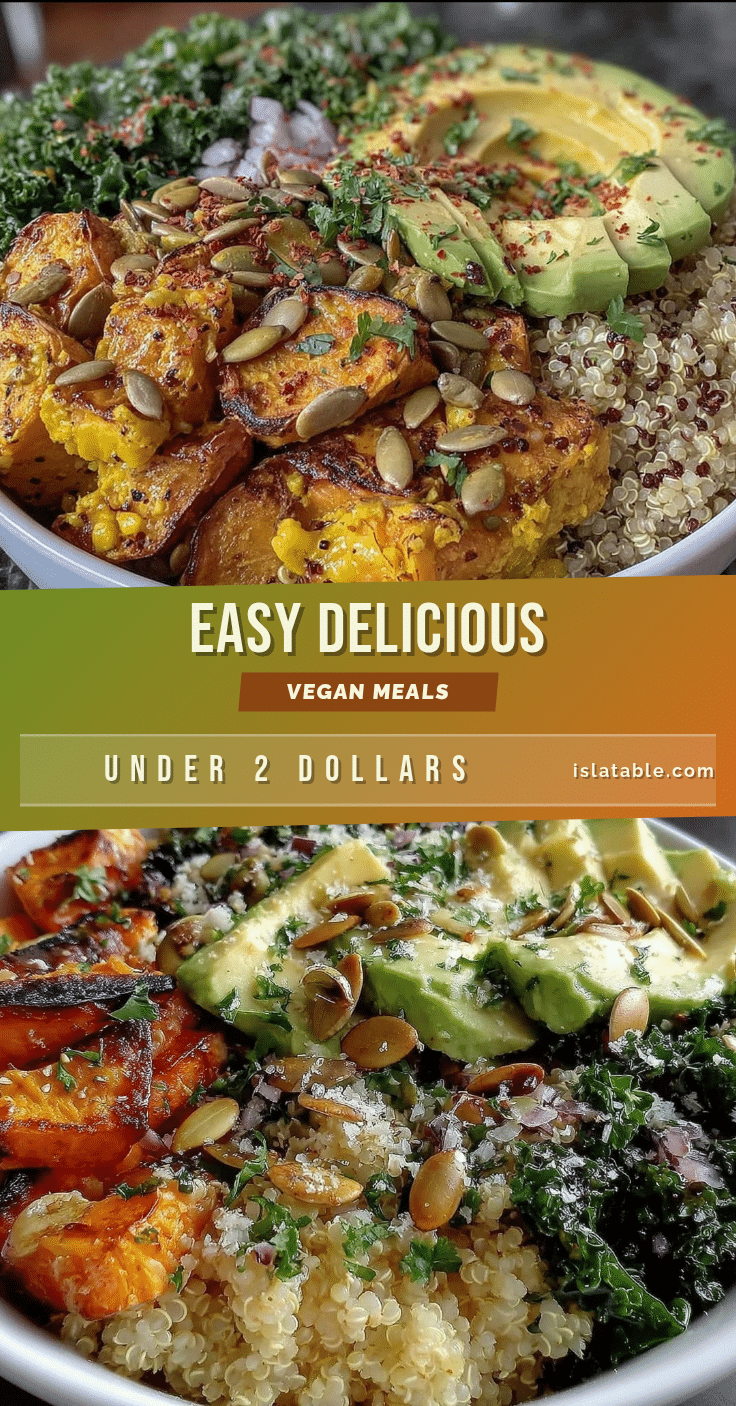
Healthy Budget Vegan Meals Under 2 Dollars
Hearty, satisfying vegan meals made with simple pantry staples that cost under $2 per serving, perfect for beginners and budget-conscious cooks.
- Prep Time: 10 minutes
- Cook Time: 35 minutes
- Total Time: 45 minutes
- Yield: 4 servings 1x
- Category: Main Course
- Cuisine: Vegan, Budget-Friendly
Ingredients
- 1 cup dried or canned lentils (brown or green)
- 1 cup brown rice or white rice
- 1 can (14.5 oz) diced tomatoes
- 2 tablespoons tomato paste
- 2 cups vegetable broth (low sodium preferred)
- 1 medium onion (yellow or white), chopped
- 2 cloves garlic, minced
- 2 carrots, chopped
- 1 bell pepper, chopped (optional)
- 1 teaspoon cumin
- 1 teaspoon smoked paprika
- 1/2 teaspoon chili powder
- 1/2 teaspoon dried oregano
- Pinch of black pepper
- 1 tablespoon olive oil or neutral oil
- Salt to taste
- Optional: lemon or lime juice, fresh herbs like cilantro or parsley
Instructions
- Rinse 1 cup of dried lentils or beans under cold water. If using canned beans, drain and rinse thoroughly. Chop 1 medium onion, 2 cloves of garlic, 2 carrots, and 1 bell pepper (if using) into small pieces.
- Heat 1 tablespoon of olive oil in a large pot over medium heat. Add chopped onions and garlic and cook until softened and fragrant, about 5 minutes.
- Add carrots and bell peppers, stir well, and cook for another 4 minutes until veggies start to soften.
- Sprinkle in 1 teaspoon cumin, 1 teaspoon smoked paprika, 1/2 teaspoon chili powder, 1/2 teaspoon dried oregano, and a pinch of black pepper. Stir constantly for 1 minute to toast the spices.
- Pour in 1 can diced tomatoes, 2 tablespoons tomato paste, and 2 cups vegetable broth. Stir to combine. Add rinsed lentils or beans and bring to a simmer, about 5 minutes.
- Lower heat, cover, and simmer gently for 25-30 minutes, stirring occasionally, until lentils are tender but not mushy. If using dried beans, soak overnight and cook 45 minutes to 1 hour. Add water or broth if mixture thickens too much.
- While stew simmers, cook 1 cup rice or quinoa according to package instructions (generally 15-20 minutes simmering in 2 cups water).
- Taste stew and adjust salt and pepper. Stir in chopped fresh herbs and a squeeze of lemon or lime juice if desired.
- Serve stew over cooked rice or quinoa warm.
Notes
Use canned beans to save time but rinse well to reduce sodium. Adjust spices to taste and add soy sauce or nutritional yeast for extra umami. Leftovers reheat well with a splash of water or broth to loosen consistency. Swap veggies seasonally to keep costs down and flavors fresh.
Nutrition
- Serving Size: Approximately 1.5 cu
- Calories: 325
- Sugar: 6
- Sodium: 250
- Fat: 6
- Saturated Fat: 0.8
- Carbohydrates: 50
- Fiber: 8
- Protein: 18
Keywords: vegan, budget meals, healthy, lentils, rice, easy recipes, plant-based, affordable, beginner-friendly