“You sure that’s edible?” my neighbor asked, eyeing the wild greens I’d just tossed into my shopping bag. Honestly, I wasn’t totally convinced myself at first. The dandelions growing rampant in my backyard had always been a bit of a nuisance—those bright yellow flowers and jagged leaves more of a weed than a wonder. But after a particularly rough week, I found myself craving something fresh, bright, and a little different. That’s when I stumbled on the idea of making a fresh dandelion green pesto with lemon zest and aged Pecorino.
It was late afternoon, the kitchen was quiet except for the hum of the blender, and the scent of lemon zest mingled with the sharp, earthy aroma of dandelion leaves. I’d never made pesto from dandelions before—usually basil is the go-to—but the leaves had this wild, peppery note that I thought could really surprise a tired palate. Plus, I had a wedge of aged Pecorino that begged for a starring role.
That first batch didn’t come out perfect—too bitter, maybe, or a little too thick—but I kept tweaking it, adjusting the lemon, balancing the cheese, and adding just the right splash of olive oil. Now, whenever that fresh green pesto hits the table, it feels like a little celebration of the unexpected. It’s bright, it’s tangy, and it’s wild in the best way possible. Sometimes, culinary magic really does come from the things you least expect.
So, if you’re the type to wander outside and grab whatever greens are growing freely, or just want to try something a little different and fresh, this fresh dandelion green pesto with lemon zest and aged Pecorino might just become your new favorite. It’s the kind of recipe that sneaks up on you, then sticks around because it just makes dinner better.
Why You’ll Love This Fresh Dandelion Green Pesto Recipe
This fresh dandelion green pesto with lemon zest and aged Pecorino is one of those kitchen wins that feels both rustic and refined. After cooking and testing this recipe multiple times, I can say it’s a keeper, and here’s why:
- Quick & Easy: You can whip this pesto up in under 15 minutes—perfect for busy weeknights or when you need a last-minute sauce that feels fancy.
- Simple Ingredients: No need to hunt down exotic items. Dandelion greens might be the wild card, but lemon, Pecorino, garlic, and nuts are staples in most kitchens.
- Perfect for Spring and Early Summer: This recipe shines when dandelion greens are fresh and tender. It’s a lovely way to celebrate the season’s bounty.
- Crowd-Pleaser: The bright lemon zest and sharp Pecorino balance the earthiness of the greens, making it a hit even with skeptics—kids included!
- Unbelievably Delicious: The pesto’s texture is silky but still a bit rustic, offering a satisfying bite with every forkful.
- Unique Twist: Unlike traditional basil pesto, the peppery kick of dandelion greens paired with lemon zest adds an unexpected freshness that wakes up your taste buds.
This recipe isn’t just another green sauce—it’s a fresh take on a classic, perfect for impressing guests or turning an ordinary pasta night into something memorable. The combination of wild greens with the tangy cheese and citrus zest is honestly a small revelation. Trust me, once you try this, you’ll see why I keep coming back to it, week after week.
What Ingredients You Will Need
This fresh dandelion green pesto recipe uses simple, wholesome ingredients to deliver bold flavor and satisfying texture without the fuss. Most of these are pantry staples, and the dandelion greens can be easily foraged or found at farmers’ markets.
- Dandelion Greens: About 3 cups, washed and tough stems removed (young leaves work best to avoid bitterness)
- Extra Virgin Olive Oil: ½ cup (cold-pressed preferred for richer flavor)
- Aged Pecorino Cheese: ½ cup grated (I recommend Pecorino Romano for its sharp, salty depth)
- Fresh Lemon Zest: Zest of 1 medium lemon (adds brightness and balances the greens’ earthiness)
- Garlic Cloves: 2 medium, peeled (roasted garlic can be swapped for a milder flavor)
- Toasted Pine Nuts: ¼ cup (cashews or walnuts work well as alternatives)
- Sea Salt: ½ to 1 teaspoon, to taste
- Freshly Ground Black Pepper: A few grinds, to taste
If dandelion greens aren’t easy to find, you can substitute with a mix of arugula and spinach, but trust me—the unique flavor of dandelions is worth the search. For a dairy-free twist, swap Pecorino for nutritional yeast or a vegan hard cheese alternative.
Equipment Needed
- Food Processor or Blender: Essential for getting that smooth pesto texture. I’ve found a food processor works best for controlling the consistency, but a high-speed blender can do the job if you pause and scrape frequently.
- Microplane or Zester: To get fine lemon zest without the bitter pith.
- Measuring Cups and Spoons: For precise ingredient amounts.
- Spatula: To scrape down the sides of your processor or blender.
- Glass Jar or Airtight Container: For storing leftover pesto in the fridge.
If you don’t have a food processor, a mortar and pestle is a charming alternative—hand-crushed pesto has a rustic texture I adore. Just be ready to put in a bit more elbow grease! Also, a good quality olive oil really makes a difference; I’m partial to California or Italian extra virgin olive oils that have a fruity, peppery finish.
Preparation Method
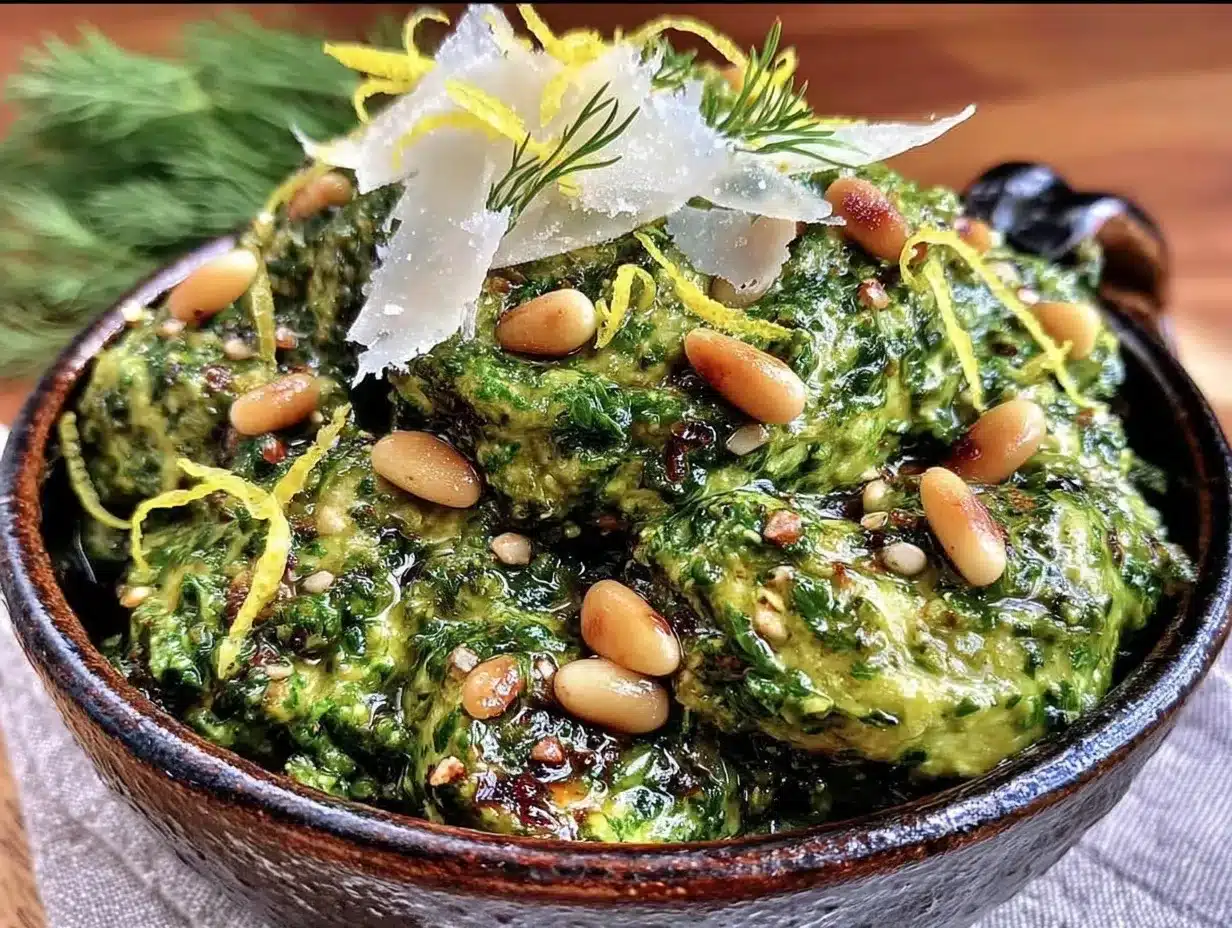
- Prepare the Dandelion Greens: Rinse about 3 cups of dandelion greens thoroughly to remove any grit. Pat them dry with a clean towel or use a salad spinner (about 5 minutes). Trim off the thicker stems to avoid bitterness.
- Toast the Pine Nuts: In a dry skillet over medium heat, toast ¼ cup pine nuts for 3-5 minutes, stirring frequently until golden and fragrant. Be careful—they can burn quickly. Remove from heat and let cool.
- Grate the Pecorino Cheese: Measure ½ cup of finely grated aged Pecorino. Freshly grated cheese blends more smoothly than pre-grated.
- Zest the Lemon: Using a microplane, zest one medium lemon, avoiding the white pith. Set aside the zest and squeeze out a tablespoon of lemon juice to add later if desired.
- Combine Ingredients: In your food processor, add the dandelion greens, toasted pine nuts, grated Pecorino, garlic cloves, lemon zest, and a pinch of sea salt. Pulse a few times to begin breaking down the greens.
- Add Olive Oil: While pulsing, slowly drizzle in ½ cup of extra virgin olive oil. Stop to scrape the sides as needed. Continue processing until the pesto reaches your desired consistency—somewhere between chunky and smooth (about 1-2 minutes).
- Taste and Adjust: Add freshly ground black pepper and more sea salt if needed. If the pesto tastes too bitter, a splash of lemon juice can brighten and balance the flavors.
- Store or Serve: Transfer the pesto to a glass jar or bowl. If not using immediately, pour a thin layer of olive oil on top to prevent oxidation. Refrigerate and use within 3-4 days.
Note: If your pesto thickens in the fridge, stir in a little olive oil or warm water before serving to loosen it up. The aroma of lemon zest right before serving really brings this pesto alive, so don’t skip that step!
Cooking Tips & Techniques
Making fresh dandelion green pesto is straightforward, but a few tips from my kitchen trials can save you some headaches:
- Manage Bitterness: Dandelion greens can be bitter if mature. Always use young, tender leaves, and don’t over-pulse—the texture should stay a bit rustic.
- Toast Your Nuts: Toasting pine nuts or any substitute nuts adds a warm, nutty flavor that deepens the pesto’s complexity. Just watch them closely—they burn fast!
- Balance Flavors Carefully: Lemon zest and aged Pecorino bring brightness and saltiness respectively. Add them gradually and taste as you go.
- Use Quality Olive Oil: A good olive oil will make the pesto shine. Avoid light or refined oils here.
- Work Quickly: Pesto oxidizes and loses its vibrant green color fast. Blend just before serving or store with an olive oil barrier on top.
- Multi-task Like a Pro: While the pesto blends, you can boil pasta or prep vegetables to streamline meal prep.
One mistake I made early on was skipping the lemon zest; it really wakes up the pesto and keeps it from tasting flat. Also, blending too long can turn your pesto into a puree—personally, I like a bit of texture left, so I pulse in short bursts.
Variations & Adaptations
Fresh dandelion green pesto is surprisingly versatile. Here are some ways to tweak it for your preferences or dietary needs:
- Nut-Free Version: Swap pine nuts for toasted sunflower seeds or pumpkin seeds for allergy-friendly pesto.
- Vegan Adaptation: Replace Pecorino with nutritional yeast or a vegan hard cheese substitute. Add a touch of miso for umami depth.
- Seasonal Twist: In early spring, mix dandelion greens with fresh nettles or wild garlic for a more complex green flavor profile.
- Herbal Boost: Add a handful of fresh parsley or basil for a milder, more familiar pesto with extra freshness.
- Spicy Kick: Toss in a pinch of red pepper flakes or a small fresh chili for a pesto with attitude.
Personally, I’ve tried blending in some fresh sorrel for a lemony tang when I ran out of lemon zest—it was a happy accident that gave the pesto a new dimension. Feel free to experiment and find your own signature pesto twist.
Serving & Storage Suggestions
This fresh dandelion green pesto is incredibly versatile when it comes to serving. It’s perfect tossed with pasta, spread on toasted crusty bread, or dolloped over grilled chicken or fish. The lemon zest makes it particularly refreshing served cold or at room temperature.
For a bright spring meal, I like to serve it alongside a crisp salad or a batch of healthy keto coleslaw—the creamy dressing contrasts beautifully with the zesty pesto.
Store leftover pesto in an airtight container in the refrigerator for up to 4 days. To prevent browning, pour a thin layer of olive oil on top before sealing. For longer storage, freeze pesto in ice cube trays, then transfer cubes to a freezer bag—perfect for quick flavor boosts later on.
When reheating, avoid direct heat; instead, stir pesto into warm pasta or dishes off the heat to preserve its fresh flavor and texture. Over time, the flavors mellow but maintain that distinct lemony brightness.
Nutritional Information & Benefits
This fresh dandelion green pesto is a nutrient-dense addition to your meals. Dandelion greens themselves are rich in vitamins A, C, and K, as well as calcium and antioxidants, which support immune health and bone strength. The olive oil provides heart-healthy monounsaturated fats, while Pecorino adds protein and calcium.
Per serving (about 2 tablespoons), you can expect roughly 120 calories, 10 grams of fat (mostly healthy fats), 3 grams of protein, and minimal carbs, making it a great option for low-carb and keto diets.
Be mindful that Pecorino contains dairy and the pine nuts are tree nuts, so those with allergies should substitute accordingly. Overall, this pesto is a flavorful way to add greens and healthy fats to your diet without extra sugars or processed ingredients.
Conclusion
This fresh dandelion green pesto with lemon zest and aged Pecorino is one of those recipes that quietly transforms ordinary meals. It’s the kind of sauce that brings a little wild freshness to the table, showcasing the unexpected beauty of foraged greens. I love how it balances sharp, tangy, and earthy notes without feeling heavy or overdone.
Whether you’re a home cook who loves trying new garden finds or someone looking to switch up your usual pesto routine, this recipe offers a bright, delicious alternative. Don’t be afraid to adjust the lemon, cheese, or nuts to fit your taste—there’s room to make it your own.
If you give this pesto a try, I’d love to hear how you served it or any variations you came up with. Sharing those small tweaks is part of the fun—after all, cooking is as much about experimentation as it is tradition. Here’s to fresh flavors and happy cooking!
Frequently Asked Questions about Fresh Dandelion Green Pesto
Can I use other greens instead of dandelion?
Yes, young kale, arugula, or spinach can work, though the flavor will be milder. Dandelion adds a unique peppery bite that’s hard to replicate exactly.
How do I remove bitterness from dandelion greens?
Use young, tender leaves and remove thicker stems. Blanching the greens briefly in boiling water, then shocking in ice water, can also reduce bitterness.
Is this pesto gluten-free?
Absolutely! This pesto contains no gluten ingredients and is safe for gluten-free diets.
Can I make this pesto ahead of time?
Yes, store it in the refrigerator with a layer of olive oil on top for up to 4 days or freeze in small portions for longer storage.
What dishes pair well with this pesto?
It’s fantastic with pasta, roasted vegetables, grilled meats, or as a spread on sandwiches. Try it with your favorite indoor smokeless BBQ chicken for an extra flavor boost.
Pin This Recipe!
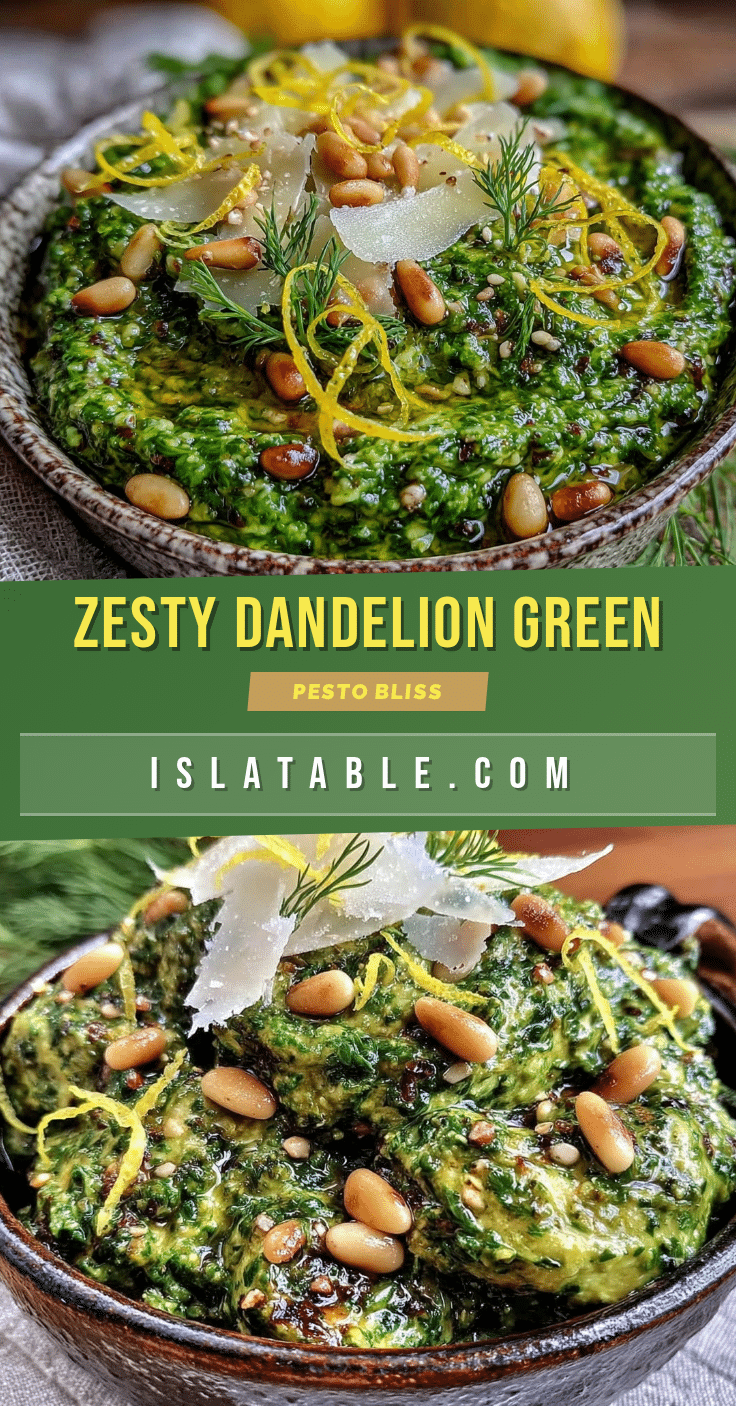
Fresh Dandelion Green Pesto Recipe Easy Homemade with Lemon Zest and Pecorino
A bright, tangy pesto made from fresh dandelion greens, lemon zest, and aged Pecorino cheese. This unique pesto offers a peppery twist on the classic basil version and is perfect for spring and early summer.
- Prep Time: 10 minutes
- Cook Time: 5 minutes
- Total Time: 15 minutes
- Yield: About 1 cup (approximately 8 servings of 2 tablespoons each) 1x
- Category: Sauce
- Cuisine: Italian-inspired
Ingredients
- 3 cups dandelion greens, washed and tough stems removed
- 1/2 cup extra virgin olive oil (cold-pressed preferred)
- 1/2 cup aged Pecorino cheese, grated
- Zest of 1 medium lemon
- 2 medium garlic cloves, peeled
- 1/4 cup toasted pine nuts (cashews or walnuts as alternatives)
- 1/2 to 1 teaspoon sea salt, to taste
- Freshly ground black pepper, to taste
Instructions
- Rinse about 3 cups of dandelion greens thoroughly to remove any grit. Pat dry with a clean towel or use a salad spinner. Trim off thicker stems to avoid bitterness.
- Toast 1/4 cup pine nuts in a dry skillet over medium heat for 3-5 minutes, stirring frequently until golden and fragrant. Remove from heat and let cool.
- Grate 1/2 cup of aged Pecorino cheese finely.
- Using a microplane, zest one medium lemon, avoiding the white pith. Set aside the zest and squeeze out a tablespoon of lemon juice to add later if desired.
- In a food processor, add dandelion greens, toasted pine nuts, grated Pecorino, garlic cloves, lemon zest, and a pinch of sea salt. Pulse a few times to begin breaking down the greens.
- While pulsing, slowly drizzle in 1/2 cup extra virgin olive oil. Stop to scrape the sides as needed. Continue processing until pesto reaches desired consistency, about 1-2 minutes.
- Add freshly ground black pepper and more sea salt if needed. If pesto tastes too bitter, add a splash of lemon juice to brighten and balance flavors.
- Transfer pesto to a glass jar or bowl. If not using immediately, pour a thin layer of olive oil on top to prevent oxidation. Refrigerate and use within 3-4 days.
Notes
Use young, tender dandelion leaves to avoid bitterness. Toast nuts carefully to avoid burning. Add lemon juice to balance bitterness if needed. Store pesto with a thin layer of olive oil on top to prevent oxidation. If pesto thickens in fridge, stir in olive oil or warm water before serving.
Nutrition
- Serving Size: 2 tablespoons
- Calories: 120
- Sugar: 0.5
- Sodium: 150
- Fat: 10
- Saturated Fat: 1.5
- Carbohydrates: 2
- Fiber: 1
- Protein: 3
Keywords: dandelion pesto, green pesto, homemade pesto, lemon zest pesto, Pecorino pesto, wild greens, easy pesto recipe, spring pesto