I didn’t trust kale in pasta. For years, it was the one green I’d push to the side, convinced it would turn into a sad, chewy mess the second it hit a hot pan. My husband, who eats anything green without complaint, kept suggesting I add it to our fall pasta nights, and I kept finding reasons not to. Too tough. Too bitter. Too much work for something that would just get in the way of the good stuff—the sausage, the cheese, the comforting carbs.
Then came a Tuesday in late October when the farmer’s market had practically nothing left but kale and squash, and I was out of excuses. I grabbed a bunch of lacinato kale (the flat-leaf kind, not the curly stuff that gets stuck in your teeth), figuring if it was going to ruin dinner, at least I’d tried. I browned some spicy Italian sausage in my biggest skillet, let the rendered fat coat the bottom, and threw in the kale without thinking too hard about it. The way it wilted down into these deep green ribbons, soaking up all that porky goodness, caught me off guard. (Honestly, I stood there staring at the pan like it had done something wrong.)
That first bite was a quiet apology to every kale leaf I’d ever dismissed. The slight bitterness balanced the rich sausage, the tender leaves clung to the pasta just right, and a splash of pasta water pulled everything together into something that felt way more intentional than a desperate Tuesday dinner. I’ve made this Easy Fall Harvest Pasta with Sausage and Kale at least a dozen times since, tweaking the garlic ratio, testing different cheeses, and figuring out the exact moment to add the kale so it stays vibrant without turning limp. It’s become the meal I reach for when the air gets crisp and I need something that feels like a warm sweater on a plate. Trust me on this one—even if you’re a kale skeptic, this recipe will change your mind.
Why You’ll Love This Recipe
This isn’t just another pasta recipe you’ll make once and forget about. I’ve tested this one through multiple fall seasons, tweaking the technique until every element works in harmony. The sausage renders down to create a built-in sauce base, the kale transforms from tough to tender in under three minutes, and the whole thing comes together faster than you can order takeout.
- Quick & Easy: From start to table in 30 minutes flat. No complicated techniques, no specialty equipment, and no waiting around. Perfect for those weeknights when you’re staring at the clock wondering what’s for dinner.
- Simple Ingredients: You’ll find everything at a regular grocery store. No hunting down obscure produce or specialty oils. Most of these ingredients are probably in your kitchen right now—or close to it.
- Perfect for Fall: This is the kind of meal that makes you want to light a candle, pour a glass of red wine, and pretend you’re at a cozy Italian trattoria. The flavors scream autumn without being fussy about it.
- Crowd-Pleaser: I’ve served this to picky kids, skeptical in-laws, and friends who swear they don’t like kale. Every single person asked for seconds. The sausage does the heavy lifting, but the kale earns its keep.
- Unbelievably Delicious: The magic here is in the balance. Spicy sausage meets sweet roasted squash meets bitter kale meets salty Parmesan. Every bite hits a different note, and somehow they all harmonize.
What makes this recipe different from the dozens of other fall pasta recipes out there is the technique. Instead of wilting the kale into submission, I sauté it just until it brightens and softens, then let the residual heat finish the job. The sausage gets deeply browned—not just cooked—which creates those crispy bits that stick to the pasta and make every forkful interesting. And the pasta water? That’s the secret weapon. The starchy liquid binds everything together into a silky, cohesive sauce without needing heavy cream or butter. It’s comfort food that feels honest, not heavy.
This recipe is the kind that makes you close your eyes after the first bite—not because it’s fancy or complicated, but because it tastes like exactly what you needed. It’s perfect for impressing guests without breaking a sweat, or turning a random Tuesday into something worth remembering.
What Ingredients You Will Need
This recipe relies on simple, high-quality ingredients that work together to create something greater than the sum of their parts. Most are pantry staples or easy fall finds, and I’ve included notes on substitutions where they work well.
For the Pasta
- 12 ounces short pasta (rigatoni, penne, or fusilli work best—the ridges catch the sauce). I prefer De Cecco or Barilla for consistent texture. If you’re gluten-free, use a brown rice or chickpea pasta, but watch the cooking time closely.
- 1 tablespoon kosher salt for the pasta water (plus more for seasoning). Don’t skip this—properly salted pasta water is the foundation of good flavor.
For the Sauce and Mix-Ins
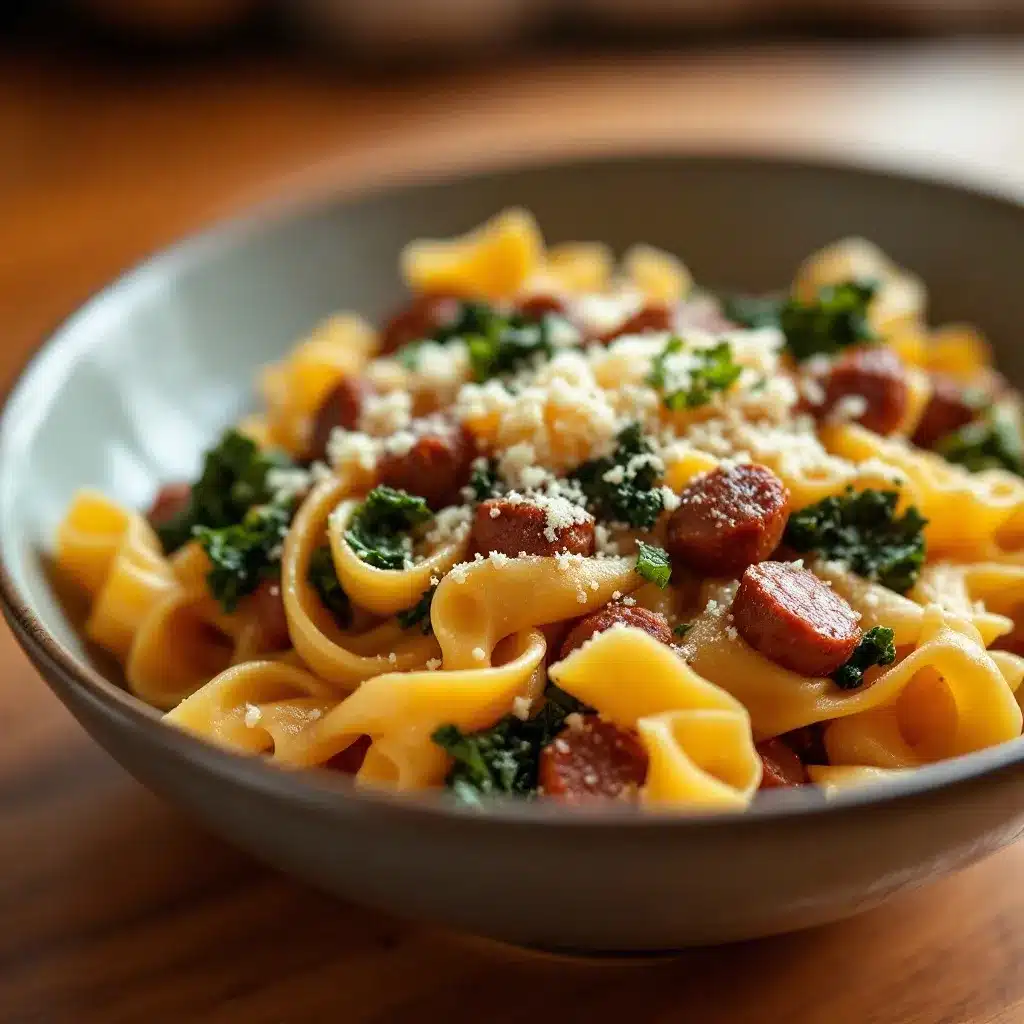
- 1 pound spicy Italian sausage (casings removed). Sweet Italian sausage works too, but the heat from the spicy version cuts through the richness beautifully. I like Johnsonville or a local butcher’s house-made sausage for the best flavor.
- 1 medium yellow onion, diced (about 1 cup). Red onion works in a pinch, but yellow gives the sweetest, most mellow base.
- 4 cloves garlic, minced. Adjust to your preference—I’ve gone up to 6 cloves without regret. Fresh is non-negotiable here; the jarred stuff won’t give you the same punch.
- 1 bunch lacinato kale (also called dinosaur or Tuscan kale), stems removed and leaves chopped into bite-sized ribbons. About 4-5 cups loosely packed. Curly kale works too, but it takes slightly longer to wilt and has a tougher texture.
- 1 cup butternut squash, cut into ½-inch cubes (about half a small squash). Pre-cut squash from the grocery store saves time, but fresh tastes noticeably better. You can also use delicata squash (no peeling needed) or sweet potato.
- ½ cup dry white wine (like Pinot Grigio or Sauvignon Blanc). Chicken or vegetable broth works as a substitute if you don’t cook with wine.
- ½ cup reserved pasta water (save it before draining). This is crucial for creating a silky sauce without cream.
- ½ cup grated Parmesan cheese, plus more for serving. Buy a block and grate it yourself—the pre-shredded stuff has anti-caking agents that prevent smooth melting. For a dairy-free option, use nutritional yeast or a vegan Parmesan alternative.
- 2 tablespoons olive oil (for roasting the squash). A good-quality extra virgin olive oil makes a difference here.
- Red pepper flakes (optional, for extra heat). I add a pinch at the end when I’m feeling bold.
The beauty of this ingredient list is its flexibility. If you can’t find butternut squash, swap in acorn squash or even diced carrots. No kale? Swiss chard or spinach will work—just adjust the cooking time since spinach wilts much faster. And if you’re watching your carb intake, this pairs beautifully with a cauliflower rice bowl approach, swapping the pasta for roasted cauliflower florets.
Equipment Needed
You don’t need a professional kitchen to pull this off. Here’s what you’ll actually use:
- Large pot for boiling pasta (at least 5 quarts). A stockpot works great, but any large pot will do.
- Large skillet or Dutch oven (12-inch preferred). A heavy-bottomed pan distributes heat evenly and prevents the sausage from burning. I use my trusty Lodge cast iron skillet, but a stainless steel or non-stick pan works fine too.
- Baking sheet for roasting the squash. Line it with parchment paper for easier cleanup.
- Chef’s knife and cutting board. A sharp knife makes quick work of the kale and squash—dull knives are dangerous and frustrating.
- Wooden spoon or spatula for breaking up the sausage. The flat edge of a wooden spoon works best for getting those crispy bits.
- Measuring cups and spoons. Eyeballing the pasta water can lead to a watery sauce, so measure carefully.
- Colander for draining pasta. And a liquid measuring cup to catch that precious pasta water.
- Microplane or box grater for fresh Parmesan. The microplane gives you fluffy, melt-in-your-mouth cheese that clings to the pasta beautifully.
If you don’t have a Dutch oven, any deep skillet with a lid will work. And if you’re short on time, you can skip roasting the squash and sauté it directly in the skillet with the onions—just cut the cubes smaller so they cook through faster.
Preparation Method
- Preheat your oven to 400°F (200°C). While it heats up, toss the cubed butternut squash with 1 tablespoon of olive oil and a pinch of salt on a baking sheet. Spread them in a single layer—crowding leads to steaming instead of roasting. Roast for 15-18 minutes, flipping halfway through, until the edges are golden and the squash is fork-tender. (Pro tip: the smaller you cut the cubes, the faster they roast. Aim for ½-inch dice.)
- Bring a large pot of water to a rolling boil. Add 1 tablespoon of kosher salt—the water should taste like the sea. Add your pasta and cook according to package directions until al dente. For most short pastas, that’s about 8-10 minutes. Here’s the critical part: right before you drain the pasta, scoop out 1 cup of the starchy pasta water and set it aside. This liquid gold is what creates that silky, cohesive sauce. Drain the pasta and set it aside (don’t rinse it—you want that starch on the noodles).
- While the pasta cooks, start the sausage. Heat your large skillet over medium-high heat. Add the sausage (no oil needed—the fat renders out as it cooks). Break it up with a wooden spoon into small crumbles. Let it cook undisturbed for 2-3 minutes to develop a deep brown crust, then stir and continue cooking until fully cooked through and crispy in spots, about 5-6 minutes total. Use a slotted spoon to transfer the sausage to a plate, leaving about 2 tablespoons of rendered fat in the pan. (If there’s too much fat, pour off the excess—you want just enough to coat the bottom.)
- Cook the aromatics. Reduce the heat to medium. Add the diced onion to the pan with the rendered fat and sauté for 3-4 minutes until translucent and starting to brown at the edges. Add the minced garlic and cook for 30 seconds until fragrant—don’t let it burn, or it’ll turn bitter. (I learned this the hard way when I walked away to check on the squash and came back to acrid garlic. Set a timer if you’re prone to distraction.)
- Deglaze the pan. Pour in the white wine (or broth) and scrape up all those browned bits stuck to the bottom of the pan—that’s pure flavor. Let it simmer for 1-2 minutes until reduced by half. The smell at this point is absolutely intoxicating, like the essence of fall in a pan.
- Wilt the kale. Add the chopped kale to the pan in handfuls—it’ll look like way too much, but trust me, it shrinks dramatically. Toss it with tongs and cook for 2-3 minutes until bright green and just wilted. The kale should still have some structure, not be a sad, limp mess. If you’re using curly kale, give it an extra minute.
- Bring it all together. Add the cooked pasta, roasted squash, and browned sausage back to the pan. Pour in about ½ cup of the reserved pasta water and toss everything together. The starch in the water will emulsify with the fat in the pan, creating a glossy sauce that clings to every piece of pasta. If the sauce seems too thick, add more pasta water a tablespoon at a time until it reaches the consistency you like.
- Finish with cheese. Remove the pan from the heat. Sprinkle the grated Parmesan over the pasta and toss gently until it melts into the sauce. Taste and adjust seasoning—you probably won’t need much salt since the sausage, pasta water, and cheese are all salty, but add a crack of black pepper and maybe a pinch of red pepper flakes if you want extra heat.
- Serve immediately. Divide into bowls and top with extra Parmesan and a drizzle of good olive oil if you’re feeling fancy. The pasta waits for no one—it’s best fresh, when the kale is still vibrant and the cheese is gooey and perfect.
Cooking Tips & Techniques
After making this recipe more times than I can count (including a few spectacular failures), I’ve gathered some hard-won wisdom. Here’s what I wish someone had told me the first time around.
Don’t overcook the kale. This is the number one mistake I see people make. Kale needs just 2-3 minutes in the pan—long enough to wilt and soften, but not so long that it turns into a muddy green mess. You want it to still have some bite and a vibrant color. The residual heat from the pasta and sausage will continue to cook it slightly after you remove the pan from the heat, so pull it off a minute before you think it’s done.
Brown the sausage properly. I used to rush this step, stirring constantly until the sausage was gray and uniform. Big mistake. Let the sausage sit undisturbed for a few minutes to develop a deep brown crust. Those crispy bits—called fond in fancy cooking terms—are what give the sauce its depth. If you’re using lean sausage, add a tablespoon of olive oil to help with browning.
Reserve more pasta water than you think you need. I always save a full cup, even though I usually only use about half. Different pastas release different amounts of starch, and sometimes you need more liquid to get the sauce right. It’s better to have extra than to be scrambling for a replacement. (Ask me how I know.)
Toast the squash for better flavor. Roasting at high heat caramelizes the natural sugars in the squash, giving it a sweetness that balances the spicy sausage. If you’re in a rush, you can microwave the squash cubes for 2 minutes before sautéing them in the pan, but you’ll lose some of that caramelized depth.
Use the right pasta shape. Short, ridged pastas like rigatoni, penne, or fusilli are ideal because the sauce clings to the ridges and hides inside the tubes. Long pasta like spaghetti or linguine works in a pinch, but you’ll lose some of that sauce-catching magic. If you only have long pasta, break it in half before cooking so it’s easier to toss with the chunky sauce.
Time your components. Start the squash roasting first, then get the pasta water boiling, then start the sausage. By the time the pasta is done, the squash should be roasted and the sauce should be ready to go. It’s a symphony of timing that takes practice, but once you get the hang of it, dinner comes together in a seamless 30 minutes.
Variations & Adaptations
This recipe is incredibly forgiving, and I’ve experimented with more variations than I can count. Here are the ones that actually worked well enough to make again.
Vegetarian Version: Skip the sausage and add a can of drained and rinsed chickpeas or white beans. Sauté them with the onions and garlic until they’re golden and slightly crispy. For extra umami, add a tablespoon of tomato paste or a splash of soy sauce. You can also crumble in some plant-based sausage—I’ve had good luck with the Italian-style options from Field Roast and Beyond Meat.
Dairy-Free Version: Omit the Parmesan and use nutritional yeast instead (about 2 tablespoons, or to taste). The nutritional yeast adds a cheesy, nutty flavor without any dairy. You can also use a vegan Parmesan alternative—just be aware that some brands melt better than others. For extra richness, stir in a tablespoon of olive oil or a dollop of cashew cream at the end.
Protein Swap: Chicken Italian sausage works beautifully if you want a lighter option. Turkey sausage is also good, but it’s leaner, so add a tablespoon of olive oil to the pan when browning. For a completely different vibe, try crumbled bacon or diced pancetta instead of sausage—the smoky, salty flavor pairs wonderfully with the kale and squash.
Seasonal Vegetable Swap: Butternut squash isn’t the only fall vegetable that works here. Try roasted Brussels sprouts (halved or quartered), diced sweet potatoes, or even sliced apples for a sweet-tart twist. In the spring, swap in asparagus and peas. This recipe is basically a template for whatever vegetables are at their peak.
Extra Greens: If you’re a greens fanatic (I see you), add a handful of baby spinach or arugula along with the kale. The spinach will wilt in seconds, and the arugula adds a peppery kick that cuts through the richness. You can also stir in some chopped fresh parsley or basil at the end for a fresh finish.
Gluten-Free Option: Use your favorite gluten-free pasta—I’ve had good results with chickpea pasta and brown rice pasta. Just be careful not to overcook it, as gluten-free pastas tend to get mushy faster. Reserve extra pasta water since gluten-free pastas often need more liquid to create a cohesive sauce.
I once made this with roasted delicata squash and a splash of balsamic vinegar at the end, and it was honestly one of the best versions I’ve ever had. Don’t be afraid to experiment—this recipe rewards creativity.
Serving & Storage Suggestions
This pasta is best served immediately, straight from the pan, while the kale is still vibrant and the cheese is melted and gooey. But life happens, and leftovers are a beautiful thing.
Serving Temperature: Serve hot, with extra grated Parmesan on the side. A drizzle of good olive oil right before serving adds a luxurious finish. If you’re feeling fancy, sprinkle some toasted pine nuts or crushed red pepper flakes on top for texture and heat.
What to Serve With It: A simple green salad with a lemon vinaigrette cuts through the richness beautifully. Crusty bread is non-negotiable for sopping up any leftover sauce in the bottom of the bowl. For drinks, a crisp Pinot Grigio or a light-bodied red like Pinot Noir pairs perfectly. If you’re in the mood for something sparkling, a dry Prosecco works surprisingly well.
Storing Leftovers: Transfer cooled pasta to an airtight container and refrigerate for up to 4 days. The flavors actually meld and deepen overnight, making leftovers almost better than the original. (Don’t tell anyone I said that.)
Reheating: The microwave works in a pinch, but the stovetop is better. Add a splash of water or broth to a skillet, add the leftover pasta, and reheat over medium heat, stirring occasionally, until warmed through. The added liquid helps revive the sauce and prevents the pasta from drying out. If the kale looks a little sad, stir in a handful of fresh spinach to brighten things up.
Freezing: This pasta freezes well for up to 3 months. Let it cool completely, then transfer to a freezer-safe container or zip-top bag. To reheat, thaw overnight in the refrigerator, then reheat on the stovetop with a splash of water or broth. The texture of the kale will be softer after freezing, but the flavor will still be excellent.
One thing I’ve noticed: the flavors continue to develop over the first 24 hours. The garlic mellows, the squash absorbs the sausage flavor, and everything settles into a harmonious whole. If you have the foresight, make this a day ahead and reheat it for an even better experience.
Nutritional Information & Benefits
This isn’t exactly health food, but it’s far from indulgent. A generous serving (about 1.5 cups) contains roughly:
- Calories: 520-580 (depending on pasta type and sausage fat content)
- Protein: 28-32 grams
- Fat: 22-26 grams
- Carbohydrates: 52-58 grams
- Fiber: 6-8 grams
- Sugar: 6-8 grams (natural from squash and onion)
- Sodium: 800-1000 mg (varies based on sausage and cheese)
Health Benefits: This dish packs some serious nutritional punch. Kale is a powerhouse of vitamins A, C, and K, plus fiber and antioxidants. Butternut squash provides beta-carotene (which converts to vitamin A) and potassium. The sausage adds high-quality protein and iron, while the olive oil and cheese contribute healthy fats and calcium. If you use whole wheat pasta, you’ll get extra fiber and B vitamins.
Dietary Considerations: This recipe is naturally nut-free and egg-free. For gluten-free, use gluten-free pasta. For dairy-free, skip the Parmesan and use nutritional yeast. For lower carb, swap the pasta for zucchini noodles or roasted cauliflower. For a lower sodium version, use low-sodium broth instead of wine and go easy on the added salt.
Potential Allergens: This recipe contains dairy (Parmesan) and gluten (pasta), plus potential sulfites if using wine. Check your sausage ingredients for any hidden allergens—some brands add fillers or preservatives.
I personally love that this meal feels indulgent but isn’t actually that heavy. It’s the kind of dinner that satisfies a deep craving without leaving you in a food coma. If you’re looking for a lighter option, try serving it alongside a keto-friendly Cobb salad for a balanced meal that hits all the right notes.
Conclusion
This Easy Fall Harvest Pasta with Sausage and Kale is more than just a weeknight dinner—it’s the kind of recipe that becomes a seasonal tradition. The combination of spicy sausage, sweet roasted squash, tender kale, and perfectly al dente pasta creates something that feels both familiar and special. It’s the meal I turn to when the leaves start changing and the air gets that crisp, electric feeling that says autumn has arrived.
What I love most about this recipe is how forgiving it is. You can swap in whatever vegetables are in your fridge, use whatever pasta you have on hand, and adjust the heat level to your preference. It’s a template for fall comfort food that you can make your own.
I’d love to hear how this turns out for you. Did you add extra garlic? Swap in bacon for the sausage? Use spinach instead of kale? Drop a comment below and let me know your favorite variation. And if you’re looking for more cozy fall meals, check out my gluten-free cornbread muffins for the perfect side dish, or my chicken zucchini boats for another quick weeknight win.
Happy cooking, friends. May your kale always be vibrant, your sausage always crispy, and your pasta always perfectly al dente.
Frequently Asked Questions
Can I use frozen kale instead of fresh?
You can, but I don’t recommend it. Frozen kale releases a lot of water as it thaws, which can make your sauce watery and dilute the flavor. If you’re in a pinch, thaw the frozen kale completely and squeeze out as much liquid as possible before adding it to the pan. Fresh kale is definitely worth seeking out here—it holds its texture better and has a brighter flavor.
What’s the best pasta shape for this recipe?
Short, ridged pastas like rigatoni, penne, or fusilli are ideal because the sauce clings to the ridges and hides inside the tubes. I’m partial to rigatoni because those big tubes catch chunks of sausage and squash perfectly. But honestly, any pasta shape works—just avoid delicate shapes like angel hair that might get overwhelmed by the chunky sauce.
Can I make this recipe ahead of time?
Absolutely. In fact, the flavors deepen and meld overnight, making leftovers almost better than the original. Make the recipe as directed, let it cool completely, then refrigerate in an airtight container for up to 4 days. Reheat on the stovetop with a splash of water or broth to revive the sauce. If you’re meal prepping, I recommend keeping the pasta and sauce separate until you’re ready to eat to prevent the pasta from absorbing too much liquid.
How do I prevent the kale from becoming bitter?
Kale bitterness usually comes from overcooking or using the curly variety. Stick with lacinato kale (the flat-leaf kind) and cook it just until wilted—about 2-3 minutes. The heat from the sausage fat also helps mellow the bitterness. If you’re still worried, massage the kale with a little olive oil and salt before adding it to the pan. This breaks down the tough fibers and reduces bitterness significantly.
What can I use instead of white wine?
Chicken or vegetable broth works perfectly as a substitute. Use the same amount (½ cup) and add a splash of lemon juice or vinegar at the end to mimic the acidity that wine provides. If you’re not avoiding alcohol but just don’t have wine on hand, a splash of apple cider vinegar mixed with broth is a surprisingly good stand-in.
Pin This Recipe!
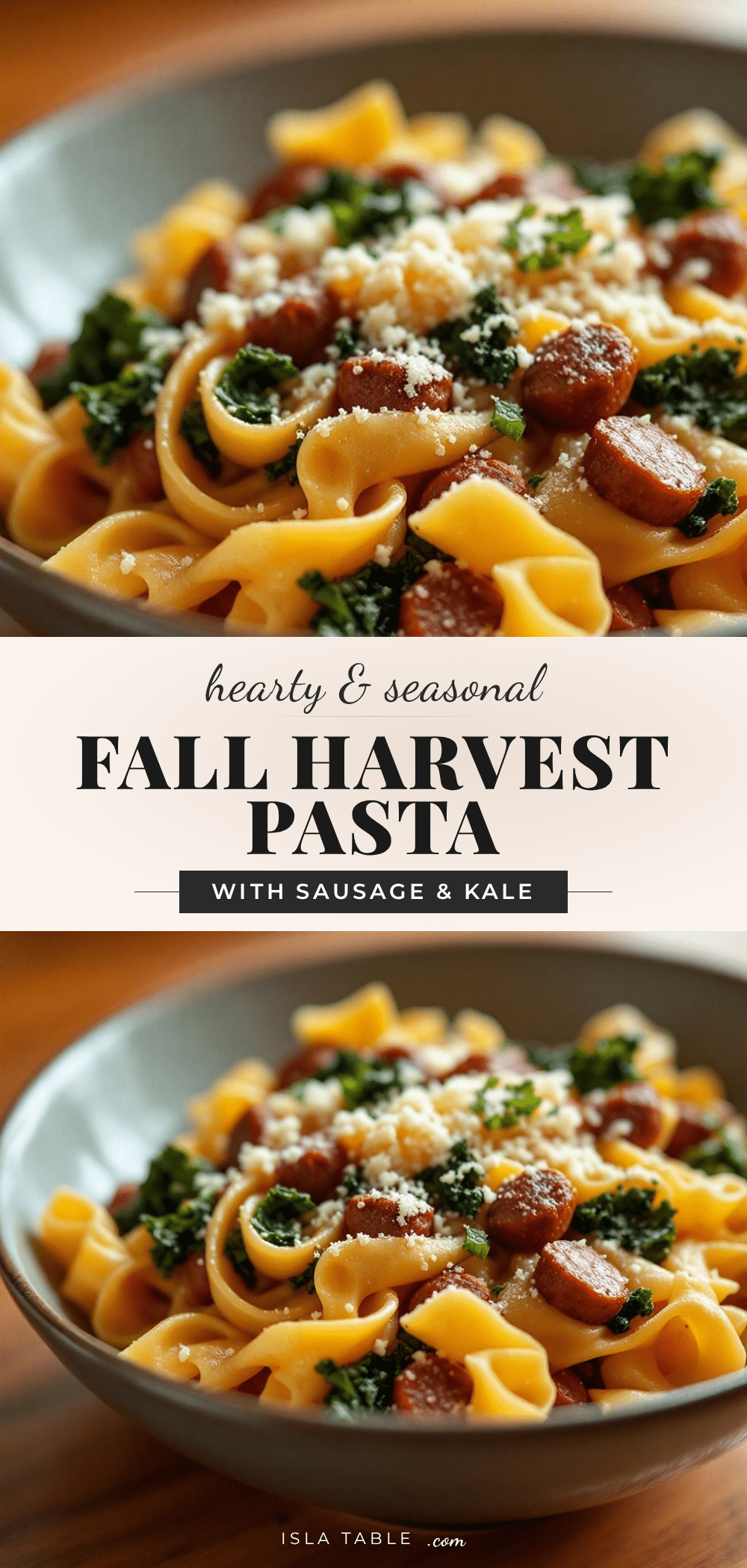
Easy Fall Harvest Pasta with Sausage and Kale: A 30-Minute Meal
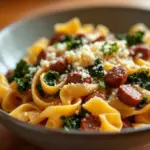
This quick and easy fall pasta combines spicy Italian sausage, tender lacinato kale, and roasted butternut squash in a silky sauce made with pasta water and Parmesan. Ready in 30 minutes, it’s a cozy, crowd-pleasing weeknight dinner that even kale skeptics will love.
- Prep Time: 10 minutes
- Cook Time: 20 minutes
- Total Time: 30 minutes
- Yield: 4 servings 1x
- Category: Main Course
- Cuisine: Italian-American
Ingredients
- 12 ounces short pasta (rigatoni, penne, or fusilli)
- 1 tablespoon kosher salt (for pasta water, plus more for seasoning)
- 1 pound spicy Italian sausage (casings removed)
- 1 medium yellow onion, diced (about 1 cup)
- 4 cloves garlic, minced
- 1 bunch lacinato kale (stems removed, leaves chopped into bite-sized ribbons, about 4–5 cups loosely packed)
- 1 cup butternut squash, cut into ½-inch cubes (about half a small squash)
- ½ cup dry white wine (like Pinot Grigio or Sauvignon Blanc)
- ½ cup reserved pasta water
- ½ cup grated Parmesan cheese, plus more for serving
- 2 tablespoons olive oil (for roasting squash)
- Red pepper flakes (optional, for extra heat)
Instructions
- Preheat your oven to 400°F (200°C). Toss the cubed butternut squash with 1 tablespoon of olive oil and a pinch of salt on a baking sheet. Spread in a single layer and roast for 15-18 minutes, flipping halfway through, until golden and fork-tender.
- Bring a large pot of water to a rolling boil. Add 1 tablespoon of kosher salt. Cook pasta according to package directions until al dente. Before draining, reserve 1 cup of starchy pasta water. Drain pasta and set aside (do not rinse).
- While pasta cooks, heat a large skillet over medium-high heat. Add the sausage (no oil needed) and break it into small crumbles. Cook undisturbed for 2-3 minutes to develop a brown crust, then stir and cook until fully cooked and crispy, about 5-6 minutes total. Transfer sausage to a plate, leaving about 2 tablespoons of rendered fat in the pan.
- Reduce heat to medium. Add diced onion to the pan and sauté for 3-4 minutes until translucent and starting to brown. Add minced garlic and cook for 30 seconds until fragrant.
- Pour in the white wine (or broth) and scrape up browned bits from the bottom of the pan. Let simmer for 1-2 minutes until reduced by half.
- Add chopped kale to the pan in handfuls. Toss with tongs and cook for 2-3 minutes until bright green and just wilted.
- Add cooked pasta, roasted squash, and browned sausage back to the pan. Pour in about ½ cup of reserved pasta water and toss everything together. If sauce seems too thick, add more pasta water a tablespoon at a time.
- Remove pan from heat. Sprinkle grated Parmesan over the pasta and toss gently until melted. Taste and adjust seasoning with black pepper and optional red pepper flakes.
- Serve immediately, divided into bowls, topped with extra Parmesan and a drizzle of olive oil if desired.
Notes
Don’t overcook the kale—2-3 minutes is enough. Brown the sausage properly by letting it sit undisturbed for a few minutes. Reserve more pasta water than you think you need (at least 1 cup). Toast the squash for better flavor by roasting at high heat. Use short, ridged pasta shapes like rigatoni or penne for best sauce adherence. Time your components: start squash roasting first, then pasta water, then sausage.
Nutrition
- Serving Size: 1.5 cups
- Calories: 520580
- Sugar: 68
- Sodium: 8001000
- Fat: 2226
- Saturated Fat: 810
- Carbohydrates: 5258
- Fiber: 68
- Protein: 2832
Keywords: fall pasta, sausage and kale pasta, 30-minute meal, easy weeknight dinner, butternut squash pasta, Italian sausage pasta, kale pasta recipe