“Careful with that pot!” my friend warned, half-joking, as I wrestled the heavy pan off the stove. The unmistakable aroma of saffron filled the kitchen, warm and inviting, yet that crusty bottom was the real prize. Persian saffron rice with golden tahdig crust isn’t just a side dish—it’s a centerpiece, a conversation starter, and honestly, a little bit magical. I remember the first time I tried making this dish; it was more curiosity than confidence. Persian rice can be intimidating—the timing, the soaking, the layering—but that crispy tahdig? Worth every bit of effort and probably a few kitchen mishaps along the way.
That first golden crust didn’t come out perfect—more patchy than picture-perfect—but my family couldn’t stop scraping the pan for those crunchy bits. Since then, I’ve made it so many times I lost count—sometimes with saffron, sometimes with a little turmeric twist—and it’s always a hit. There’s something about that deep, nutty crunch married with the fragrant, fluffy rice that feels like a small celebration every time.
What’s funny is how comfort food often comes wrapped in patience and a bit of trial and error. I’ve had my share of burnt bottoms and mushy middles, but over time, I learned to read the rice like a book, to listen for the sizzle beneath the lid, and to know just when to lift that lid and reveal the golden tahdig treasure. It’s become my quiet moment in the kitchen, a way to slow down and savor the little wins.
So, if you’re skeptical about making Persian saffron rice with golden tahdig crust, I get it. But stick with me here—this recipe will show you how to get that perfect balance of fluffy, aromatic rice and that crispy, golden crust that’s honestly the best part. It’s not just a recipe; it’s a little ritual that brings a taste of Persian tradition right to your table.
Why You’ll Love This Recipe
Making crispy Persian saffron rice with golden tahdig crust is like scoring a culinary jackpot—once you nail it, you’ll want to make it again and again. Here’s what makes this recipe stand out:
- Quick & Easy: The method comes together in about 45 minutes, perfect for busy weeknights or when you want something a bit special without the fuss.
- Simple Ingredients: You probably have most of these in your pantry—basmati rice, saffron, butter or oil—no exotic shopping necessary.
- Perfect for Gatherings: Whether it’s a cozy family dinner or an impromptu dinner party, this dish impresses with its golden crust and vibrant color.
- Crowd-Pleaser: Kids and adults alike can’t resist the crispy tahdig, and the saffron-infused rice adds a subtle, elegant flavor.
- Unbelievably Delicious: That contrast between fluffy rice and crunchy crust is pure comfort food magic.
What sets this recipe apart? It’s the technique of layering the rice and creating a gentle steam that crisps the bottom without burning. The saffron is bloomed in hot water first, releasing its full aroma and giving the rice a delicate golden hue. Plus, the tip of mixing a bit of yogurt or potato with the rice base helps form the perfect tahdig crust. It’s a little trick I picked up that completely transformed my results.
This isn’t just another saffron rice recipe—it’s the one that makes you pause and savor that first crispy bite, the one that stays with you long after the meal. If you want to try a Persian classic that feels special but isn’t complicated, this is it.
What Ingredients You Will Need
This recipe uses simple, wholesome ingredients that come together for bold flavor and satisfying texture without the fuss. Most are pantry staples, with just a few special touches like saffron to make it uniquely Persian.
- Basmati Rice: 2 cups (about 400g), rinsed and soaked for at least 30 minutes (this helps the grains stay separate and fluffy)
- Saffron Threads: 1/4 teaspoon, steeped in 2 tablespoons hot water (for that signature aroma and color)
- Butter or Vegetable Oil: 3 tablespoons (unsalted butter adds richness, vegetable oil works well for a neutral flavor)
- Salt: 1 teaspoon, for seasoning the rice water
- Water: Approximately 4 cups (1 liter), for boiling the rice
- Plain Yogurt or Mashed Potato: 1/4 cup (optional but recommended to help create a sturdy tahdig crust)
- Turmeric: 1/2 teaspoon (optional, for extra color if you want a deeper golden crust)
For saffron, I usually go with a trusted brand like Mehr Saffron—the threads are vibrant and fragrant, which really makes a difference. If you don’t have saffron, turmeric alone adds a nice warm color, but saffron’s floral notes are hard to substitute. For the yogurt, full-fat is best to get a crisp crust, but Greek yogurt or even a dairy-free alternative can work if needed.
Some people like to add a pinch of ground cardamom or a bay leaf when cooking the rice for a subtle aroma, which is a nice personal touch but totally optional. And if you’re curious about gluten-free options or low-carb twists, swapping the rice for cauliflower rice won’t give the same tahdig experience but can be delicious in its own right—similar to the ideas in my healthy keto coleslaw recipe.
Equipment Needed
- Large Pot or Saucepan with Lid: A heavy-bottomed pot works best to avoid hot spots that burn the rice or tahdig. I use a non-stick pot, but traditional Persian cooks swear by a cast-iron or thick aluminum pot.
- Fine Mesh Sieve or Colander: For rinsing and draining the rice thoroughly.
- Measuring Cups and Spoons: For accurate water and ingredient measurements.
- Small Bowl: To steep your saffron threads in hot water.
- Wooden Spoon or Spatula: For stirring and loosening the tahdig after cooking.
If you don’t have a heavy-bottomed pot, a thick skillet can work for the tahdig step, but you’ll want a lid that seals well to trap steam. I once tried making tahdig in a thin pan and ended up with uneven crust—lesson learned! Budget-friendly non-stick pots from brands like T-fal are a solid option if you’re just starting out.
Preparation Method
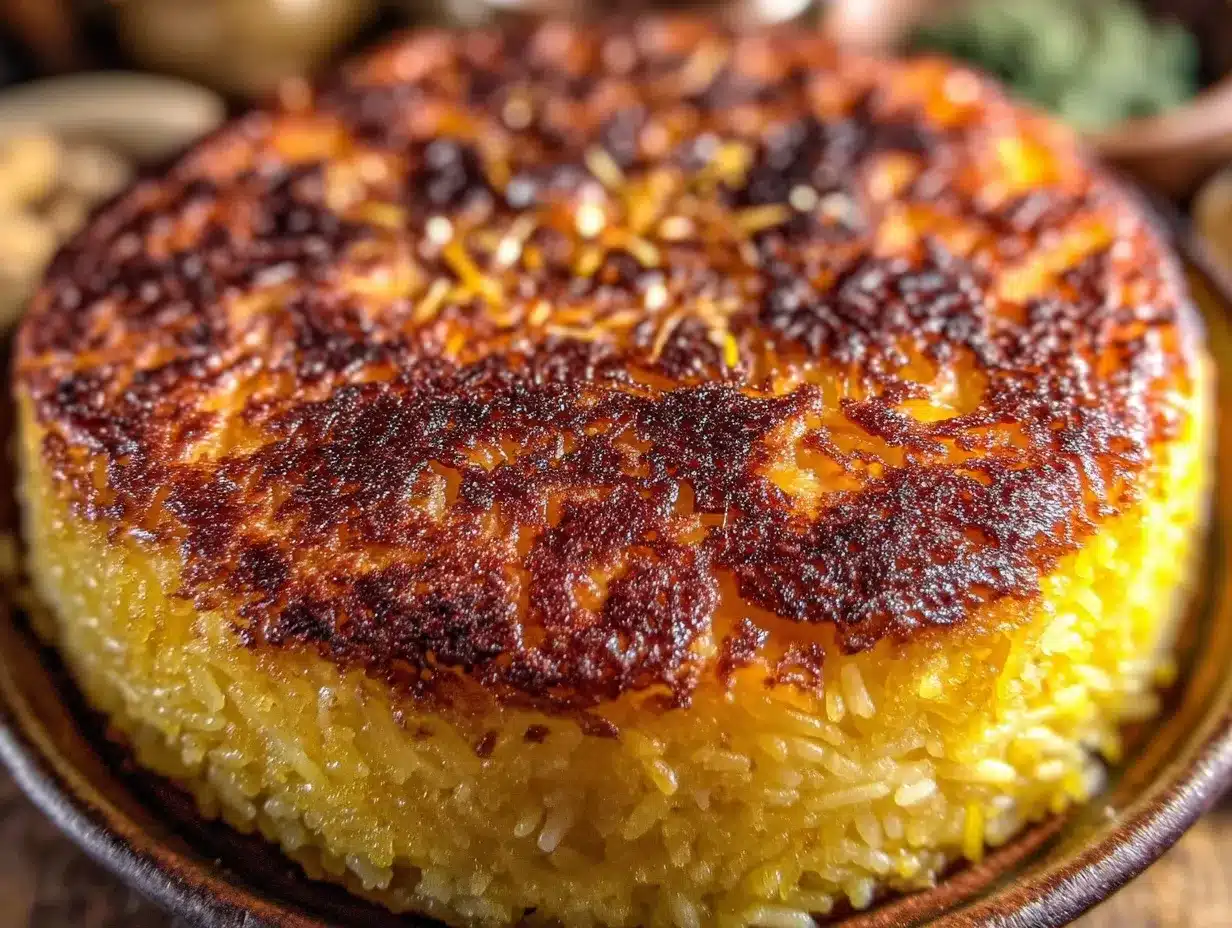
- Rinse and Soak the Rice: Rinse 2 cups (400g) of basmati rice under cold water until the water runs clear to remove excess starch. Soak the rice in cold water for 30 to 45 minutes. This soaking is crucial for fluffy, separate grains.
- Prepare the Saffron: While the rice soaks, crush 1/4 teaspoon of saffron threads between your fingers or with a mortar and pestle. Steep the crushed saffron in 2 tablespoons of hot water for at least 10 minutes until it turns a deep golden color.
- Parboil the Rice: Bring about 4 cups (1 liter) of water to a boil in a large pot. Add 1 teaspoon salt. Drain the soaked rice and add it to the boiling water. Cook for about 5 to 7 minutes, or until the rice is slightly soft but still firm in the center (al dente). Taste a grain to check.
- Drain the Rice: Pour the rice into a fine mesh sieve or colander to drain all water. This step is key to preventing soggy rice later.
- Mix the Tahdig Base: In a small bowl, combine 3 tablespoons of melted butter or oil with 1/4 cup plain yogurt or mashed potato and a pinch of turmeric (optional). This mixture helps form a sturdy, golden crust.
- Form the Tahdig Layer: Pour the butter-yogurt mixture into the bottom of your heavy-bottomed pot and spread evenly. Gently spoon a thin layer of the drained rice over this mixture, pressing lightly to form a base.
- Add the Remaining Rice: Drizzle the saffron water evenly over the rest of the rice and gently pile it on top of the thin layer in the pot. Use the back of a spoon to smooth the surface.
- Steam the Rice: Wrap the lid of the pot with a clean kitchen towel (to catch condensation) and place it firmly on the pot. Cook over medium-high heat for 5 minutes until you hear the rice sizzling. Then reduce heat to low and cook for 30 to 40 minutes. This slow steaming is what creates the perfect fluffy rice and golden tahdig crust.
- Check and Serve: Remove from heat and let the rice sit, covered, for 5 minutes. To serve, carefully invert the pot onto a serving platter so the tahdig is on top. If it sticks, gently loosen with a spatula. The crust should be beautifully golden and crisp.
Quick tip: If your tahdig sticks too much, try adding a bit more butter or oil next time and ensure the heat is low during steaming—too high and it burns; too low and it won’t crisp.
Cooking Tips & Techniques
Getting the perfect tahdig isn’t about rushing; it’s about patience and attention to detail. Here are a few things I learned the hard way:
- Don’t skip soaking your basmati rice. It helps the grains cook evenly and prevents clumping.
- Drain thoroughly. Excess water leads to soggy rice and soft crust, which nobody wants.
- Use a heavy-bottomed pot. A thin pot burns the rice before the tahdig can form properly.
- Control your heat carefully. Starting with medium-high heat to hear that satisfying sizzle, then reducing to low for slow steaming, is the secret to tender rice and a crispy crust.
- Wrap your lid with a towel. This prevents condensation from dripping back onto the rice and making it mushy.
- Don’t rush the steaming time. The longer, gentler steam helps develop flavor and texture.
One time, I forgot the towel trick and ended up with a soggy top layer—lesson learned! Also, I’ve found that mixing yogurt or mashed potato into the butter base really helps keep the tahdig intact when flipping. It’s like the glue that holds the crust together.
When you’re confident with the tahdig technique here, you might want to try it with other recipes like smokeless BBQ chicken to add a crispy, flavorful base to your meal.
Variations & Adaptations
This recipe is flexible and open to your preferences or dietary needs:
- Herb-Infused Tahdig: Add chopped fresh dill or parsley mixed into the yogurt base for a fresh twist.
- Vegetarian Version: Use vegetable oil or vegan butter instead of dairy butter and swap yogurt with coconut yogurt for a dairy-free tahdig.
- Potato Tahdig: Replace the rice base with thinly sliced potatoes layered on the bottom for a crispy potato crust variation.
- Spice It Up: Add a pinch of ground cardamom or cinnamon to the rice water for subtle warmth and complexity.
- Brown Rice Option: Use brown basmati rice, but increase soaking and cooking times to ensure tenderness.
Personally, I once tried this with a few strands of saffron replaced by turmeric and a little toasted sesame seeds sprinkled on the tahdig before cooking—that version was a hit and brought a nutty crunch that paired well with the crispy crust. For a gluten-free option, this recipe is naturally safe, but be mindful if you add any pre-made spice blends.
Serving & Storage Suggestions
Serve your crispy Persian saffron rice with golden tahdig crust warm, ideally just after flipping it out of the pot. The tahdig is best enjoyed fresh—those crispy edges get a bit softer when refrigerated. Pair it with grilled meats, stews, or vegetarian mains—the fluffy saffron rice complements almost anything.
For a full Persian-inspired meal, try adding a fresh salad or yogurt-based side. If you want a lighter side, my healthy keto coleslaw recipe balances the rich rice beautifully.
Store leftovers in an airtight container in the refrigerator for up to 3 days. To reheat, sprinkle a little water over the rice and warm gently in a skillet or microwave to revive some moisture without losing the tahdig crunch. Avoid reheating for too long, or the crust will soften.
The flavors actually deepen after resting overnight, so if you can handle it, a day-old saffron rice tastes surprisingly good and sometimes even better!
Nutritional Information & Benefits
This Persian saffron rice recipe is a satisfying carbohydrate source, rich in flavor without added sugars or heavy sauces. Here’s an estimated breakdown per serving (makes about 4 servings):
| Nutrient | Amount |
|---|---|
| Calories | 280 kcal |
| Carbohydrates | 58g |
| Protein | 6g |
| Fat | 6g |
| Fiber | 1g |
Saffron is known for its antioxidant properties and mood-lifting effects, making this dish not only delicious but also a little wellness boost. Using basmati rice offers a lower glycemic index option compared to other white rices, which can help with blood sugar control.
This recipe is naturally gluten-free and can be adapted for dairy-free diets by swapping butter and yogurt. If you’re watching carbs, pairing this rice with protein and vegetables—as in my high-protein low-carb chicken zucchini boats—creates a balanced meal.
Conclusion
Crispy Persian saffron rice with golden tahdig crust is one of those recipes that turns a simple grain into something memorable. The crispy crust, infused with buttery saffron goodness, brings a texture and aroma that’s hard to forget. Whether you’re serving it for a comforting family meal or impressing guests with a touch of Persian tradition, this recipe offers a satisfying challenge with delicious rewards.
Feel free to tweak the spices, try different tahdig bases, or pair it with your favorite mains. This dish has become a staple in my kitchen because it’s approachable yet special, and it always sparks a little excitement around the dinner table.
If you make it, I’d love to hear how your tahdig turned out or what variations you tried. Sharing these experiences makes cooking even more fun!
FAQs about Crispy Persian Saffron Rice with Golden Tahdig Crust
How do I prevent the tahdig from sticking to the pot?
Use a heavy-bottomed pot and generous butter or oil in the base. Also, wrap your lid with a clean towel to prevent condensation dripping onto the rice, and keep the heat low during steaming.
Can I make tahdig with other types of rice?
While basmati is traditional for its long grains and texture, you can try jasmine or other long-grain rices, but soaking and cooking times may vary. Short-grain rices typically don’t produce the same crisp tahdig.
What if I don’t have saffron? Can I skip it?
You can substitute with turmeric for color, but saffron adds a unique aroma and flavor. Without saffron, your rice will still be tasty, just less fragrant and colorful.
How do I reheat leftover tahdig without losing its crispiness?
Warm leftovers gently in a skillet over low heat or microwave with a sprinkle of water to avoid drying out. The crust may soften but reheating carefully helps preserve some texture.
Is it possible to make this recipe vegan?
Yes! Replace butter with vegetable oil or vegan butter and use dairy-free yogurt alternatives for the tahdig base. The rice and tahdig will still form nicely with these swaps.
Pin This Recipe!
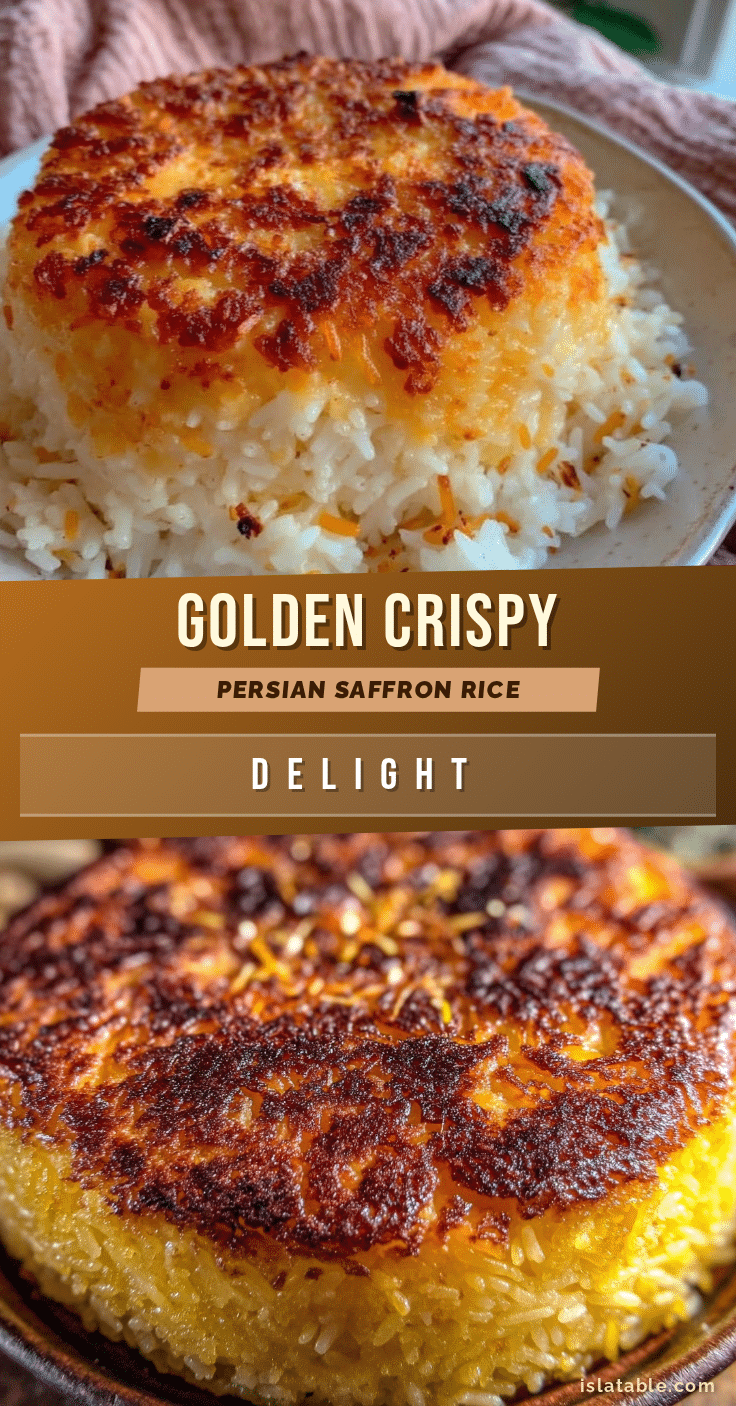
Crispy Persian Saffron Rice Recipe with Perfect Golden Tahdig Crust
A traditional Persian saffron rice recipe featuring a perfectly crispy golden tahdig crust, combining fluffy aromatic rice with a crunchy, flavorful base.
- Prep Time: 40 minutes
- Cook Time: 35 minutes
- Total Time: 75 minutes
- Yield: 4 servings 1x
- Category: Side Dish
- Cuisine: Persian
Ingredients
- 2 cups (about 400g) basmati rice, rinsed and soaked for at least 30 minutes
- 1/4 teaspoon saffron threads, steeped in 2 tablespoons hot water
- 3 tablespoons unsalted butter or vegetable oil
- 1 teaspoon salt
- Approximately 4 cups (1 liter) water
- 1/4 cup plain yogurt or mashed potato (optional, recommended for tahdig crust)
- 1/2 teaspoon turmeric (optional, for extra color)
Instructions
- Rinse 2 cups (400g) of basmati rice under cold water until the water runs clear to remove excess starch. Soak the rice in cold water for 30 to 45 minutes.
- Crush 1/4 teaspoon of saffron threads and steep in 2 tablespoons of hot water for at least 10 minutes until deep golden.
- Bring about 4 cups (1 liter) of water to a boil in a large pot. Add 1 teaspoon salt. Drain the soaked rice and add it to boiling water. Cook for 5 to 7 minutes until slightly soft but still firm (al dente).
- Drain the rice thoroughly using a fine mesh sieve or colander.
- In a small bowl, combine 3 tablespoons melted butter or oil with 1/4 cup plain yogurt or mashed potato and a pinch of turmeric (optional).
- Pour the butter-yogurt mixture into the bottom of a heavy-bottomed pot and spread evenly. Spoon a thin layer of drained rice over this mixture, pressing lightly.
- Drizzle the saffron water evenly over the remaining rice and pile it on top of the thin layer. Smooth the surface with the back of a spoon.
- Wrap the pot lid with a clean kitchen towel and place it firmly on the pot. Cook over medium-high heat for 5 minutes until sizzling, then reduce heat to low and cook for 30 to 40 minutes to steam.
- Remove from heat and let sit covered for 5 minutes. Invert the pot onto a serving platter so the tahdig is on top. Loosen gently with a spatula if needed.
Notes
Use a heavy-bottomed pot to avoid burning. Wrap the lid with a clean towel to prevent condensation dripping onto the rice. Control heat carefully: start medium-high to hear sizzling, then reduce to low for slow steaming. Adding yogurt or mashed potato to the butter base helps form a sturdy tahdig crust. If tahdig sticks, increase butter/oil and ensure low heat during steaming.
Nutrition
- Serving Size: 1 serving (about 1 c
- Calories: 280
- Fat: 6
- Carbohydrates: 58
- Fiber: 1
- Protein: 6
Keywords: Persian rice, saffron rice, tahdig, crispy rice, basmati rice, golden crust, Persian cuisine, saffron, easy rice recipe