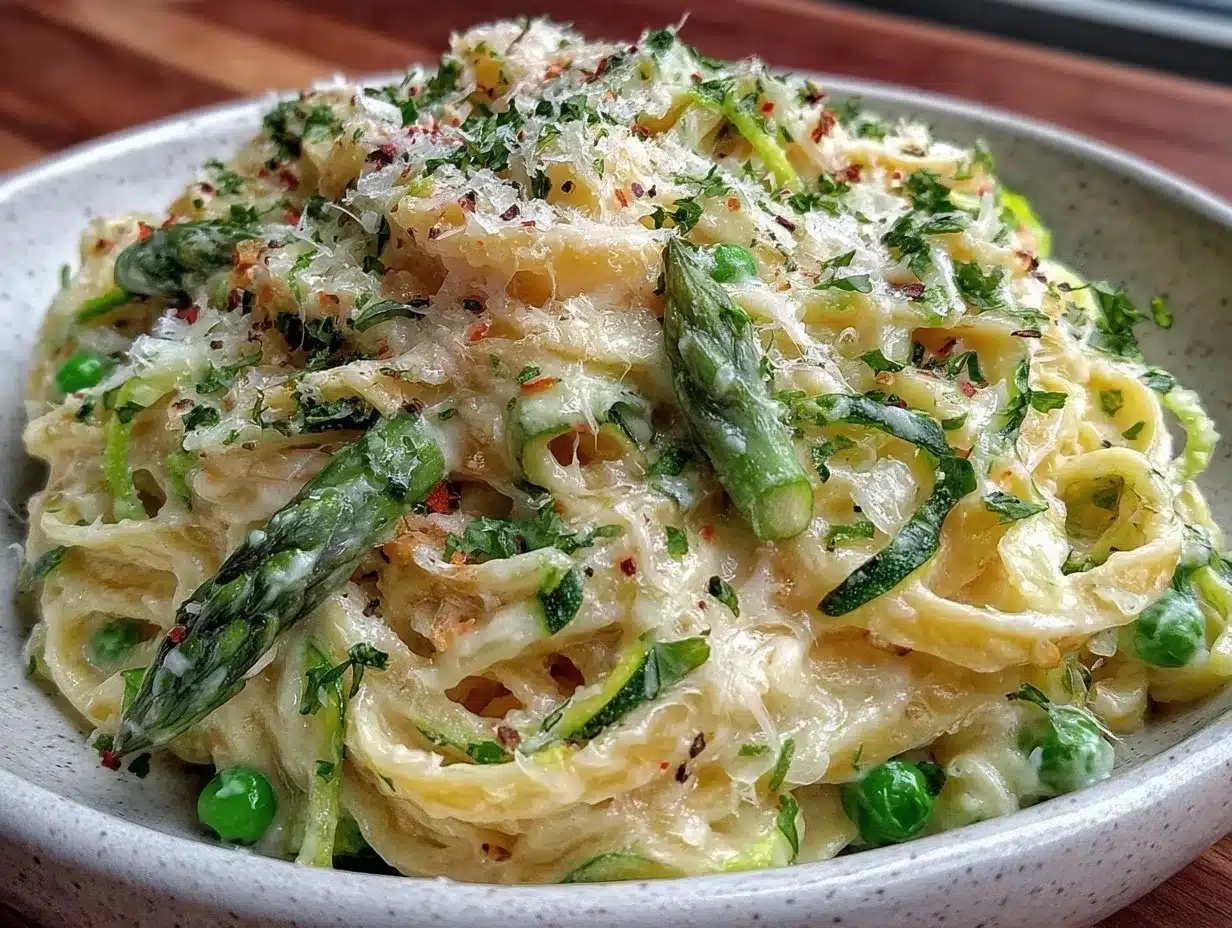
“Wait, you cooked the whole dinner in one pot and it tastes like this?” That’s exactly what my roommate blurted out last Thursday night, eyeing the creamy spring vegetable pasta steaming in front of her. Honestly, I was half-expecting a shrug or a “Not bad,” but nope — full-on surprise and a request for seconds. The funny thing is, this recipe came about because I was juggling too many things that evening, and the idea of dirtying multiple pans was just… no. So I threw together some fresh spring veggies, pasta, and a creamy sauce right into one pot, hoping for the best.
As the aromas filled the kitchen—bright notes of fresh peas, tender asparagus, and the gentle tang of parmesan melting into the sauce—I realized this wasn’t just a quick fix. It was the kind of meal that felt like a little celebration of spring, all cozy and comforting but fresh and light, too. I kept making it throughout that week, tweaking the seasoning, swapping in whatever veggies I had on hand. Each time, it hit the spot, whether it was a late-night solo dinner or a casual hangout with friends.
The best part? It’s deceptively simple, but it looks fancy enough to impress without the fuss. That creamy texture, combined with the crisp-tender veggies, makes this one-pot spring vegetable pasta a recipe I trust to deliver every time. It’s become my go-to when I want something homemade but don’t want to spend forever in the kitchen. And honestly, it’s just one of those dishes that quietly reminds me why I love cooking in the first place—simple ingredients, big flavor, and very little cleanup.
So, if you’re someone who loves the idea of fresh, vibrant meals without the overwhelm, this pasta might just become your new kitchen buddy. It’s easy, satisfying, and full of spring’s best flavors—no complicated steps, just honest comfort on a plate.
Why You’ll Love This Recipe
This creamy one-pot spring vegetable pasta has quickly become a favorite in my recipe rotation, and here’s why it might win a spot in yours, too:
- Quick & Easy: Ready in about 30 minutes, this recipe fits perfectly into busy weeknights or those moments when you want dinner fast without sacrificing taste.
- Simple Ingredients: No need for fancy, hard-to-find items. Most of these ingredients are pantry staples or fresh spring veggies you can grab at any market.
- Perfect for Spring: It’s packed with seasonal veggies like asparagus, peas, and tender green beans that bring freshness and color to your plate.
- Creamy Comfort: The sauce is silky and rich, but without feeling heavy—thanks to a smart combination of cream, broth, and parmesan.
- One-Pot Wonder: No juggling multiple pans means less mess and less stress, which is a total win in my book.
- Customizable: Whether you want to add chicken, swap in different veggies, or go dairy-free with a little tweak, this recipe adapts easily.
What makes this recipe stand out is the way the pasta soaks up that creamy sauce while mingling with crisp spring vegetables. I like to think of it as comfort food that feels light and fresh—not your typical heavy cream-laden pasta. Over the years, I’ve tried versions that cook pasta separately and mix in sauce later, but cooking everything together in one pot not only saves time but infuses the dish with a depth of flavor you just can’t get otherwise. Plus, it’s perfect for anyone who loves fuss-free cooking but still wants something impressive on the table.
This recipe has that kind of “close your eyes and savor it” magic, the kind that makes you forget how easy it was to whip up. It’s a great way to enjoy fresh spring produce without a ton of prep, and honestly, it’s just plain fun to make. If you’re into recipes like the creamy chicken salad with sweet grapes or the crispy broccoli salad with bacon crunch, you’ll find this pasta shares that same balance of rich flavors and fresh ingredients, but with a comforting twist.
What Ingredients You Will Need
This creamy one-pot spring vegetable pasta relies on fresh, wholesome ingredients that come together to create bold flavor and satisfying texture without fuss. Most are pantry staples or easy to find seasonal produce.
- Pasta: 12 ounces (340 grams) of penne or fusilli work beautifully—they hold onto the sauce well. Rigatoni or farfalle are great alternatives.
- Vegetables:
- 1 cup fresh asparagus, cut into 1-inch pieces (use tender stalks for best texture)
- 1 cup fresh or frozen peas (sweet and bright, they add a lovely pop)
- 1 cup green beans, trimmed and halved (adds crunch and color)
- 1 small yellow onion, finely chopped (for base flavor)
- 2 cloves garlic, minced (fresh is best for that punch)
- Liquids & Dairy:
- 4 cups (960 ml) low-sodium chicken or vegetable broth (for cooking the pasta and flavor)
- 1 cup (240 ml) half-and-half or heavy cream (for creaminess; can swap with coconut cream for dairy-free)
- 3/4 cup (75 grams) grated Parmesan cheese (preferably Parmigiano-Reggiano for rich, nutty flavor)
- Fats & Flavorings:
- 2 tablespoons unsalted butter (adds silkiness)
- 1 tablespoon olive oil (for sautéing)
- Salt and freshly ground black pepper, to taste
- 1 teaspoon lemon zest (optional, adds brightness)
- Fresh basil or parsley for garnish (a handful, chopped)
When picking your broth, I like to use a quality brand like Swanson or Pacific Foods for a clean flavor. If you’re using frozen peas, don’t thaw them beforehand—they’ll thaw quickly in the cooking liquid and stay bright green. For a dairy-free version, try swapping out the cream for full-fat coconut milk and using nutritional yeast in place of Parmesan.
Feel free to swap vegetables based on what’s freshest or what you have on hand—zucchini ribbons or baby spinach are lovely spring additions. Just make sure to add softer veggies later in the cooking process to keep that perfect tender-crisp bite.
Equipment Needed
- Large deep skillet or wide saucepan with lid: A good-sized pan (about 12 inches/30 cm diameter) is key since everything cooks together. I’ve used both stainless steel and non-stick pans; non-stick helps prevent sticking but stainless steel gives a nice fond for flavor.
- Wooden spoon or silicone spatula: For stirring without scratching your pan.
- Measuring cups and spoons: Precise measurements help keep the creamy sauce balanced.
- Chef’s knife and cutting board: For prepping your veggies quickly and safely.
- Grater: To freshly grate the Parmesan cheese, which melts better and tastes fresher than pre-grated.
For budget-friendly cooks, a sturdy stainless steel sauté pan with a lid works wonders. I once tried this recipe in a large cast iron skillet and while it required a bit more attention stirring, the flavor was amazing thanks to the caramelized bits on the bottom. Just remember to stir fairly often to avoid sticking. If you don’t have a lid, a large baking sheet can work as a cover to help the pasta cook evenly.
Preparation Method
- Prep your veggies: Trim and chop asparagus into 1-inch pieces, trim and halve green beans, mince garlic, and finely chop the onion. Set aside. (About 10 minutes)
- Heat the fat: In your large skillet or saucepan over medium heat, warm 1 tablespoon olive oil and 2 tablespoons unsalted butter until melted and shimmering.
- Sauté aromatics: Add the chopped onion and cook, stirring occasionally, for 3-4 minutes until translucent but not browned. Toss in the minced garlic and cook 30 seconds until fragrant.
- Add the vegetables: Stir in asparagus and green beans, cooking for 2-3 minutes to brighten their color and soften slightly.
- Add pasta and liquid: Pour in the dry pasta, then add 4 cups (960 ml) broth. Make sure the pasta is mostly submerged. Bring to a gentle boil, then reduce heat to medium-low.
- Simmer and stir: Cover with a lid and let simmer for about 10 minutes, stirring every few minutes to prevent sticking. If the liquid absorbs too quickly, add a splash of water or broth.
- Add peas and cream: Stir in the peas and 1 cup (240 ml) half-and-half or cream. Cover again and cook another 4-5 minutes until pasta is tender and sauce is creamy. The peas should be vibrant and tender, not mushy.
- Finish the sauce: Remove from heat and stir in 3/4 cup (75 grams) grated Parmesan cheese until melted and smooth. Season with salt, pepper, and 1 teaspoon lemon zest if using.
- Serve: Garnish with chopped fresh basil or parsley and an extra sprinkle of Parmesan if desired. Serve immediately for best texture and flavor.
Tip: If the sauce seems too thick, stir in a splash more broth or cream until you reach your preferred consistency. If it’s too thin, let it simmer uncovered for a couple of minutes to thicken up.
Watching the pasta absorb the broth and cream while the veggies cook just right is honestly a little hypnotic. I often find myself stirring just a bit more than necessary, curious to see how creamy it can get without losing that fresh veggie snap. It’s a simple process, but the timing is key—especially when you add those peas last so they stay bright green and sweet.
Cooking Tips & Techniques
One-pot pasta dishes like this one are fantastic but require a bit of attention to get perfect every time. Here’s what I’ve learned after many tries:
- Use the right pasta shape: Short, ridged pasta like penne or fusilli helps the sauce cling better and cooks more evenly in one pot.
- Don’t rush the simmer: Gentle simmering with the lid on helps the pasta absorb the liquid without drying out. Stirring every few minutes prevents sticking and promotes even cooking.
- Add delicate veggies late: Peas and other soft vegetables go in toward the end to keep their color and texture bright.
- Freshly grated Parmesan: Always grate your own cheese if possible. It melts better and gives a richer flavor than pre-shredded varieties.
- Season gradually: Add salt in stages—some with broth, some at the end. This avoids over-salting and lets flavors build naturally.
- Watch the liquid level: If the pasta absorbs all the broth too fast, add small amounts of water or broth to keep the sauce creamy without drying out.
- Don’t skip the lemon zest: It adds a subtle brightness that cuts through the richness and lifts the whole dish.
One of my early mistakes was adding all the vegetables at once, which left some mushy and others undercooked. Now, I add sturdier veggies first and delicate ones last—that little timing tweak makes a huge difference. Also, when I first tried this recipe, I used skim milk instead of cream, and honestly, the sauce was too thin. The half-and-half or cream really gives it that luscious mouthfeel without feeling too heavy.
Multitasking in the kitchen? While the pasta simmers, you can prep a quick crispy broccoli salad with bacon crunch to add some crunch and contrast on the side. It’s a combination that always impresses guests without extra fuss.
Variations & Adaptations
This creamy one-pot spring vegetable pasta is a fantastic base to play with, and I’ve tried several variations to keep it interesting:
- Protein boost: Add cooked shredded chicken or sautéed shrimp in the last few minutes for a heartier meal. It pairs well with the creamy sauce without overpowering the veggies.
- Veggie swaps: Use zucchini ribbons, spinach, or cherry tomatoes instead of or alongside asparagus and green beans. Just add softer veggies last to avoid overcooking.
- Dairy-free version: Swap cream for canned coconut milk and Parmesan for nutritional yeast flakes. The flavor changes, but it’s still creamy and satisfying.
- Herb twist: Try stirring in chopped tarragon or dill instead of basil for a fresh spring flavor that feels different yet familiar.
- Spicy kick: Add a pinch of red pepper flakes with the garlic for a subtle heat that contrasts nicely with the creaminess.
Personally, I once made this pasta with a handful of baby spinach stirred in at the very end and a few halved sun-dried tomatoes. It added a bright tang and extra color, perfect for a late April dinner. If you want to switch up the carbs, using gluten-free pasta works just fine—just watch the cooking time since it can vary.
Serving & Storage Suggestions
This creamy one-pot spring vegetable pasta is best served fresh and hot, garnished with a sprinkle of fresh herbs and extra Parmesan. The creamy sauce thickens as it cools, so reheat gently to bring back that luscious texture.
Pair it with a crisp green salad or a light citrusy side like a fresh cowboy caviar salad bowl to balance the richness. A chilled glass of Sauvignon Blanc or a sparkling water with lemon complements the meal beautifully.
Got leftovers? Store them in an airtight container in the refrigerator for up to 3 days. When reheating, add a splash of broth or cream to loosen the sauce and heat over low to medium heat, stirring often to prevent sticking. The flavors deepen overnight, making it just as delicious the next day.
Nutritional Information & Benefits
Per serving (makes about 4 servings): Approximately 450 calories, 18g fat, 55g carbohydrates, and 15g protein.
This recipe packs a good dose of fiber and vitamins from the spring vegetables, including Vitamin C, K, and folate. The protein comes mainly from Parmesan and optionally added chicken or shrimp. Using vegetable broth keeps sodium levels moderate, and you control the creaminess with your choice of dairy or dairy-free options.
Gluten-free pasta can be used to make this suitable for gluten-sensitive diets, and swapping traditional cream for coconut cream makes it dairy-free. Just watch the salt if you use broth varieties that are not low-sodium.
From a wellness viewpoint, this dish balances indulgence and nutrition nicely. The fresh veggies brighten the plate while the creamy sauce satisfies cravings without feeling over the top. It’s a great reminder that comfort food can be wholesome and easy.
Conclusion
This creamy one-pot spring vegetable pasta is exactly the kind of recipe I keep coming back to when I want something fresh, quick, and comforting all at once. It’s a no-fuss way to enjoy spring veggies in a rich, creamy sauce without a mountain of dishes afterward. You can make it your own by swapping veggies, adding protein, or tweaking the herbs to suit your mood.
Why do I love this recipe so much? It’s honest, straightforward cooking that feels thoughtful but isn’t complicated. Plus, it brings a little bit of spring into every bite, which is a welcome reminder as the seasons change. If you give it a try, I’d love to hear how you made it yours—drop a comment or share your favorite add-ins!
Here’s to simple, creamy, and downright delicious dinners that brighten the week.
FAQs About Creamy One-Pot Spring Vegetable Pasta
Can I use frozen vegetables for this pasta?
Absolutely! Frozen peas work especially well and add a nice pop of sweetness. Just add them at the end so they don’t overcook and lose their texture.
What can I substitute for heavy cream?
Half-and-half is a lighter option that still gives good creaminess. For dairy-free, try full-fat coconut milk or coconut cream. Just keep in mind the flavor will change slightly.
How do I prevent the pasta from sticking to the pot?
Stirring every few minutes during simmering and making sure there’s enough liquid are key. Adding a splash of broth or water if it looks dry helps keep everything moving smoothly.
Can I make this recipe ahead of time?
You can prepare it a few hours ahead and refrigerate. Reheat gently with a bit of broth or cream to loosen the sauce before serving.
What pasta shapes work best for one-pot recipes?
Short, ridged pasta like penne, fusilli, or rigatoni are ideal because they cook evenly and hold onto the sauce well.
Pin This Recipe!
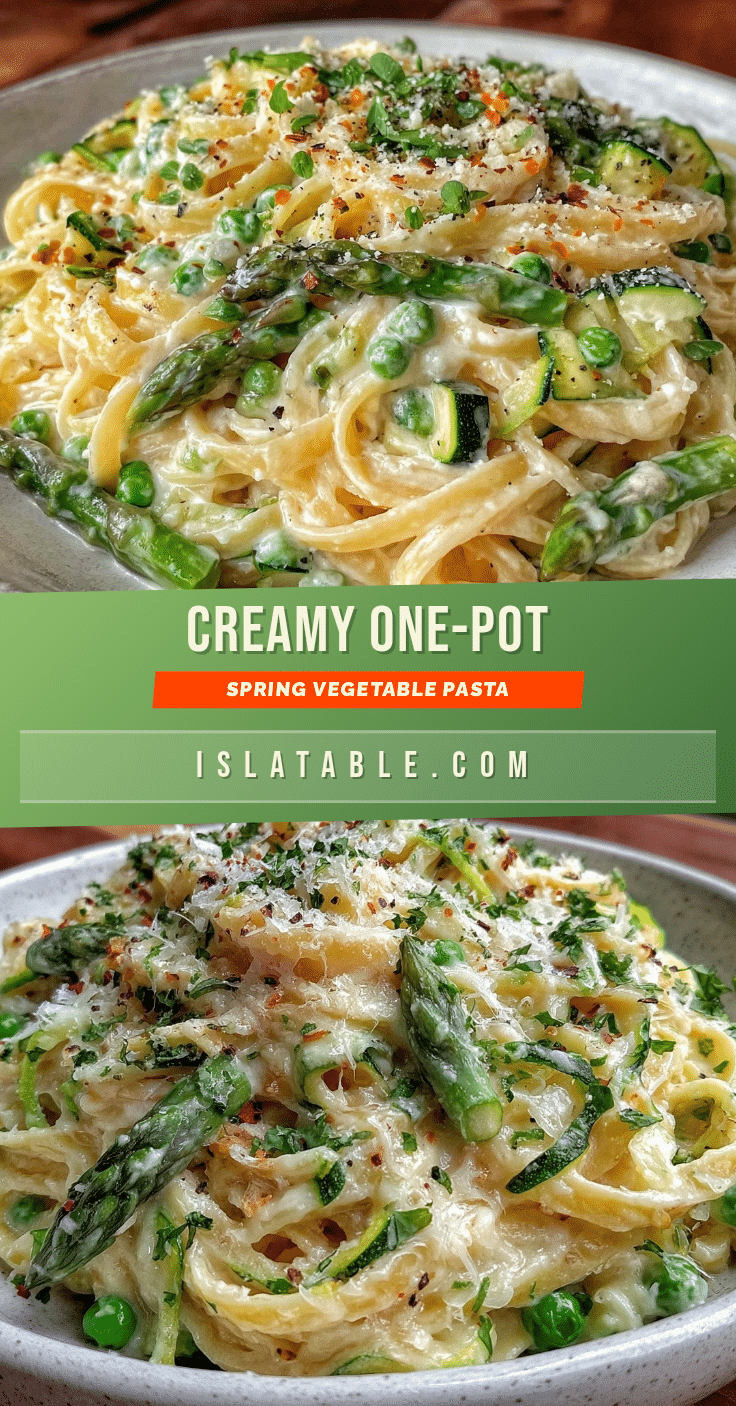
Creamy One-Pot Spring Vegetable Pasta
A quick and easy one-pot pasta dish featuring fresh spring vegetables in a creamy, comforting sauce. Perfect for busy weeknights and customizable to your taste.
- Prep Time: 10 minutes
- Cook Time: 20 minutes
- Total Time: 30 minutes
- Yield: 4 servings 1x
- Category: Main Course
- Cuisine: American
Ingredients
- 12 ounces penne or fusilli pasta
- 1 cup fresh asparagus, cut into 1-inch pieces
- 1 cup fresh or frozen peas
- 1 cup green beans, trimmed and halved
- 1 small yellow onion, finely chopped
- 2 cloves garlic, minced
- 4 cups low-sodium chicken or vegetable broth
- 1 cup half-and-half or heavy cream
- 3/4 cup grated Parmesan cheese
- 2 tablespoons unsalted butter
- 1 tablespoon olive oil
- Salt and freshly ground black pepper, to taste
- 1 teaspoon lemon zest (optional)
- Fresh basil or parsley for garnish
Instructions
- Trim and chop asparagus into 1-inch pieces, trim and halve green beans, mince garlic, and finely chop the onion. Set aside.
- In a large skillet or saucepan over medium heat, warm olive oil and unsalted butter until melted and shimmering.
- Add chopped onion and cook, stirring occasionally, for 3-4 minutes until translucent but not browned. Add minced garlic and cook 30 seconds until fragrant.
- Stir in asparagus and green beans, cooking for 2-3 minutes to brighten their color and soften slightly.
- Add dry pasta to the pot, then pour in broth. Ensure pasta is mostly submerged. Bring to a gentle boil, then reduce heat to medium-low.
- Cover with a lid and let simmer for about 10 minutes, stirring every few minutes to prevent sticking. Add a splash of water or broth if liquid absorbs too quickly.
- Stir in peas and half-and-half or cream. Cover again and cook another 4-5 minutes until pasta is tender and sauce is creamy.
- Remove from heat and stir in grated Parmesan cheese until melted and smooth. Season with salt, pepper, and lemon zest if using.
- Garnish with chopped fresh basil or parsley and extra Parmesan if desired. Serve immediately.
Notes
Use short, ridged pasta like penne or fusilli for best sauce cling. Stir frequently during simmering to prevent sticking. Add delicate vegetables like peas last to keep their texture and color. For dairy-free, substitute cream with coconut milk and Parmesan with nutritional yeast. Adjust liquid as needed to maintain creamy sauce consistency.
Nutrition
- Serving Size: 1 serving (approxima
- Calories: 450
- Sugar: 6
- Sodium: 600
- Fat: 18
- Saturated Fat: 10
- Carbohydrates: 55
- Fiber: 6
- Protein: 15
Keywords: one-pot pasta, spring vegetables, creamy pasta, easy dinner, quick pasta recipe, vegetarian pasta, comfort food