I need a breakfast that feeds a crowd without me standing at the stove flipping pancakes for an hour. That’s the thought that started it all. Not some grand family tradition passed down through generations—just a very specific, very real Tuesday morning panic before my sister’s family showed up for the weekend. I had eggs, I had sausage, I had a block of cheddar that was staring at me from the fridge. And I had exactly zero interest in making individual plates for seven people.
The first version of this Easy Cheesy Sausage and Egg Breakfast Casserole came out a little dry, honestly. I was too scared of undercooking it, so I left it in the oven too long. The second version? That was the one. The bread soaked up just enough egg mixture to stay tender, the sausage browned perfectly, and the cheese—well, let’s just say there were no leftovers. My nephew asked for seconds before he finished his first plate, and that’s when I knew I had something worth writing down.
This isn’t fancy brunch food. It’s the kind of breakfast you make when you want everyone to feel full and happy without you having to miss the conversation. It’s forgiving, it’s flexible, and it’s honestly the best way I’ve found to start a busy morning with a full table.
Why You’ll Love This Recipe
Let me tell you why this casserole has become my go-to for every holiday morning, lazy Saturday, and overnight guest situation. It checks all the boxes without any of the stress.
- Quick & Easy: You’ll spend about 15 minutes on prep, then the oven does the rest. Perfect for those mornings when you want a hot breakfast but don’t want to be a short-order cook.
- Simple Ingredients: Eggs, milk, bread, sausage, cheese. That’s it. No weird specialty items, no trips to three different stores. You probably have most of this in your kitchen right now.
- Perfect for Crowds: This recipe scales beautifully. Need to feed 12 people? Double it. Feeding a smaller group? Halve it. It’s the ultimate crowd-pleaser for Easter brunch, Christmas morning, or just a weekend with the in-laws.
- Crowd-Pleaser: I’ve served this to picky eaters, gluten-free friends (use gluten-free bread), and my uncle who “doesn’t eat casseroles.” Every single person went back for more. Kids love it, adults love it, and it disappears fast.
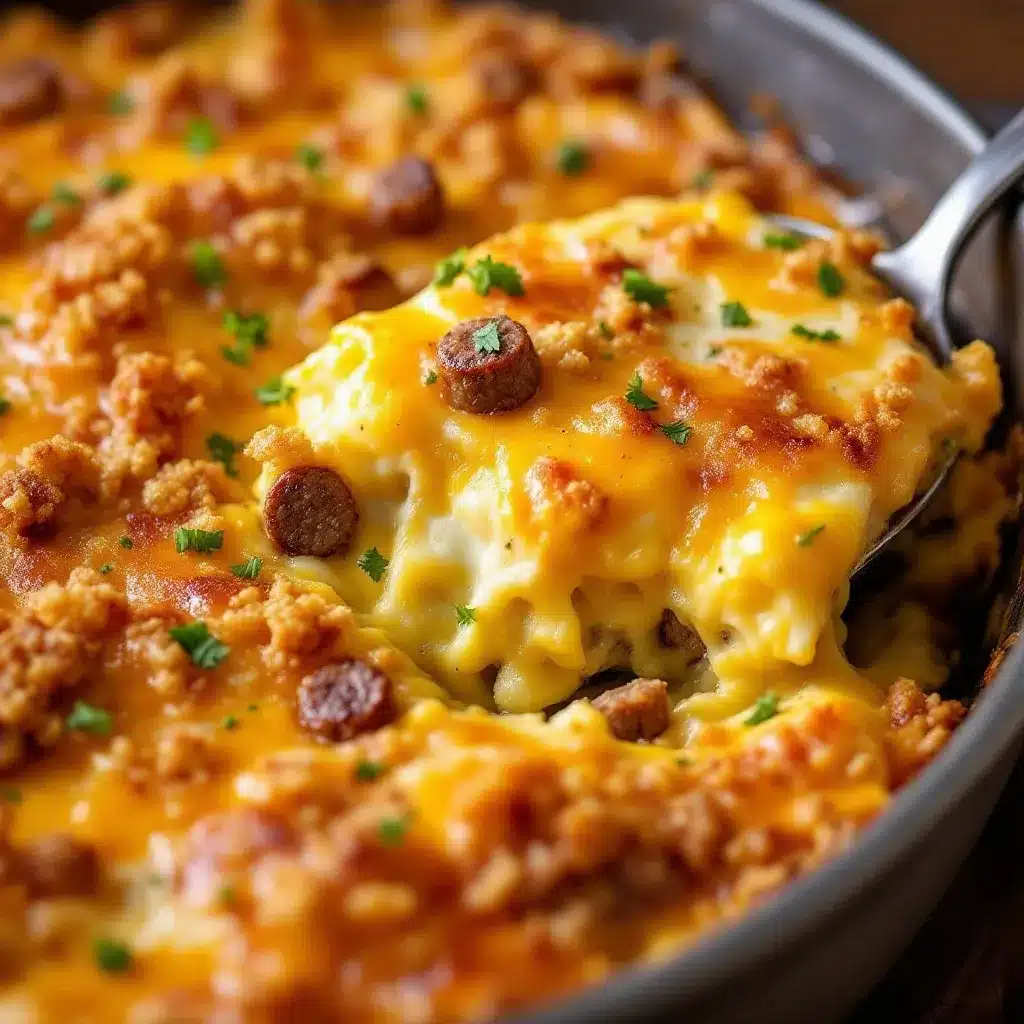
- Unbelievably Delicious: The texture is what gets me every time. The top gets golden and slightly crispy, the inside stays soft and custard-like, and every bite has that perfect ratio of egg, cheese, and savory sausage.
What makes this different from every other breakfast casserole recipe out there? It’s the ratio. I’ve tested this more times than I care to admit to get the perfect balance of eggs to bread so the casserole holds together without being dry or soggy. Plus, I add a little Dijon mustard to the egg mixture—trust me on this one. It doesn’t make it taste like mustard at all. It just makes everything taste more like itself.
This is the recipe you’ll make when you want to impress without stress. It’s comfort food that feels like a hug in a baking dish, and honestly, isn’t that what breakfast should be?
What Ingredients You Will Need
This recipe uses simple, everyday ingredients to create something that tastes anything but ordinary. Here’s what you’ll need and why each one matters.
For the Casserole Base
- 1 pound breakfast sausage (I prefer Jimmy Dean or Owen’s for consistent flavor; you can use mild, hot, or maple depending on your mood)
- 8 large eggs (room temperature if you remember, but straight from the fridge works too—I’ve done both)
- 2 cups whole milk (2% works in a pinch, but whole milk gives the creamiest texture; for dairy-free, use unsweetened oat milk)
- 1 tablespoon Dijon mustard (this is my secret ingredient—don’t skip it, it adds depth without any mustard flavor)
- 1/2 teaspoon salt (I use kosher salt; if using table salt, reduce to 1/4 teaspoon)
- 1/4 teaspoon black pepper (freshly ground is always better, but pre-ground works)
- 1/4 teaspoon garlic powder (optional, but I add it every time for a little extra savory punch)
- 6 cups cubed bread (about 6-8 slices; day-old French bread or sourdough works best, but any sturdy bread will do)
- 2 cups shredded cheddar cheese (sharp cheddar gives the most flavor; I like to shred it myself from a block because it melts better)
Optional Add-Ins
- 1/2 cup diced onion (sautéed with the sausage for extra flavor)
- 1/2 cup diced bell pepper (any color works; adds color and a slight sweetness)
- 1 cup fresh spinach (wilt it into the sausage mixture for a pop of green)
- 1/4 cup chopped green onions (for garnish right before serving)
Ingredient Selection Tips: When choosing your bread, look for something with some structure. Flimsy sandwich bread can turn to mush. A day-old baguette or Italian loaf is ideal because it’s sturdy enough to hold up to the egg mixture without disintegrating. For the sausage, I recommend bulk breakfast sausage rather than links—it’s easier to crumble and distributes more evenly throughout the casserole.
Substitution Guidance: Need this gluten-free? Use your favorite gluten-free bread—just make sure it’s a sturdy variety, not the soft, squishy kind. Want to lighten it up? Swap the whole milk for 2% and use turkey sausage instead of pork. For a vegetarian version, skip the sausage and add sautéed mushrooms and roasted red peppers. The beauty of this recipe is how adaptable it is.
Equipment Needed
You don’t need a fancy kitchen to pull this off. Here’s what you’ll actually use:
- 9×13-inch baking dish (glass or ceramic works best; metal can work but may cook faster, so keep an eye on it)
- Large skillet (for browning the sausage; a 10- or 12-inch skillet is perfect)
- Large mixing bowl (for whisking the eggs and milk together)
- Whisk (a fork works in a pinch, but a whisk makes the egg mixture smooth and uniform)
- Measuring cups and spoons (for accuracy—baking is a science, but this recipe is forgiving enough that eyeballing works if you’re experienced)
- Spatula or wooden spoon (for breaking up the sausage as it cooks)
- Cheese grater (if you’re shredding your own cheese, which I highly recommend)
- Knife and cutting board (for cubing the bread and any veggies you’re adding)
I’ve made this casserole in a disposable aluminum pan for a camping trip, and it turned out just fine. Don’t stress if you don’t have the perfect dish. Just make sure whatever you use is deep enough to hold everything without spilling over. A 9×13 is standard, but an 8×8 will work if you halve the recipe.
One tip I learned the hard way: spray your baking dish generously with non-stick spray, even if it’s non-stick. Cheese has a way of bonding to surfaces like it’s making a lifelong commitment, and you don’t want to be scrubbing crusted egg off your favorite dish the morning after.
Preparation Method
Let’s walk through this step by step. I’ll tell you exactly what to look for at each stage so you know you’re on the right track.
- Preheat your oven to 350°F (175°C). Spray your 9×13-inch baking dish with non-stick cooking spray and set it aside. Getting the oven hot before you start assembling ensures even cooking.
- Brown the sausage. Place your 1 pound of breakfast sausage in a large skillet over medium-high heat. Break it up with a spatula as it cooks. You’re looking for small, crumbly pieces—not big chunks. Cook for 6-8 minutes until it’s fully browned and no longer pink. The sausage should be sizzling and releasing its fat. Don’t drain all the fat! Leave about a tablespoon in the pan—it adds flavor to the casserole. If you’re adding onion or bell pepper, toss them in during the last 2 minutes of cooking. Set the sausage aside to cool slightly while you prepare the egg mixture.
- Cube the bread. While the sausage cools, cut your bread into 1-inch cubes. If your bread is fresh, leave the cubes out on the counter for 10-15 minutes to dry out slightly. Day-old bread is ideal because it absorbs the egg mixture without turning to mush. You should have about 6 cups of cubes.
- Whisk the egg mixture. In a large mixing bowl, crack 8 large eggs. Add 2 cups whole milk, 1 tablespoon Dijon mustard, 1/2 teaspoon salt, 1/4 teaspoon black pepper, and 1/4 teaspoon garlic powder if using. Whisk vigorously until the mixture is completely uniform—no streaks of egg white remaining. The mustard should be fully incorporated. The mixture should look pale yellow and slightly frothy on top. This takes about 30 seconds of steady whisking.
- Layer the casserole. Spread half the bread cubes evenly in the bottom of your prepared baking dish. Sprinkle half the cooked sausage over the bread. Sprinkle 1 cup of the shredded cheddar cheese over the sausage. Repeat with the remaining bread, sausage, and another cup of cheese. This layering ensures every bite has a little bit of everything.
- Pour the egg mixture. Slowly pour the egg mixture evenly over the entire casserole. Take your time here—pour in a zigzag pattern across the dish rather than dumping it all in one spot. Use a fork or spatula to gently press down on the top layer, encouraging the liquid to soak into all the bread cubes. Every piece of bread should look wet. If you see dry spots, press them down gently.
- Let it rest. Here’s the step most people skip, and it makes a huge difference. Let the casserole sit at room temperature for 15-20 minutes before baking. This allows the bread to fully absorb the egg mixture. If you’re making this the night before, cover it with foil and refrigerate overnight. The longer it rests, the better the texture.
- Bake. Place the casserole in the preheated oven and bake for 35-40 minutes. The top should be golden brown and puffed up slightly. The center should be set—give the dish a gentle shake; it should jiggle just a little in the very center but not look liquid. A knife inserted in the center should come out clean. If the top is browning too quickly but the center isn’t set, tent loosely with foil for the last 10 minutes.
- Rest before serving. This is critical. Let the casserole rest for 5-10 minutes after it comes out of the oven. This allows the eggs to finish setting and makes slicing much cleaner. If you cut into it immediately, it will be runny and fall apart. I know it’s hard to wait, but trust me on this one.
- Serve and enjoy. Cut into squares and serve warm. Garnish with chopped green onions or fresh parsley if you’re feeling fancy. I like to serve it with a side of fresh fruit or a simple green salad to balance out the richness.
Cooking Tips & Techniques
I’ve made this casserole probably twenty times at this point, and I’ve learned a few things the hard way. Here’s what I wish someone had told me.
Don’t overmix the eggs. Whisk until just combined. Over-whisking incorporates too much air, which can make the casserole puff up in the oven and then deflate, leaving you with a dense, flat texture. You want the eggs to be uniform but not frothy.
Toast your bread cubes for extra texture. If you have 10 extra minutes, spread the bread cubes on a baking sheet and toast them in a 350°F oven for 5-7 minutes before assembling. This gives them a head start on drying out and results in a casserole with more structure and a slightly crisper top. I do this every time now—it’s a game-changer.
Use full-fat dairy. I know we all want to be healthy, but this is not the recipe to experiment with skim milk or low-fat cheese. The fat in whole milk and full-fat cheese is what gives this casserole its creamy, luxurious texture. Low-fat versions release too much water and can make the casserole watery and sad.
Watch your oven temperature. Every oven runs differently. My old oven ran hot, and I had to check the casserole at 30 minutes. My current oven runs cool, and it takes the full 40 minutes. Start checking at 30 minutes and go from there. The top should be golden brown and the center should be set but still slightly jiggly.
Let it rest overnight. If you have the time, assemble the casserole the night before and let it sit in the refrigerator overnight. This allows the flavors to meld together and the bread to fully absorb the egg mixture. The result is a more cohesive, flavorful casserole. Just add 5-10 minutes to the baking time if starting from cold.
One of my biggest failures with this recipe happened when I was rushing. I skipped the resting step, poured the egg mixture, and threw it straight in the oven. The top was perfectly golden, but when I cut into it, there were dry pockets of bread that hadn’t absorbed any liquid. Don’t be like me. Give it time to soak.
Variations & Adaptations
This recipe is incredibly flexible. Here are some of my favorite variations to keep things interesting.
Southwest Style: Swap the breakfast sausage for chorizo, add 1 can of drained and rinsed black beans, and use pepper jack cheese instead of cheddar. Top with fresh salsa and avocado slices after baking. This version is amazing for a brunch with a Mexican-inspired menu.
Vegetarian Option: Skip the meat entirely and add 2 cups of sautéed mushrooms, 1 cup of roasted red peppers, and 1 cup of fresh spinach. The mushrooms provide that savory, umami flavor that makes you forget there’s no meat. I’ve served this to dedicated carnivores who didn’t even notice the missing sausage.
Low-Carb Adaptation: Replace the bread cubes with 4 cups of frozen hash browns (thawed and patted dry) or 3 cups of riced cauliflower (squeezed dry in a kitchen towel). Reduce the milk to 1 cup since the vegetables won’t absorb as much liquid. This version is surprisingly satisfying and perfect if you’re watching your carbs.
Spicy Sausage and Pepper Jack: Use hot breakfast sausage, swap the cheddar for pepper jack cheese, and add 1 diced jalapeño (seeds removed unless you like heat) to the sausage while it cooks. This one has a nice kick without being overwhelming, and the pepper jack melts beautifully.
Make it a “Everything but the Kitchen Sink” Casserole: This is what I make when I need to clean out the fridge. Leftover roasted vegetables, cooked bacon, diced ham, different cheeses—throw it all in. The ratio of bread to egg to cheese is what matters, not the specific mix-ins. I’ve made versions with leftover chicken zucchini boats chopped up and mixed in, and it was surprisingly good.
Serving & Storage Suggestions
This casserole is best served warm, straight from the oven. Cut it into squares and serve on plates with a side of fresh fruit or a simple green salad. The richness of the casserole pairs beautifully with something light and fresh.
For a complete brunch spread, serve this alongside gluten-free cornbread muffins for a carb-on-carb situation that everyone will love, or balance it out with a bowl of mixed berries and a drizzle of honey.
Beverage pairings: A tall glass of orange juice, a hot cup of coffee, or a mimosa if you’re feeling celebratory. For a non-alcoholic option, my sugar-free lemonade cuts through the richness perfectly.
Storage: Leftover casserole keeps well in the refrigerator for 3-4 days. Store it in an airtight container or cover the baking dish tightly with foil. The flavors actually get better as they sit, so day-old casserole is delicious.
Freezing: This casserole freezes beautifully. Bake it completely, let it cool, then wrap the entire dish tightly in plastic wrap followed by a layer of foil. Freeze for up to 3 months. To reheat, thaw overnight in the refrigerator, then reheat covered in a 350°F oven for 20-25 minutes or until warmed through.
Reheating: Individual portions can be reheated in the microwave for 1-2 minutes. For best results, use the oven: place slices on a baking sheet, cover with foil, and heat at 350°F for 10-15 minutes. The texture stays much better than the microwave.
One thing I’ve noticed: this casserole actually improves after a day in the fridge. The flavors meld together, and the texture becomes even more cohesive. I’ve been known to make it specifically for leftovers—don’t judge me.
Nutritional Information & Benefits
Here’s the estimated nutritional breakdown for one serving (based on 8 servings per recipe):
| Nutrient | Amount per Serving |
|---|---|
| Calories | 420 |
| Protein | 28g |
| Fat | 28g |
| Saturated Fat | 12g |
| Carbohydrates | 18g |
| Fiber | 1g |
| Sugar | 5g |
| Sodium | 780mg |
This casserole is packed with protein from the eggs and sausage, which helps keep you full and satisfied throughout the morning. Eggs are a great source of choline, which supports brain health, and the calcium from the cheese and milk is excellent for bone health.
Dietary Considerations: This recipe contains gluten (from the bread), dairy (from the milk and cheese), and eggs. For a gluten-free version, use gluten-free bread. For a dairy-free version, use unsweetened oat milk and dairy-free cheese (though the texture will be slightly different). For a lower-sodium option, use low-sodium sausage and reduce the added salt.
I’m not a nutritionist, and these numbers are estimates. But I can tell you this: one serving of this casserole keeps me full from breakfast straight through lunch, which is more than I can say for a bowl of cereal.
Conclusion
This Easy Cheesy Sausage and Egg Breakfast Casserole is the recipe you’ll turn to again and again. It’s forgiving enough for beginners, flexible enough for experienced cooks, and delicious enough to impress anyone you serve it to. Whether you’re feeding a crowd on Christmas morning, hosting a casual brunch, or just want a hearty breakfast that doesn’t require standing at the stove, this casserole delivers.
What I love most about this recipe is how it brings people together. There’s something about a warm, cheesy casserole on the table that makes everyone feel welcome and cared for. It’s not fancy or complicated—it’s just good food made with love, and that’s always worth sharing.
I’d love to hear how yours turns out! Did you add any fun mix-ins? Did your family love it? Drop a comment below and let me know. And if you’re looking for more easy breakfast ideas, check out my kid-friendly breakfast in bed ideas or my collection of easy low-carb keto brunch recipes for more inspiration.
Happy cooking, friends! Now go make some memories around the breakfast table.
Frequently Asked Questions
Can I make this casserole the night before?
Absolutely! In fact, I recommend it. Assemble the casserole completely, cover it with foil, and refrigerate overnight. The bread absorbs the egg mixture, and the flavors meld together beautifully. When you’re ready to bake, add 5-10 minutes to the baking time since you’re starting from cold.
Can I use different types of cheese?
Yes! Cheddar is classic, but you can use Monterey Jack, Colby, Gouda, or a blend. I’ve made it with smoked gouda and it was incredible. Just avoid cheeses that don’t melt well, like feta or goat cheese, unless you’re using them as a garnish on top.
How do I know when the casserole is done?
The top should be golden brown and puffed. Give the dish a gentle shake—the center should jiggle slightly but not look liquid. A knife inserted in the center should come out clean. If the top is browning too quickly, tent with foil for the last 10 minutes.
Can I freeze this breakfast casserole?
Yes, it freezes wonderfully. Bake it completely, let it cool, then wrap tightly in plastic wrap and foil. Freeze for up to 3 months. Thaw overnight in the refrigerator and reheat in a 350°F oven until warmed through.
What’s the best bread to use?
Day-old French bread or sourdough is ideal because it’s sturdy enough to hold up to the egg mixture without turning to mush. Avoid soft, squishy sandwich bread unless you toast it first. Gluten-free bread works well too—just choose a sturdy variety.
Pin This Recipe!
Easy Cheesy Sausage Egg Breakfast Casserole (Best Recipe)

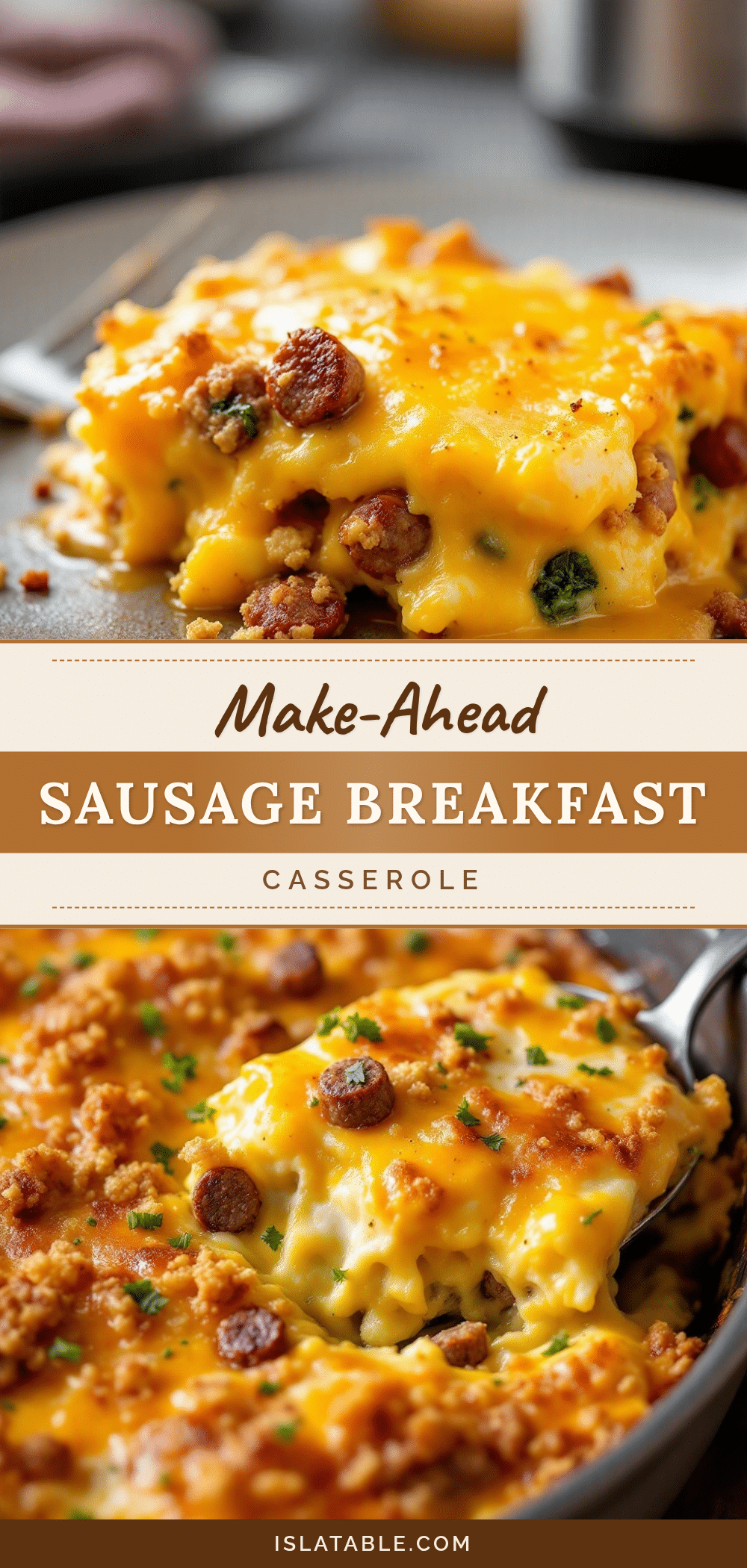
This Easy Cheesy Sausage and Egg Breakfast Casserole is the perfect crowd-pleasing breakfast that requires minimal prep and delivers maximum flavor. With simple ingredients like eggs, milk, bread, sausage, and cheese, it’s forgiving, flexible, and ideal for holiday mornings, lazy Saturdays, or overnight guests.
- Prep Time: 15 minutes
- Cook Time: 35-40 minutes
- Total Time: 50-55 minutes
- Yield: 8 servings 1x
- Category: Breakfast
- Cuisine: American
Ingredients
- 1 pound breakfast sausage
- 8 large eggs
- 2 cups whole milk
- 1 tablespoon Dijon mustard
- 1/2 teaspoon kosher salt
- 1/4 teaspoon black pepper
- 1/4 teaspoon garlic powder (optional)
- 6 cups cubed bread (about 6–8 slices, day-old French bread or sourdough)
- 2 cups shredded cheddar cheese
- 1/2 cup diced onion (optional)
- 1/2 cup diced bell pepper (optional)
- 1 cup fresh spinach (optional)
- 1/4 cup chopped green onions (optional, for garnish)
Instructions
- Preheat your oven to 350°F (175°C). Spray a 9×13-inch baking dish with non-stick cooking spray and set aside.
- Brown the sausage: Place 1 pound breakfast sausage in a large skillet over medium-high heat. Break it up with a spatula and cook for 6-8 minutes until fully browned and no longer pink. Leave about 1 tablespoon of fat in the pan. If adding onion or bell pepper, toss them in during the last 2 minutes of cooking. Set aside to cool slightly.
- Cube the bread: Cut bread into 1-inch cubes. If fresh, let them dry out on the counter for 10-15 minutes. You should have about 6 cups.
- Whisk the egg mixture: In a large mixing bowl, whisk together 8 large eggs, 2 cups whole milk, 1 tablespoon Dijon mustard, 1/2 teaspoon salt, 1/4 teaspoon black pepper, and 1/4 teaspoon garlic powder (if using) until uniform and slightly frothy.
- Layer the casserole: Spread half the bread cubes in the prepared dish. Sprinkle half the cooked sausage over the bread, then 1 cup shredded cheddar. Repeat with remaining bread, sausage, and another cup of cheese.
- Pour the egg mixture: Slowly pour the egg mixture evenly over the casserole in a zigzag pattern. Gently press down on the top layer to help the liquid soak into all the bread cubes.
- Let it rest: Let the casserole sit at room temperature for 15-20 minutes before baking. For overnight preparation, cover with foil and refrigerate.
- Bake: Place in the preheated oven and bake for 35-40 minutes until the top is golden brown and puffed. The center should be set but slightly jiggly. If browning too quickly, tent with foil for the last 10 minutes.
- Rest before serving: Let the casserole rest for 5-10 minutes after baking to allow the eggs to finish setting.
- Serve: Cut into squares and serve warm. Garnish with chopped green onions or fresh parsley if desired.
Notes
For best results, let the casserole rest for 15-20 minutes before baking to allow the bread to absorb the egg mixture. Toasting the bread cubes for 5-7 minutes before assembling adds extra texture. The casserole can be assembled the night before and refrigerated; add 5-10 minutes to baking time if starting from cold. Leftovers keep in the refrigerator for 3-4 days and freeze well for up to 3 months.
Nutrition
- Serving Size: 1 square (1/8 of rec
- Calories: 420
- Sugar: 5
- Sodium: 780
- Fat: 28
- Saturated Fat: 12
- Carbohydrates: 18
- Fiber: 1
- Protein: 28
Keywords: breakfast casserole, sausage egg casserole, easy breakfast, cheesy casserole, crowd-pleasing breakfast, overnight breakfast casserole