Late summer evenings stretch long and slow, with that soft golden light fading gently behind the trees. The air holds the faint scent of pine and something smoky, a quiet invitation to step outside and tend to a simple ritual. It’s the kind of night where the only thing I want is my flavorful cedar plank salmon with maple-Dijon glaze—a dish that’s less about show and more about savoring the moment. The cedar plank crackles softly over the fire, imparting its subtle woodsy aroma to the salmon, while the glaze, sticky and sweet with a hint of tang, clings like a whisper.
This recipe has become a small ceremony in my kitchen, one I turn to when the world feels too loud. It’s not rushed or flashy, just honest cooking that feels like a gentle nod to nature’s rhythm. The texture of the salmon—moist, flaky, kissed by smoke—is something I’ve come to rely on as a quiet comfort. And honestly, the balance of that maple-Dijon glaze, with its perfect blend of sweet and mustardy sharpness, is a detail I never tire of.
I remember the first time I tried cedar plank salmon; it was a discovery that stuck quietly under the surface, waiting to resurface on nights like this. So here it is, a recipe that’s less about impressing and more about grounding—something you’ll come back to, not because it shouts, but because it whispers to your taste buds and your soul.
Why You’ll Love This Recipe
Cooking salmon on a cedar plank might sound fancy, but this recipe is honestly one of the easiest ways to get impressive flavor without fuss. I’ve made this dish countless times, tweaking the glaze to get that perfect maple-Dijon balance that’s neither too sweet nor too sharp.
- Quick & Easy: Ready in about 30 minutes, this recipe fits well into busy weeknights or relaxed weekend dinners with very little prep.
- Simple Ingredients: No need for exotic spices or hard-to-find components—just pantry staples, fresh salmon, and a cedar plank.
- Perfect for Special Occasions: Whether you’re hosting a laid-back summer barbecue or a quiet dinner for two, this salmon feels special without the stress.
- Crowd-Pleaser: The glaze’s sweet-savory punch always wins over kids and adults alike—there’s something about that sticky, tangy finish that hooks everyone.
- Unbelievably Delicious: The cedar plank smoking infuses a delicate woodsy flavor that’s subtle but unmistakably there, paired with the moist, flaky salmon—it’s comfort food with a twist.
What sets this recipe apart is the glaze. I’ve found that blending real maple syrup with Dijon mustard and just a touch of garlic powder gives the salmon a nuanced flavor that’s unlike anything you get from store-bought sauces. Plus, the cedar plank method cooks the fish evenly while keeping it incredibly tender—no drying out here. It’s a technique I trust, and once you try it, you’ll see why this recipe sticks as a favorite for quiet nights and easy entertaining alike.
What Ingredients You Will Need
This recipe uses straightforward, wholesome ingredients that come together to create a nuanced flavor profile—the cedar plank lends gentle smokiness, the glaze adds sweet and tangy depth, and the salmon provides a tender, rich base. Most of these are pantry staples, which means you can pull this dish together with minimal fuss.
- For the Salmon:
- 1 large salmon fillet (about 1.5 pounds or 680 grams), skin on
- Salt and freshly ground black pepper, to taste
- Olive oil or avocado oil, for brushing
- For the Maple-Dijon Glaze:
- 3 tablespoons pure maple syrup (I prefer Grade A for subtle sweetness)
- 2 tablespoons Dijon mustard (look for a smooth, creamy type)
- 1 teaspoon apple cider vinegar (adds a gentle tang and brightness)
- 1/4 teaspoon garlic powder (optional, but adds depth)
- Freshly ground black pepper, a pinch
- For the Cedar Plank:
- 1 untreated cedar plank, soaked in water for at least 1 hour (this prevents burning and imparts flavor)
Pro tip: When selecting your salmon, I recommend wild-caught if possible for the best flavor and texture, but responsibly farmed salmon works well too. If you can’t find cedar planks, alder or hickory planks can be a substitute, though the flavor will differ slightly. For those avoiding maple syrup, honey is a fine alternative, but it will change the glaze’s flavor profile a bit.
Equipment Needed
- Grill or grill pan: A charcoal or gas grill works best for cedar plank salmon to get that authentic smoky flavor. If you’re indoors, a stovetop grill pan can work, but you’ll miss out on the smokiness.
- Large bowl: For mixing the glaze ingredients thoroughly.
- Brush or spoon: To evenly spread the maple-Dijon glaze over the salmon.
- Tongs or spatula: For carefully lifting the cedar plank on and off the grill.
- Food-safe cedar plank (~12 x 7 inches): Ensure it is untreated and soaked well to avoid any flare-ups.
Personally, I’ve tried cedar plank salmon on both a gas grill and a pellet smoker—the pellet smoker adds more smoke flavor but the gas grill is faster and easier to manage. If you don’t have a grill, you might enjoy my indoor smokeless BBQ chicken recipe for a similar smoky taste without the outdoor setup.
Preparation Method
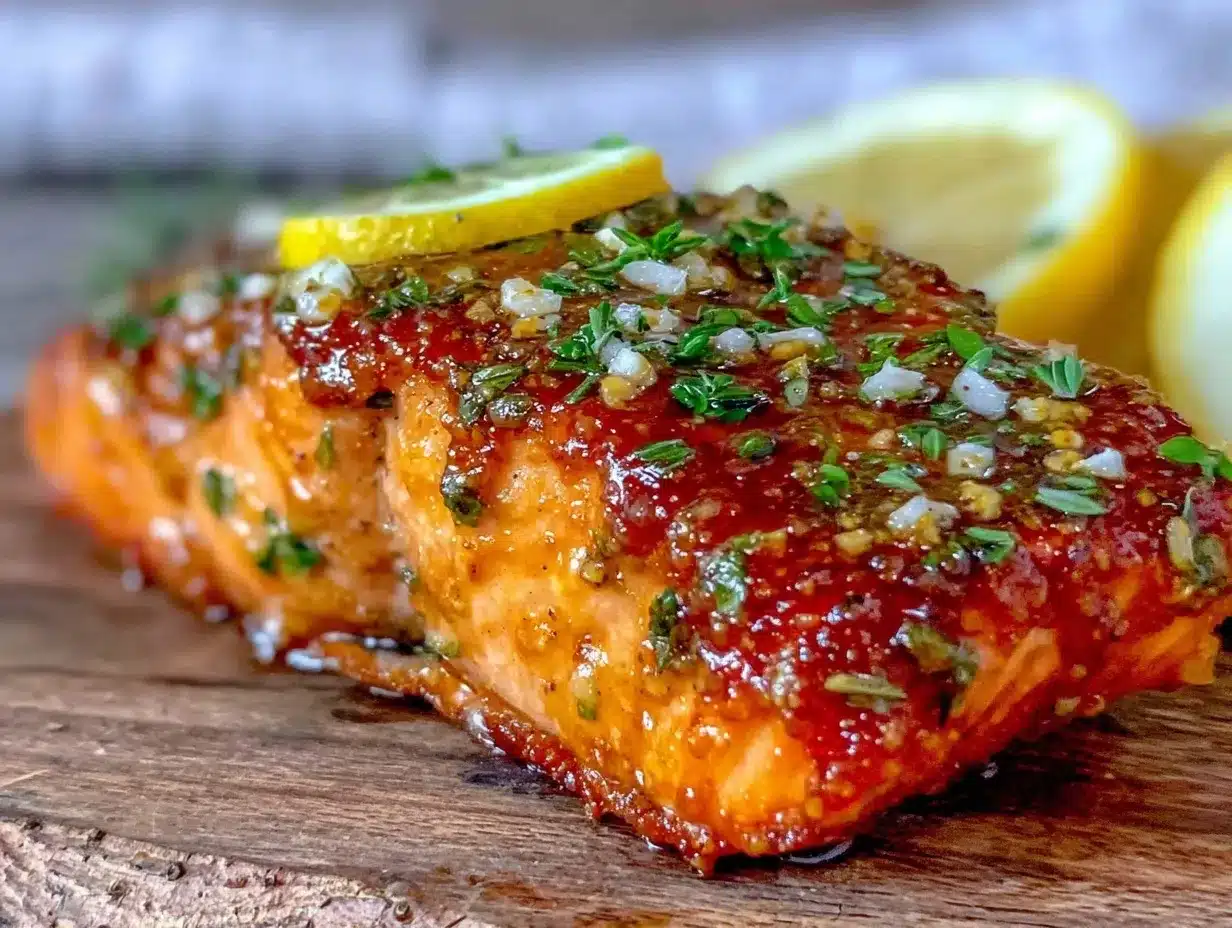
- Soak the Cedar Plank: Place the cedar plank in a large container or sink filled with cold water. Weigh it down if necessary so it stays submerged. Let it soak for at least 1 hour (this step is essential to prevent the wood from catching fire on the grill).
- Prepare the Glaze: While the plank soaks, whisk together 3 tablespoons maple syrup, 2 tablespoons Dijon mustard, 1 teaspoon apple cider vinegar, 1/4 teaspoon garlic powder, and a pinch of black pepper in a bowl. Set aside.
- Prep the Salmon: Pat the salmon dry with paper towels. Brush lightly with olive oil and season both sides with salt and pepper evenly—don’t be shy here, seasoning is key to balanced flavor.
- Preheat the Grill: Heat your grill to medium heat, around 350°F (175°C). If using charcoal, arrange coals on one side to create indirect heat.
- Place the Cedar Plank on the Grill: Remove the plank from water and dry the top surface. Place it directly on the grill grates and close the lid. Let it heat for about 3-5 minutes until it starts to smoke and crackle slightly.
- Add the Salmon: Carefully place the salmon fillet skin-side down on the cedar plank. Brush the glaze generously over the top of the salmon, making sure every bit is coated with that sweet-tangy goodness.
- Cook the Salmon: Close the grill lid and cook for 20-25 minutes. The salmon is done when it flakes easily with a fork and reaches an internal temperature of 145°F (63°C). Watch the plank closely to avoid burning—if edges start to char too much, move it to indirect heat.
- Finishing Touches: Remove the plank with tongs or a spatula, let salmon rest for 5 minutes right on the plank before serving—this helps the juices settle and flavors meld.
If you’re worried about overcooking, you can check the salmon at 15 minutes and brush on an extra coat of glaze if you like it saucier. The smell of cedar smoke mingling with sweet maple is a good sign you’re on track. I always find that letting the salmon rest briefly off the heat makes a noticeable difference in texture.
Cooking Tips & Techniques
Cooking salmon on a cedar plank might seem straightforward, but a few tricks help get it just right every time. First, soaking the plank is a must; skipping this can lead to flare-ups or a bitter burnt taste. I’ve learned that soaking for at least an hour is the sweet spot—longer if you can.
Temperature control is another key. Medium heat is ideal; too high and the plank might catch fire or the salmon will cook unevenly. If you see flames licking the plank, move it to a cooler part of the grill or use a spray bottle with water to tame the flames (trust me, I’ve had to do this more than once).
Brushing on the glaze in layers during cooking adds dimension—start with a generous coat, then add a thin layer halfway through cooking for that sticky, glossy finish. Be careful not to add too much too soon or the sugars in the maple syrup can burn.
Finally, the skin-on salmon helps keep the fillet together and locks in moisture. If you prefer skinless, handle carefully to avoid breaking the fish apart. For a gentle smoky flavor indoors, try my indoor smokeless BBQ chicken recipe as a way to enjoy that cozy BBQ vibe year-round.
Variations & Adaptations
There’s room to tailor this salmon recipe to your tastes and dietary needs. Here are a few ideas I’ve tried or thought about:
- Spicy Twist: Add a teaspoon of smoked paprika or a dash of cayenne to the glaze for a gentle heat that balances the sweetness.
- Herb-Infused: Sprinkle fresh dill or thyme over the salmon before glazing for an aromatic lift that pairs beautifully with maple and mustard.
- Gluten-Free: This recipe is naturally gluten-free, but if you want to add a soy sauce touch, choose tamari or coconut aminos.
- Vegan Alternative: Try cedar plank grilling with thick slices of marinated tofu or tempeh brushed with a similar maple-Dijon glaze—this method works wonders for plant-based meals (like my vegan baked beans with maple syrup).
- Cooking Method Swap: If you don’t have a grill, bake the salmon on a cedar plank in a 400°F (205°C) oven for about 20 minutes—though you’ll miss that woodsmoke aroma, the glaze still shines.
One personal favorite is the herb-infused variation with dill and a squeeze of fresh lemon when serving. It brightens the dish without overshadowing the glaze’s subtle complexity.
Serving & Storage Suggestions
This cedar plank salmon is best served warm, right off the plank if you can—a rustic presentation that feels effortlessly inviting. I like to pair it with simple sides like grilled asparagus or a fresh salad, such as the crisp textures in my healthy keto coleslaw recipe with creamy sugar-free dressing. The brightness of raw veggies balances the smoky-sweet salmon beautifully.
Leftovers keep well in an airtight container in the fridge for up to 3 days. Reheat gently in a low oven (around 275°F or 135°C) covered with foil to avoid drying out, or enjoy cold in a salad or sandwich.
Flavors tend to deepen overnight, so sometimes I actually prefer the salmon the next day, sliced thin with crunchy greens and a drizzle of extra glaze. Just avoid microwaving—it tends to toughen the fish and dull the glaze’s shine.
Nutritional Information & Benefits
A serving of cedar plank salmon with maple-Dijon glaze (approximately 6 ounces or 170 grams) provides a rich source of omega-3 fatty acids, vital for heart and brain health. Salmon is also packed with high-quality protein and B vitamins, making it a nourishing choice.
The glaze uses pure maple syrup, which, while sweet, contains antioxidants and minerals like manganese that refined sugar lacks. Dijon mustard adds flavor with minimal calories and no fat. This recipe is naturally gluten-free and low in carbohydrates, fitting well into a variety of diet plans.
From a wellness perspective, I appreciate how this recipe balances indulgence with nutrition—comfort food that doesn’t feel heavy or overly processed, and that’s something I look for in my meals.
Conclusion
There’s a quiet satisfaction in preparing this flavorful cedar plank salmon with maple-Dijon glaze. It’s a recipe that invites you to slow down and enjoy the process as much as the plate. Whether you’re cooking for yourself on a contemplative evening or sharing a meal with friends, this dish feels both special and approachable.
Feel free to tweak the glaze or try different herbs—there’s no one right way to make it your own. For me, it’s the simple pleasures of smoky cedar, tender salmon, and that sweet-tangy glaze that keeps me coming back. If you try it, I’d love to hear how you made it yours and what sides you chose to pair with it.
Here’s to quiet dinners, thoughtful cooking, and flavors that linger long after the last bite.
Frequently Asked Questions
Can I use a different type of wood plank besides cedar?
Yes, alder or hickory planks can be good alternatives. Just make sure any plank you use is untreated and soaked well before grilling to prevent burning.
How long should I soak the cedar plank before grilling?
At least 1 hour is ideal. This helps prevent the plank from catching fire and allows it to impart smoky flavor gradually as it heats.
Can I bake cedar plank salmon in the oven instead of grilling?
Absolutely. Preheat your oven to 400°F (205°C) and bake the salmon on the soaked plank for about 20 minutes. You won’t get the full smoky flavor but the glaze still shines.
Is the maple-Dijon glaze suitable for people with dietary restrictions?
The glaze is naturally gluten-free and low in carbs. If you’re avoiding maple syrup, honey is a possible substitute, but it will alter the flavor a bit.
How can I tell when the salmon is perfectly cooked?
The salmon should flake easily with a fork and reach an internal temperature of 145°F (63°C). The flesh will look opaque and moist but not raw or overly dry.
Pin This Recipe!
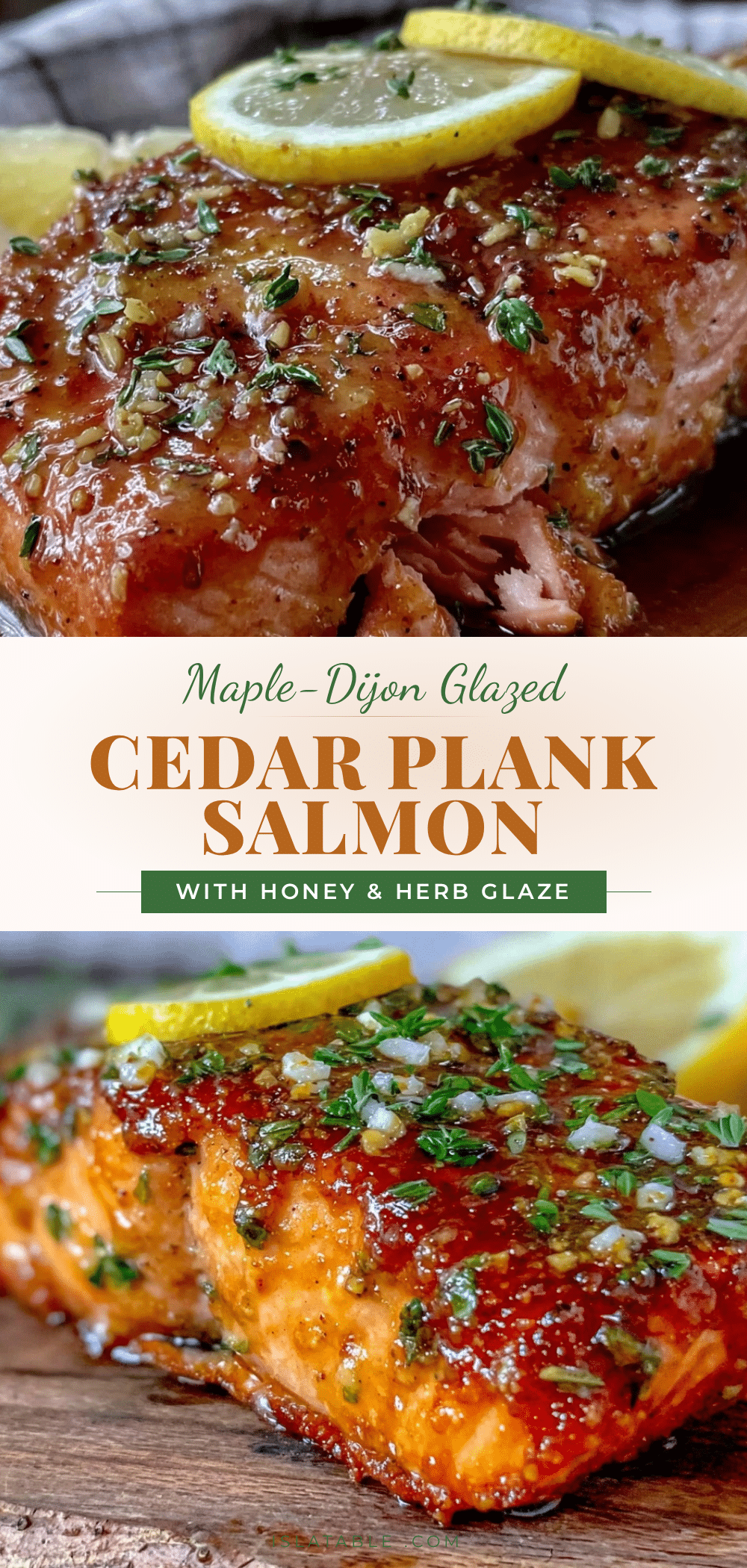
Flavorful Cedar Plank Salmon Recipe with Easy Maple-Dijon Glaze

A simple and delicious cedar plank salmon recipe featuring a sweet and tangy maple-Dijon glaze that imparts a subtle smoky flavor and moist, flaky texture.
- Prep Time: 10 minutes
- Cook Time: 25 minutes
- Total Time: 35 minutes
- Yield: 4 servings 1x
- Category: Main Course
- Cuisine: American
Ingredients
- 1 large salmon fillet (about 1.5 pounds or 680 grams), skin on
- Salt and freshly ground black pepper, to taste
- Olive oil or avocado oil, for brushing
- 3 tablespoons pure maple syrup (Grade A preferred)
- 2 tablespoons Dijon mustard (smooth, creamy type)
- 1 teaspoon apple cider vinegar
- 1/4 teaspoon garlic powder (optional)
- Freshly ground black pepper, a pinch
- 1 untreated cedar plank, soaked in water for at least 1 hour
Instructions
- Soak the cedar plank in cold water for at least 1 hour to prevent burning.
- Whisk together maple syrup, Dijon mustard, apple cider vinegar, garlic powder, and black pepper in a bowl to prepare the glaze.
- Pat the salmon dry with paper towels, brush lightly with olive or avocado oil, and season both sides with salt and pepper.
- Preheat the grill to medium heat (around 350°F or 175°C). For charcoal grills, arrange coals on one side for indirect heat.
- Remove the cedar plank from water, dry the top surface, and place it on the grill grates. Close the lid and heat for 3-5 minutes until it starts to smoke and crackle.
- Place the salmon fillet skin-side down on the cedar plank and brush the glaze generously over the top.
- Close the grill lid and cook for 20-25 minutes until the salmon flakes easily with a fork and reaches an internal temperature of 145°F (63°C). Move the plank to indirect heat if edges start to char.
- Remove the plank with tongs or a spatula and let the salmon rest for 5 minutes on the plank before serving.
Notes
Soak the cedar plank for at least 1 hour to prevent burning. Use medium heat to avoid flare-ups. Brush glaze in layers for best flavor and avoid burning the sugars. Let salmon rest before serving for better texture. If no grill is available, bake on cedar plank at 400°F for about 20 minutes.
Nutrition
- Serving Size: Approximately 6 ounc
- Calories: 350
- Sugar: 7
- Sodium: 150
- Fat: 20
- Saturated Fat: 3
- Carbohydrates: 8
- Protein: 34
Keywords: cedar plank salmon, maple-Dijon glaze, grilled salmon, easy salmon recipe, smoky salmon, healthy dinner, gluten-free salmon