“You ever get that moment when you stare down at a package of chicken thighs and breasts, wondering which one’ll actually turn out juicy and flavorful on your plate? Yeah, that was me last week—standing in front of the fridge, debating what to cook for dinner after a whirlwind day. Honestly, I wasn’t expecting much; chicken breasts have a bad rap for drying out, and thighs sometimes feel like the ‘less fancy’ choice, right? Well, I threw caution to the wind and gave both a real shot, testing every trick I knew for perfect cooking.
Late-night thoughts about flavor and texture had me tweaking marinades and cooking times, almost like a food scientist (minus the lab coat). The smell wafting from the kitchen that evening—smoky, savory, just right—was a quiet reminder that sometimes the simplest proteins teach you the most. It wasn’t just about picking thighs or breasts; it was about understanding what makes each tick in the pan, oven, or grill.
That night, I realized this whole “chicken thighs vs breast” thing isn’t just a debate; it’s a tasty journey with its own rules and rewards. And honestly? Knowing the difference and how to treat each cut has saved me from more than a few dry, disappointing dinners. This guide is for anyone who’s ever stood in front of the chicken section and thought, “Okay, what now?”—because trust me, once you get this down, you’re never going back.
Why You’ll Love This Recipe
After cooking chicken thighs and breasts countless times, I’ve nailed down what makes each cut special—and how to bring out their best flavor and texture. Here’s why this guide is a game-changer:
- Quick & Easy: Whether you’re pan-searing or roasting, the tips here come together in under 30 minutes—perfect for those hectic weeknight dinners or last-minute meal plans.
- Simple Ingredients: No need for fancy spices or rare ingredients. Most of what you’ll need is probably already sitting in your pantry or fridge.
- Perfect for Any Occasion: From casual family dinners to impressing guests at a weekend get-together, the techniques work every time.
- Crowd-Pleaser: Kids, picky eaters, and seasoned foodies alike have given thumbs-up to these easy-to-follow methods.
- Unbelievably Delicious: Achieve that tender juiciness with a crispy edge—flavor profiles that make you savor every bite.
What sets this guide apart? It’s not just about cooking chicken; it’s about understanding the unique nature of thighs and breasts. For example, cooking thighs with the skin on and a dry brine method creates a crispy, flavorful crust that’s hard to beat. On the flip side, breasts benefit from brining or marinating to keep their lean meat from drying out. These aren’t just recipes; they’re secrets to transforming ordinary chicken into something memorable.
Honestly, this isn’t just food on a plate—it’s the kind of meal that makes you pause, close your eyes, and just enjoy that moment. If you want to bring that to your kitchen without fuss, you’re in the right place.
What Ingredients You Will Need
This recipe guide uses straightforward, wholesome ingredients to bring out the best in chicken thighs and breasts without any fuss. Most are pantry staples, so you won’t have to make a special trip to the store.
- Chicken Thighs, bone-in, skin-on (adds flavor and crispiness)
- Chicken Breasts, boneless, skinless (lean and quick-cooking)
- Olive Oil or avocado oil (for searing and roasting; I prefer California Olive Ranch for its mild flavor)
- Salt, preferably kosher salt (essential for seasoning and brining)
- Black Pepper, freshly ground (for seasoning)
- Garlic Powder or fresh garlic, minced (adds depth of flavor)
- Smoked Paprika (great for smoky, savory notes especially on thighs)
- Lemon Juice, fresh (helps tenderize and brighten flavors)
- Fresh Herbs like thyme, rosemary, or parsley (optional but highly recommended for aroma)
- Honey or Maple Syrup (optional, adds subtle sweetness balancing savory spice)
- Buttermilk or plain yogurt (for marinating breasts to keep them moist—swap dairy-free options if needed)
Seasonings can be adjusted to your taste, but these basics create a balanced flavor profile that works well in many dishes. In warmer months, swapping smoked paprika with fresh chili flakes can add a kick. For a gluten-free option, all these ingredients work perfectly as-is.
For those who love experimenting, I sometimes add a touch of cumin or ground coriander for a subtle earthiness, especially on thighs. When marinating breasts, I’m a fan of mixing lemon juice with a bit of honey and garlic powder—trust me, it locks in moisture and adds incredible flavor.
Equipment Needed
- Heavy Skillet or Cast Iron Pan – Ideal for searing chicken thighs and breasts to get that perfect crust. If you don’t have cast iron, a stainless steel pan works too, just make sure it’s well-heated.
- Baking Sheet or Roasting Pan – Useful for finishing chicken in the oven, especially thighs to keep skin crispy.
- Meat Thermometer – Honestly, a game-changer for chicken. It takes the guesswork out, ensuring thighs hit 175°F (79°C) and breasts 165°F (74°C) for safety and juiciness.
- Mixing Bowls – For marinating or brining chicken. Glass or stainless steel preferred to avoid weird flavors.
- Tongs – For turning chicken without piercing the meat and losing juices.
- Paper Towels – To pat chicken dry before seasoning, which helps get crispier skin on thighs.
If you’re on a budget, cast iron pans are worth investing in—they last forever and give that unbeatable sear. I’ve had my trusty skillet for years, and it’s saved me from countless dry chicken disasters. And don’t underestimate the meat thermometer; I used to eyeball doneness until one too many overcooked breasts made me get serious about temperature checks.
Preparation Method
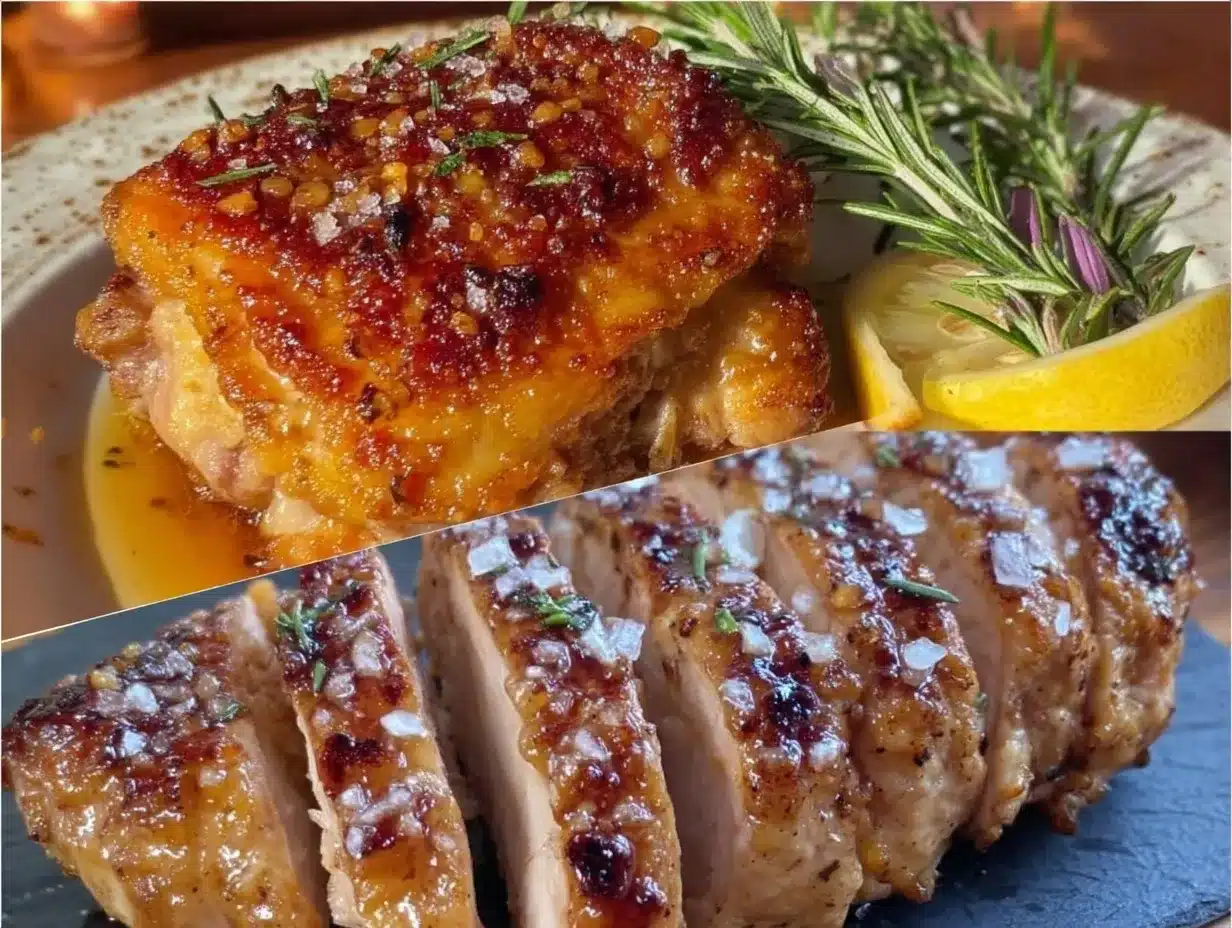
- Prep Your Chicken: Start by patting the chicken thighs and breasts dry with paper towels. This step is key—moisture on the surface means less crispiness. For thighs, leave the skin on; for breasts, skinless is best for even cooking.
- Season or Marinate: For thighs, sprinkle kosher salt, black pepper, garlic powder, and smoked paprika evenly on all sides. Let them sit at room temperature for 15-20 minutes to absorb the flavors. For breasts, whisk together buttermilk (1 cup / 240 ml), lemon juice (2 tablespoons), garlic powder (1 teaspoon), and a pinch of salt. Submerge breasts in the marinade and refrigerate for at least 30 minutes, up to 2 hours.
- Heat Your Pan: Place your skillet over medium-high heat and add 1 tablespoon (15 ml) of olive oil. Wait until the oil shimmers but doesn’t smoke—this is your sweet spot.
- Sear the Chicken: For thighs, place skin-side down first. Press lightly to ensure even contact. Sear for 5-7 minutes without moving them, until the skin is golden and crispy. Flip and sear the other side for 4-5 minutes. For breasts, pat off excess marinade, season lightly, and sear for about 4-5 minutes per side until golden brown.
- Finish in the Oven: Preheat your oven to 400°F (200°C). Transfer the seared chicken (if your skillet is oven-safe) or move to a baking sheet. Bake thighs for 15-20 minutes until internal temperature reaches 175°F (79°C). Breasts need less time—about 10-12 minutes until 165°F (74°C). Use a meat thermometer for the best results.
- Rest the Meat: Remove chicken from the oven and tent loosely with foil. Let rest for 5-7 minutes; this helps juices redistribute so every bite stays juicy.
- Serve and Enjoy: Slice breasts against the grain for tenderness. Thighs are ready to eat as-is, with that crispy skin and juicy interior. Pair with your favorite sides and dig in!
Pro tip: When searing, avoid overcrowding the pan—that steam kills the crisp! If you want a smoky touch, add a sprig of rosemary or thyme to the pan during searing for a subtle aroma. Also, letting the chicken rest is non-negotiable; I’ve learned the hard way that skipping this step leads to dry bites.
Cooking Tips & Techniques
Cooking chicken thighs and breasts perfectly takes a bit of know-how, and these tips come straight from my kitchen trials and occasional mishaps.
- Don’t Skip Patting Dry: Moisture on chicken skin is the enemy of crispiness. Always dry before seasoning.
- Use a Meat Thermometer: It’s the only way to guarantee juicy, safe chicken without guessing. Overcooked breasts are common, so keep an eye on temps.
- Room Temperature Chicken: Letting chicken sit out for 15-20 minutes before cooking helps with even cooking and better browning.
- Resting Time Is Crucial: Rest chicken after cooking; juices need time to redistribute, or you’ll end up with a dry plate.
- Don’t Overcrowd the Pan: Give each piece space to sear properly. Crowding leads to steaming instead of crisping.
- Marinate Breasts for Moisture: Lean breasts dry out fast, so a simple buttermilk or yogurt marinade adds tenderness and flavor.
- For Crispy Thighs: Cook skin-side down longer at the start. The rendered fat helps crisp the skin beautifully.
Once, I got impatient and flipped the thighs too soon—ended up with half-crispy, half-soggy skin. Lesson learned. Also, multitasking really helps: prep your sides or sauces while your chicken rests—that way, everything lands on the table hot and ready.
Variations & Adaptations
Chicken thighs and breasts are versatile—here are some ways to switch things up depending on your mood or dietary needs:
- Spicy Twist: Add cayenne pepper or chili powder to your seasoning mix for thighs, or mix hot sauce into the buttermilk marinade for breasts.
- Herb-Infused: Toss fresh chopped herbs like rosemary, thyme, or oregano into the marinade or sprinkle on top before roasting for a fragrant touch.
- Gluten-Free & Paleo: Stick to oil, salt, pepper, and fresh herbs. Avoid any soy-based marinades or breading. Perfect for clean eating.
- Slow Cooker Adaptation: For thighs, sear first then transfer to slow cooker with broth and herbs for tender, fall-off-the-bone results. Breasts can dry out here, so add extra moisture and cook on low for shorter time.
- Personal Favorite Variation: I love making a quick honey garlic glaze on thighs after roasting—it adds just the right hint of sweetness without overpowering the savory crisp skin.
Depending on your taste buds, adjusting seasonings or cooking methods can make these cuts feel fresh and exciting every time. If you’re curious about pairing these proteins with vibrant sides, something like the crispy broccoli salad with bacon crunch balances textures and flavors beautifully.
Serving & Storage Suggestions
Chicken thighs and breasts shine when served just right—here’s how I like to present and store them:
- Serving Temperature: Best served hot and fresh, right after resting. Slicing breasts thin against the grain makes them more tender, while thighs are great served whole with that crispy skin.
- Presentation: Garnish with fresh herbs or a squeeze of lemon to brighten flavors. For a family-style meal, serve alongside mashed potatoes or a vibrant salad like the creamy chicken salad with sweet grapes for a refreshing contrast.
- Storage: Cool leftover chicken to room temperature, then store in an airtight container in the refrigerator for up to 3 days. For longer storage, freeze in portions for up to 3 months.
- Reheating: Reheat gently in a skillet over low heat to preserve moisture and crispness, or warm in the oven at 325°F (160°C) covered with foil to avoid drying out.
- Flavor Development: Leftover chicken often tastes better the next day as the flavors meld, especially if marinated or glazed. Just avoid overcooking when reheating.
Nutritional Information & Benefits
Chicken thighs and breasts offer distinct nutritional profiles that can fit different dietary goals:
| Cut | Calories (per 3 oz / 85g) | Protein | Fat |
|---|---|---|---|
| Chicken Thigh (skin-on) | 180-210 | 21g | 10-12g (higher fat content) |
| Chicken Breast (skinless) | 110-130 | 26g | 2-3g (leaner) |
Thighs provide more iron and zinc due to higher fat content, which also means they’re naturally juicier and more forgiving during cooking. Breasts are leaner and great for low-fat, high-protein diets but can dry out without proper technique. Both cuts are gluten-free and rich in essential amino acids.
From a wellness perspective, this guide helps you enjoy chicken without guilt or sacrifice—balancing flavor and health based on your preferences. For a comforting meal that fits your lifestyle, these cuts can be stars on your plate.
Conclusion
Choosing between chicken thighs and breasts doesn’t have to be a mystery or a gamble. Understanding the strengths of each cut and how to handle them in the kitchen makes all the difference. Whether you crave the crispy, rich texture of thighs or the lean, versatile nature of breasts, this guide gives you a roadmap for perfect results every time.
Feel free to tweak the seasonings or cooking times to suit your taste—cooking chicken is as much about personal touch as it is about technique. I keep coming back to these methods because they consistently deliver juicy, flavorful meals that make dinner feel special without extra stress.
And hey, if you want to mix things up with a creamy, comforting dish, you might enjoy the creamy Cajun chicken pasta recipe—also a winner for busy nights. Just remember: cooking chicken well is a skill that once you’ve nailed, opens up endless dinner possibilities.
Happy cooking, and may your chicken always be juicy and full of flavor!
FAQs
What is the main difference between chicken thighs and breasts for cooking?
Chicken thighs have higher fat content and darker meat, making them juicier and more forgiving during cooking. Breasts are leaner with white meat and require careful cooking to avoid drying out.
How long should I cook chicken breasts vs thighs?
Breasts typically cook faster—about 10-12 minutes in a 400°F (200°C) oven after searing—while thighs need 15-20 minutes due to their thickness and bone-in nature.
Can I substitute chicken thighs for breasts in recipes?
Yes, but cooking times and seasoning may need adjustment. Thighs benefit from longer cooking and higher heat to crisp the skin, while breasts cook quickly and need moisture-retaining methods like marinating.
How do I keep chicken breasts juicy?
Marinate them in buttermilk or a yogurt-based mixture before cooking, avoid overcooking, and let them rest after cooking to retain moisture.
Is it better to cook chicken thighs with skin on?
Yes, cooking thighs with skin on helps retain moisture and creates a crispy, flavorful crust that adds texture and taste.
Pin This Recipe!
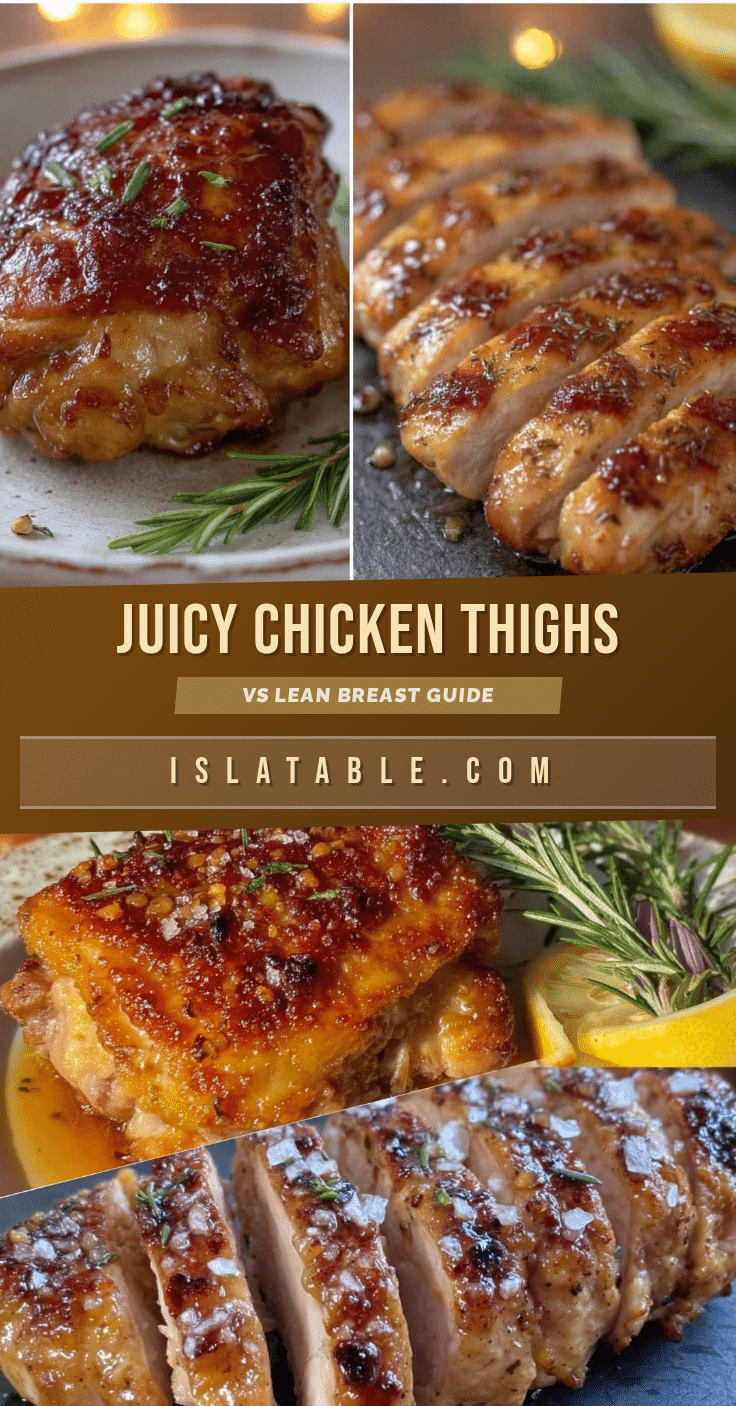
Flavorful Chicken Thighs vs Breast Guide Easy Perfect Cooking Tips 2024

A comprehensive guide to cooking juicy and flavorful chicken thighs and breasts with tips on seasoning, cooking times, and techniques for perfect results every time.
- Prep Time: 15 minutes
- Cook Time: 25 minutes
- Total Time: 40 minutes
- Yield: 4 servings
- Category: Main Course
- Cuisine: American
Ingredients
- Chicken Thighs, bone-in, skin-on
- Chicken Breasts, boneless, skinless
- Olive Oil or avocado oil
- Kosher Salt
- Black Pepper, freshly ground
- Garlic Powder or fresh garlic, minced
- Smoked Paprika
- Fresh Lemon Juice
- Fresh Herbs like thyme, rosemary, or parsley (optional)
- Honey or Maple Syrup (optional)
- Buttermilk or plain yogurt (for marinating breasts)
Instructions
- Pat chicken thighs and breasts dry with paper towels. Leave skin on thighs; breasts skinless.
- For thighs, season with kosher salt, black pepper, garlic powder, and smoked paprika. Let sit at room temperature for 15-20 minutes.
- For breasts, whisk together 1 cup buttermilk, 2 tablespoons lemon juice, 1 teaspoon garlic powder, and a pinch of salt. Marinate breasts in mixture for 30 minutes to 2 hours in the refrigerator.
- Heat skillet over medium-high heat and add 1 tablespoon olive oil. Heat until oil shimmers but does not smoke.
- Sear thighs skin-side down for 5-7 minutes until golden and crispy. Flip and sear other side for 4-5 minutes.
- Pat excess marinade off breasts, season lightly, and sear for 4-5 minutes per side until golden brown.
- Preheat oven to 400°F (200°C). Transfer chicken to oven-safe skillet or baking sheet.
- Bake thighs for 15-20 minutes until internal temperature reaches 175°F (79°C). Bake breasts for 10-12 minutes until 165°F (74°C). Use a meat thermometer to check.
- Remove chicken from oven and tent loosely with foil. Rest for 5-7 minutes to redistribute juices.
- Slice breasts against the grain and serve thighs whole with crispy skin. Pair with favorite sides and enjoy.
Notes
Pat chicken dry before seasoning to ensure crispiness. Use a meat thermometer to avoid overcooking. Let chicken rest after cooking to keep it juicy. Avoid overcrowding the pan to prevent steaming. Adding fresh herbs during searing adds aroma. Marinate breasts in buttermilk or yogurt to retain moisture.
Nutrition
- Serving Size: Approximately 3 oz (
- Calories: 150170
- Sugar: 1
- Sodium: 350400
- Fat: 67
- Saturated Fat: 1.52
- Carbohydrates: 12
- Protein: 2324
Keywords: chicken thighs, chicken breasts, cooking tips, juicy chicken, crispy chicken skin, easy chicken recipe, weeknight dinner, healthy chicken