“No sugar, no fuss,” I kept telling myself as I stared down the mountain of sugary cereals and brightly colored boxes at the grocery store. My toddler’s diet was quickly becoming a battleground of sneaky sugars hiding in innocent-looking breakfast options. One morning, after a small meltdown over a bowl of plain oatmeal, I knew it was time to rethink breakfast entirely. Honestly, I had been skeptical about cutting out added sugar—how would my kid even eat anything? But one early Saturday, with the kitchen quiet except for the hum of the toaster, I whipped up a simple banana and oat pancake batter without a single grain of sugar added. The smile that followed that first bite? Priceless.
Since then, I’ve been on a bit of a run—not the kind where you wear running shoes, but the kind where you keep making these healthy toddler breakfasts repeatedly, experimenting with flavors and textures that stick without the sugar crash. I’ve learned that it’s not just about avoiding sugar; it’s about crafting meals that are as comforting and fun as their sugary counterparts. Plus, it’s given me peace of mind knowing I’m feeding my little one something wholesome to kick off the day.
What really surprised me? How easy it is to prep these breakfasts, even on rushed mornings. You know that juggling act where you’re getting a toddler dressed while trying to make coffee? These recipes fit right into that chaos without adding stress. And that quiet satisfaction when your kid happily munches on something you made without a hint of added sugar—that’s why these recipes stuck with me, and why they might just stick with you too.
Why You’ll Love These Healthy Toddler Breakfast Ideas Without Added Sugar
After testing and tweaking these breakfast ideas over months—sometimes multiple times a week—I’m confident they’re kid-friendly and parent-approved. Here’s what makes them stand out:
- Quick & Easy: Most recipes come together in under 20 minutes, perfect for busy mornings when you’re racing the clock.
- Simple Ingredients: No need to hunt down fancy or expensive items. You’ll mostly use pantry staples and fresh produce.
- Perfect for Every Occasion: Whether it’s a casual weekday breakfast or a weekend brunch, these ideas fit right in.
- Crowd-Pleaser: Both toddlers and picky eaters have given these recipes a thumbs-up.
- Unbelievably Delicious: The flavors and textures offer that comforting feel of classic breakfasts, minus the sugar spike.
What sets these apart? It’s the thoughtful balance of natural sweetness from fruits and wholesome grains, paired with creative ways to introduce veggies and protein. For example, blending cottage cheese into batter for smooth pancakes or using ripe bananas as a natural sweetener makes a difference. It’s not just a sugar-free swap—it’s about flavor and nutrition working hand in hand.
Plus, these breakfasts are designed to be stress-free for parents who want their toddlers to eat well without the drama. It’s comfort food, but smarter and kinder to little tummies. Honestly, after trying these, I can’t imagine going back to sugary cereals or pre-packaged breakfast bars. They’re just too good and too simple.
What Ingredients You Will Need
These healthy toddler breakfast ideas rely on wholesome, easy-to-find ingredients that bring natural flavors and nutrients to the table. Most of them are pantry staples or fresh items you can grab on any grocery run.
- Whole-Grain Flours: Such as whole wheat flour, oat flour, or buckwheat flour (great for fiber and texture).
- Oats: Rolled or quick oats add heartiness and mild sweetness. I prefer Bob’s Red Mill for consistent quality.
- Fresh or Frozen Fruits: Bananas (ripe ones for natural sweetness), apples, blueberries, and pears. Fresh is best, but frozen works fine too.
- Dairy or Dairy Alternatives: Plain yogurt (Greek or regular), cottage cheese, or plant-based yogurts like coconut or almond to keep things creamy.
- Eggs: Large and preferably organic to add protein and help bind batters.
- Natural Flavorings: Cinnamon, nutmeg, vanilla extract (pure, no added sugars), and a pinch of salt to balance flavors.
- Vegetables: Zucchini, carrots, or pumpkin purée—don’t worry, these add moisture and nutrients without overpowering taste.
- Healthy Fats: Unsalted butter, coconut oil, or mild olive oil for cooking and richness.
- Leavening Agents: Baking powder or baking soda to give pancakes and muffins a nice rise.
Optional but handy:
- Chia or Flax Seeds: For extra omega-3s and fiber (grind them fresh if possible).
- Nut Butters: Natural peanut or almond butter without added sugar to add creaminess and protein.
When fresh berries are in season, swapping in those instead of frozen adds a burst of color and flavor. For gluten-free options, almond or oat flour are excellent substitutes. I’ve also found that organic eggs and local dairy products make the flavors pop a bit more, but regular brands work just fine. You can even mix in a little shredded cheese to sneak in savory notes, inspired by some of my favorite recipes like the creamy chicken salad with sweet grapes—though that’s more of a lunch idea, it’s a reminder that mixing sweet and savory can be fun and kid-friendly.
Equipment Needed
Thankfully, these breakfast recipes don’t demand fancy kitchen gear. Here’s what you’ll want:
- Mixing Bowls: At least one large bowl and a small one for wet ingredients.
- Measuring Cups and Spoons: Precision helps, especially with baking powders and spices.
- Non-Stick Skillet or Griddle: For pancakes and quick sautés. A cast-iron skillet works beautifully if you have one.
- Blender or Food Processor: Optional but handy for blending fruits or veggies into batters or smoothies.
- Baking Pan or Muffin Tin: For baked items like muffins or breakfast bars.
- Spatula and Whisk: Basic tools for mixing and flipping.
For those on a budget, a simple non-stick pan and wooden spoon can work wonders. I remember my first batch of healthy pancakes was made in a scratched-up old skillet, and they still turned out great! If you use a cast-iron skillet, keep it well-seasoned for even cooking and easy flipping. Cleaning your blender right after use saves a lot of hassle, especially on busy mornings.
Preparation Method
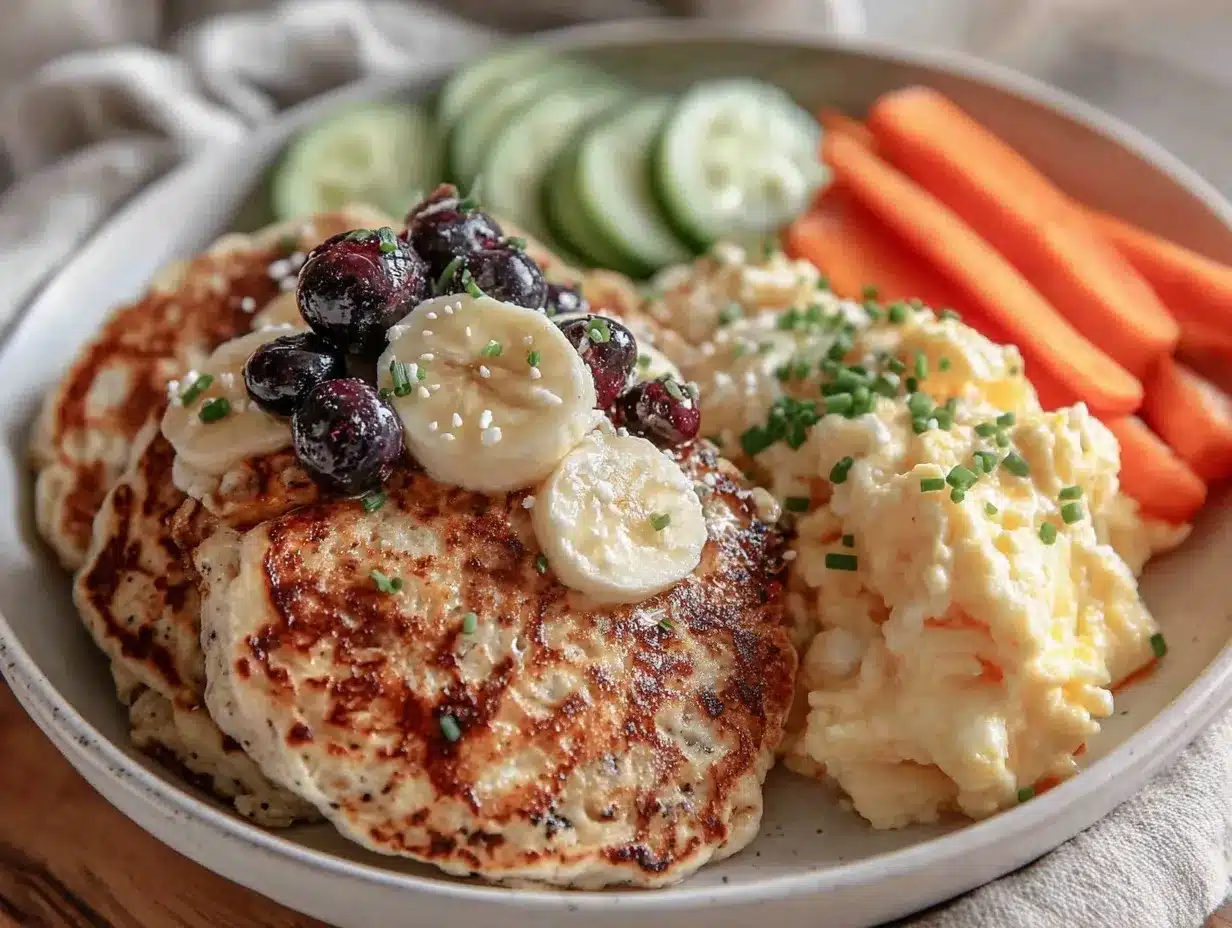
- Gather Your Ingredients: Measure out dry ingredients like flour (120g / 1 cup whole wheat or oat flour), baking powder (1 tsp), and spices such as cinnamon (½ tsp). Having everything ready helps keep the prep smooth.
- Mix Dry Ingredients: In a large bowl, whisk together the flour, baking powder, cinnamon, and a pinch of salt (about ⅛ tsp). This step ensures even distribution and avoids clumps.
- Prepare Wet Ingredients: In a separate bowl, mash one ripe banana (about 100g), then add one large egg, 120ml (½ cup) plain yogurt, and 1 tbsp melted unsalted butter or coconut oil. Whisk until smooth. The banana is your natural sweetener, so no added sugar is needed here.
- Combine Wet and Dry: Pour the wet mixture into the dry ingredients bowl. Stir gently until just combined—overmixing can make pancakes tough. The batter should be thick but pourable. Add a splash of milk (dairy or plant-based, about 2 tbsp) if too thick.
- Heat Your Skillet: Place your non-stick pan or griddle over medium heat. Add a small pat of butter or oil to prevent sticking. You’ll know it’s ready when a few drops of water sizzle upon contact.
- Cook the Pancakes: Spoon 2-3 tbsp of batter per pancake onto the skillet. Cook for about 2-3 minutes until bubbles form on the surface and the edges look set. Flip carefully using a spatula, and cook another 1-2 minutes until golden and cooked through.
- Serve Warm: Stack pancakes on a plate and let them cool slightly before serving to your toddler. You can top with fresh fruit or a dollop of plain yogurt for extra creaminess.
- Cleanup Tip: Rinse your mixing bowls and utensils right away to avoid dried batter sticking, making cleanup quicker for your next breakfast adventure.
If you want to try baked options like muffins or bars, the process is similar but involves pouring batter into greased tins and baking at 180°C (350°F) for 15-20 minutes. Remember to test with a toothpick—if it comes out clean, your breakfast is ready.
Cooking Tips & Techniques
Cooking for toddlers means balancing nutrition with texture and flavor that’s easy to handle. Here are some tips I’ve picked up along the way:
- Don’t Overmix Batters: Stir just enough to combine ingredients. Overmixing develops gluten and can make pancakes or muffins rubbery.
- Test Your Heat: Medium heat is key to cooking pancakes evenly without burning the outside while leaving the inside raw.
- Use Ripe Fruits: Bananas and apples that are slightly overripe add natural sweetness and moisture, making added sugar unnecessary.
- Incorporate Veggies Discreetly: Grated zucchini or carrots blend well in batters and add nutrients without altering flavor much. I once made a batch with shredded carrots, and my toddler didn’t even notice!
- Prep Ahead: Mix dry ingredients the night before, or make a batch of muffins and freeze them for quick breakfasts.
- Keep It Fun: Use cookie cutters to shape pancakes, or let your toddler help sprinkle cinnamon or fruit on top.
- Be Patient: Sometimes toddlers need a few tries to get used to new flavors. Keep offering these meals without pressure.
One hiccup I often faced was pancakes sticking to the pan. Switching to a well-seasoned cast iron skillet helped, but a light grease of coconut oil also did the trick. These small adjustments make mornings less hectic.
Variations & Adaptations
Every toddler is unique, and these healthy breakfast ideas can be tweaked to match their tastes and dietary needs:
- Gluten-Free: Swap whole wheat flour with almond flour or oat flour certified gluten-free. Oat flour adds a mild sweetness and soft texture.
- Vegan Option: Replace eggs with flax or chia egg (1 tbsp ground seeds + 3 tbsp water, set for 5 mins) and use plant-based yogurt and milk.
- Fruit Swaps: Instead of banana, try applesauce or mashed pears for natural sweetness.
- Spice It Up: Add a dash of nutmeg or ginger for a warm, cozy flavor twist.
- Protein Boost: Stir in a spoonful of natural peanut butter or cottage cheese for extra creaminess and protein, similar to the creamy texture found in the creamy boursin cheese pasta, though without the garlic punch.
One variation I love is mixing shredded zucchini and carrot into the pancake batter, which sneaks in a serving of veggies without fuss. It’s a quiet win on busy mornings.
Serving & Storage Suggestions
Serve these healthy toddler breakfasts warm but not hot—toddlers’ mouths are sensitive, you know. Presentation can make a difference; try arranging pancakes with colorful fruit slices or a swirl of plain yogurt on top.
Pair breakfasts with a small cup of milk or water to keep hydration balanced. For a fun twist, offer a mild herbal tea like chamomile (cooled) or a fresh fruit smoothie made without added sugar.
Leftovers can be stored in an airtight container in the refrigerator for up to 3 days or frozen for up to 2 months. Reheat pancakes or muffins in a toaster or microwave for about 30 seconds. Flavors tend to mellow and deepen after refrigeration, often making the taste more enjoyable the next day.
By the way, if you’re scouting for more wholesome meal ideas beyond breakfast, the hearty comfort of savory Italian beef sandwiches or the fresh crunch of crispy broccoli salad with bacon crunch might just inspire your family dinners.
Nutritional Information & Benefits
These breakfast ideas are rich in fiber, protein, and essential vitamins, without the sugar crash associated with many commercial breakfasts. Using whole grains supports digestive health, while fruits add natural antioxidants and vitamins like C and A.
Key ingredients like eggs and yogurt provide protein and calcium, important for growing toddlers. The inclusion of veggies adds fiber and micronutrients that help build immunity and support energy levels throughout the day.
These recipes are naturally gluten-friendly when using oat or almond flours and can be adjusted for dairy-free diets by swapping yogurts and milks. Always check for allergies, especially with nuts and dairy, and adapt accordingly.
Conclusion
Making healthy toddler breakfasts without added sugar doesn’t have to be stressful or bland. These recipes prove you can serve up meals that are nutritious, tasty, and toddler-approved—without sneaking in hidden sugars.
Feel free to customize based on your child’s preferences and dietary needs. Whether you add a pinch of cinnamon, swap fruits, or sneak in veggies, these ideas are flexible and forgiving. Personally, I love how these breakfasts start our days with calm and confidence, knowing I’m nourishing my little one the best way I can.
If you try any of these recipes or have your own sugar-free breakfast wins, I’d love to hear about them—sharing these moments keeps us all inspired and connected in this parenting journey.
Frequently Asked Questions
Can I prepare these breakfast recipes in advance?
Yes! Many recipes like pancakes and muffins can be made ahead and refrigerated or frozen. Just reheat gently before serving.
What are good natural sweeteners for toddler breakfasts?
Ripe bananas, unsweetened applesauce, and mashed pears add gentle natural sweetness without added sugars.
How can I make these recipes dairy-free?
Use plant-based yogurts and milks such as almond, coconut, or oat milk. Coconut yogurt adds creaminess without dairy.
What if my toddler refuses to eat these sugar-free breakfasts?
Patience is key. Offer the meals repeatedly without pressure, and try varying textures or flavors. Sometimes it takes a few tries.
Are these recipes suitable for toddlers with food allergies?
They can be adapted. For nut allergies, avoid nut flours and butters. Always check ingredient labels and consult a pediatrician if unsure.
Pin This Recipe!
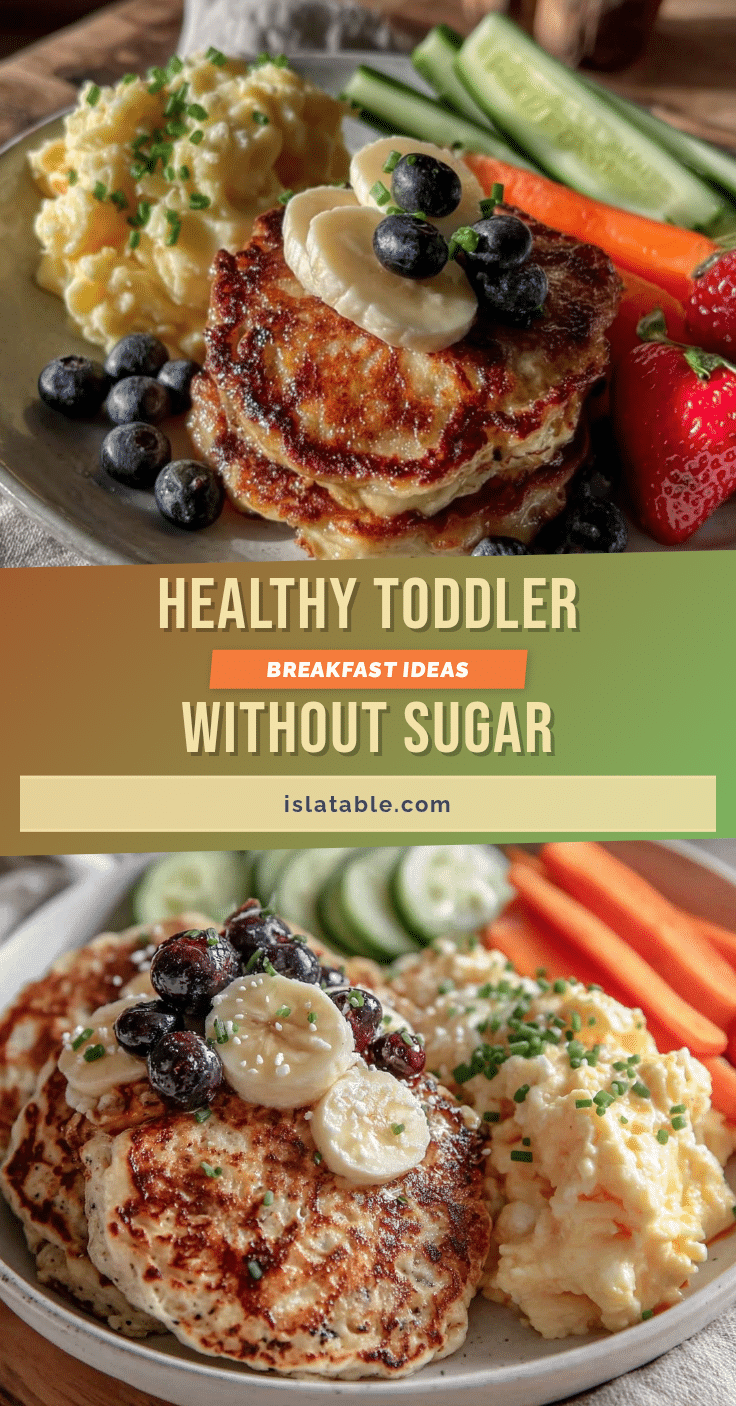
Healthy Toddler Breakfast Ideas Without Added Sugar
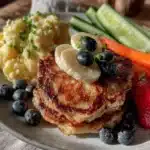
Nutritious and easy-to-make breakfast recipes for toddlers that contain no added sugar, using wholesome ingredients like fruits, whole grains, and dairy or dairy alternatives.
- Prep Time: 10 minutes
- Cook Time: 10 minutes
- Total Time: 20 minutes
- Yield: 4 servings
- Category: Breakfast
- Cuisine: American
Ingredients
- Whole wheat flour, oat flour, or buckwheat flour (about 1 cup / 120g)
- Rolled or quick oats
- Ripe bananas (about 1 medium banana, 100g)
- Apples, blueberries, pears (fresh or frozen)
- Plain yogurt (Greek or regular) or plant-based yogurt (coconut or almond)
- Large eggs (preferably organic)
- Cinnamon (½ teaspoon)
- Nutmeg (optional)
- Vanilla extract (pure, no added sugars)
- Pinch of salt (about ⅛ teaspoon)
- Zucchini, carrots, or pumpkin purée (optional)
- Unsalted butter, coconut oil, or mild olive oil (1 tablespoon melted for batter, plus more for cooking)
- Baking powder (1 teaspoon) or baking soda
- Milk (dairy or plant-based, about 2 tablespoons, optional if batter is too thick)
- Chia or flax seeds (optional, 1 tablespoon ground)
- Natural peanut or almond butter without added sugar (optional)
Instructions
- Gather your ingredients: measure out dry ingredients like flour (1 cup / 120g), baking powder (1 tsp), cinnamon (½ tsp), and a pinch of salt (⅛ tsp).
- Mix dry ingredients in a large bowl: whisk together flour, baking powder, cinnamon, and salt to avoid clumps.
- Prepare wet ingredients in a separate bowl: mash one ripe banana (about 100g), add one large egg, ½ cup (120ml) plain yogurt, and 1 tablespoon melted unsalted butter or coconut oil. Whisk until smooth.
- Combine wet and dry ingredients: pour wet mixture into dry ingredients bowl and stir gently until just combined. Add about 2 tablespoons milk if batter is too thick.
- Heat a non-stick skillet or griddle over medium heat and add a small pat of butter or oil to prevent sticking.
- Cook pancakes: spoon 2-3 tablespoons of batter per pancake onto skillet. Cook 2-3 minutes until bubbles form and edges look set, then flip and cook another 1-2 minutes until golden and cooked through.
- Serve warm: stack pancakes on a plate and let cool slightly before serving. Optionally top with fresh fruit or a dollop of plain yogurt.
- Cleanup tip: rinse mixing bowls and utensils immediately to avoid dried batter sticking.
Notes
Do not overmix batter to avoid tough pancakes. Use ripe fruits for natural sweetness. Incorporate grated veggies like zucchini or carrots for added nutrients. For baked muffins or bars, bake at 350°F (180°C) for 15-20 minutes and test doneness with a toothpick. Store leftovers in airtight container in refrigerator up to 3 days or freeze up to 2 months. Reheat gently before serving.
Nutrition
- Serving Size: 1 serving equals app
- Calories: 150
- Sugar: 5
- Sodium: 150
- Fat: 6
- Saturated Fat: 2
- Carbohydrates: 22
- Fiber: 3
- Protein: 5
Keywords: healthy toddler breakfast, no added sugar, sugar-free toddler meals, easy toddler recipes, banana oat pancakes, gluten-free toddler breakfast, vegan toddler breakfast option