“Have you ever tried dandelion tea?” my coworker asked one slow afternoon, sliding a small cup across the desk. The golden liquid smelled earthy yet bright, like a meadow after rain. I’d always thought dandelions were just pesky weeds, but this tea was different—refreshing, surprisingly smooth, and oddly comforting. It wasn’t long before that simple cup became a quiet ritual, especially when my liver felt overworked from late nights and heavy meals. Honestly, I was skeptical at first. How could something so humble pack a punch for liver health? But with each sip, I felt a subtle reset, a gentle nudge toward wellness.
That first cup sparked a little obsession. I started gathering fresh dandelion greens during weekend walks, carefully picking the leaves and roots, and experimenting with the perfect brew. It wasn’t just about health—it was about slowing down, grounding myself with nature’s simplicity. Fresh dandelion tea became a small act of self-care in a noisy world. And if you’re curious about how to make this easy, soothing tea that’s been quietly cherished for centuries, I’m sharing my best version here. No fancy ingredients, just five easy steps to a cup that feels like a fresh start.
What’s stuck with me is how this tea manages to taste like pure calm while quietly supporting liver wellness. It’s not a cure-all, but it’s a humble little helper I turn to when life gets overwhelming. So, if you want a fresh way to boost your liver health with something you can find just about anywhere, this fresh dandelion tea recipe might be the perfect place to start.
Why You’ll Love This Fresh Dandelion Tea Recipe
Making fresh dandelion tea has been a game changer in my weekly routine, and here’s why it might become a favorite for you too:
- Quick & Easy: This tea takes under 15 minutes from picking leaves to sipping. Perfect for busy days when you need a health boost without fuss.
- Simple Ingredients: No need for exotic herbs or supplements. Just fresh dandelion leaves and roots, water, and maybe a little honey if you like.
- Perfect for Wellness Rituals: Whether it’s morning calm or an evening wind-down, this tea fits seamlessly into your day.
- Crowd-Pleaser: Even friends who aren’t tea fans often end up asking for a second cup—its mild, slightly bitter flavor grows on you.
- Unbelievably Delicious: The fresh dandelion brings a subtle earthy sweetness with a hint of floral brightness that feels like a hug in a cup.
- Unique and Authentic: Unlike store-bought dandelion teas, this recipe uses fresh-picked leaves and roots, which makes a huge difference in flavor and potency.
This isn’t just another herbal tea recipe. The fresh dandelion’s natural bitterness is balanced perfectly by a short steep and a touch of honey, creating a brew that’s gentle yet effective. It’s like a secret handshake with your body, helping your liver in a way that feels natural and nurturing. If you’ve ever tried to soothe your system after a heavy meal or just want to add a wellness habit that feels grounding, this tea is a subtle but rewarding companion.
What Ingredients You Will Need
This fresh dandelion tea recipe uses simple, wholesome ingredients to deliver bold flavor and support your liver without any complicated steps. Most of these are easy to find, especially if you have access to a clean outdoor space or farmer’s market.
- Fresh dandelion leaves: About 1 cup, lightly packed (young leaves are best for a milder taste). Make sure they’re free of pesticides and harvested from a safe area.
- Fresh dandelion roots: 1 small root (around 2-3 inches long), cleaned and chopped. The root adds richness and depth to the tea.
- Filtered water: 4 cups (1 liter) to brew the tea. Good water makes a noticeable difference in flavor.
- Honey or maple syrup (optional): 1-2 teaspoons to sweeten (if desired). I recommend local honey for the best natural flavor.
- Lemon slice (optional): Adds brightness and complements the earthiness.
If you’re picking your own dandelions, look for vibrant green leaves without yellowing edges and roots that are firm and white inside. Avoid plants near roads or sprayed lawns. For a gluten-free twist, make sure your sweetener choice is pure and unprocessed.
Equipment Needed
- Small sharp knife: For chopping roots and leaves precisely.
- Cutting board: Separate one if harvesting outdoors to avoid dirt contamination.
- Medium saucepan or pot: To boil your filtered water and simmer the roots and leaves.
- Fine mesh strainer or tea infuser: Essential to catch the dandelion bits before pouring.
- Heatproof teapot or jug: For steeping and serving the tea comfortably.
- Measuring cup: For accuracy, especially if you want to follow the recipe strictly.
Optional:
- Kitchen scale: Handy if you want to weigh fresh ingredients for precision.
- Mason jar or glass bottle: For storing leftover tea in the fridge.
I’ve found that a good sharp knife makes prepping the roots much less frustrating—dull blades tend to squash the roots instead of cleanly chopping them. Also, a fine mesh strainer really helps with a smooth cup, especially if you’re brewing loose leaves instead of a tea bag.
Preparation Method
- Prepare the dandelions: Rinse 1 cup of fresh dandelion leaves and 1 small root thoroughly under cool water to remove any dirt or grit. Chop the root into small pieces (about ¼ inch) to help release flavor. This should take about 5 minutes.
- Boil the water: Bring 4 cups (1 liter) of filtered water to a rolling boil in your saucepan. Using filtered water ensures a cleaner taste. This step usually takes 5-7 minutes depending on your stove.
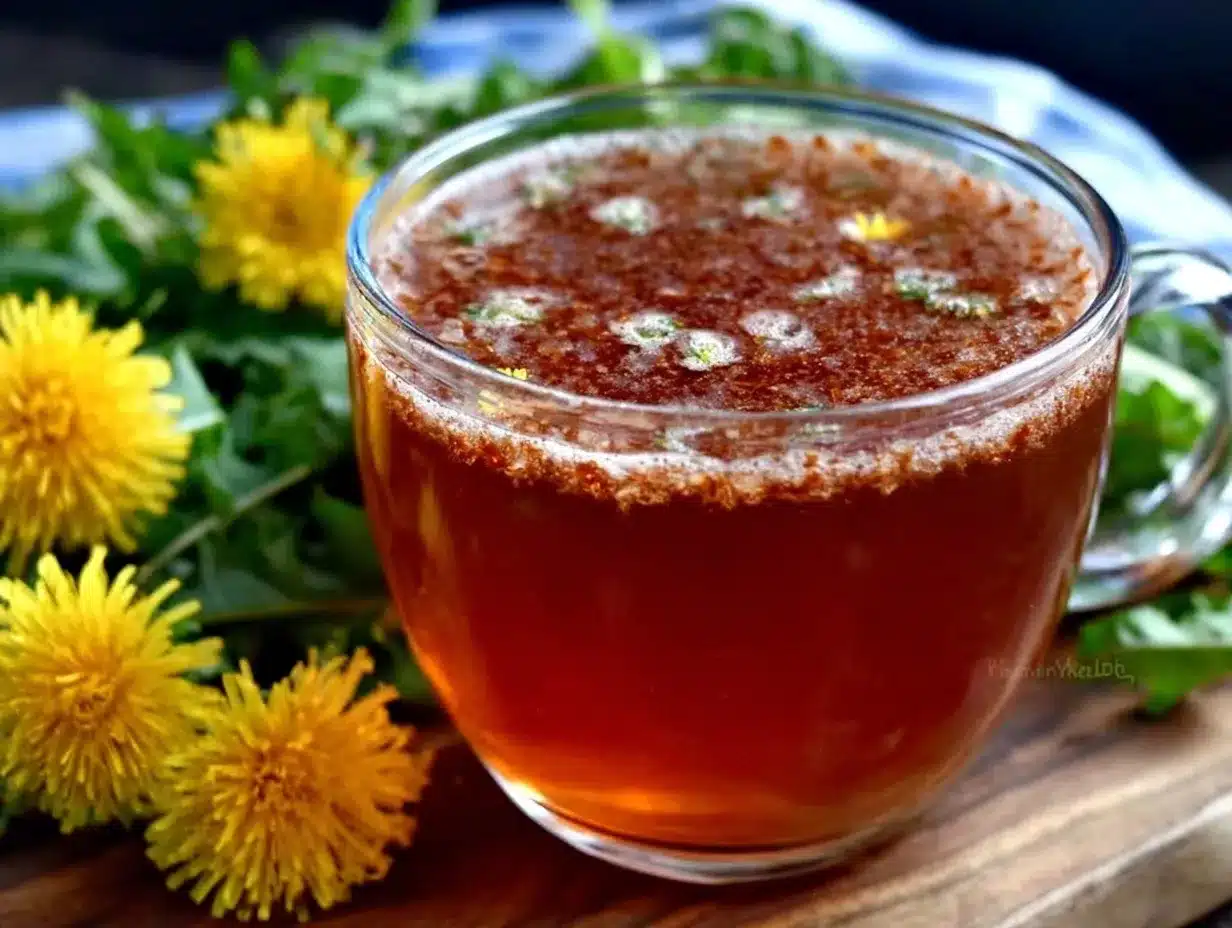
- Add the dandelions: Once boiling, reduce the heat to low and add the chopped roots and leaves to the water. Let this simmer gently for 10 minutes. You’ll notice the water turning a warm golden amber color with a light earthy aroma—a good sign that the beneficial compounds are infusing.
- Steep the tea: After simmering, remove the pot from heat and cover it with a lid. Let the tea steep for an additional 5 minutes. This step softens the bitterness and deepens the flavor.
- Strain and serve: Pour the tea through a fine mesh strainer into your teapot or directly into mugs. Add 1-2 teaspoons of honey or maple syrup if you like a touch of sweetness, and a slice of lemon for brightness. Enjoy warm for the best experience.
Pro tip: If you want a stronger brew, you can double the dandelion amounts but keep the water the same. Just be mindful that the tea will be more bitter. If bitterness isn’t your thing, stick to the recommended amounts and add lemon or sweetener to balance flavors. If you’re harvesting in spring, the leaves tend to be less bitter compared to later in the season.
Cooking Tips & Techniques
Getting fresh dandelion tea just right is all about balance and timing. Here are a few tips I’ve picked up along the way:
- Pick young leaves: The younger the dandelion leaves, the less bitter the tea will be. Older leaves can taste quite harsh, so if you’re new to this, start with tender greens.
- Dry or fresh roots? Fresh roots give a more vibrant flavor, but dried roots work well too if fresh ones aren’t available. Just adjust simmer time slightly longer for dried roots (about 15 minutes).
- Avoid over-boiling: Simmer gently rather than boiling vigorously. High heat can cause the tea to taste bitter and astringent.
- Use a fine mesh strainer: It keeps the tea smooth and pleasant to drink, especially if you’re using chopped roots and loose leaves.
- Multitasking tip: While the tea simmers, you can prep a quick healthy lunch like the creamy chicken salad with sweet grapes to keep your day balanced and energized.
- Storage advice: Freshly brewed dandelion tea tastes best right away but can be stored in the fridge for up to 48 hours. Reheat gently to preserve flavor.
Remember, bitterness isn’t a flaw here—it’s a natural part of dandelion’s charm and its liver-supporting properties. But if you find it too strong, a little honey or lemon can work wonders.
Variations & Adaptations
This fresh dandelion tea recipe is surprisingly versatile. Here are some ways you can tailor it to your taste and needs:
- Herbal blend: Add a sprig of mint or a slice of ginger during simmering to add freshness or a gentle spicy kick. Ginger also supports digestion, making it a perfect companion.
- Cold brew version: Steep the dandelion leaves and roots overnight in cold water in the refrigerator. This method yields a milder tea that’s great for hot days.
- Caffeine-free detox twist: Mix your brewed dandelion tea with chamomile or rooibos for a soothing bedtime cup that’s gentle on the liver and nerves.
- Allergen-free adjustments: This recipe is naturally gluten-free and dairy-free. Just swap honey with agave or maple syrup for a vegan-friendly option.
- Personal favorite: I once tried adding a splash of fresh orange juice instead of lemon, which gave a sweeter citrus note that brightened the earthiness beautifully.
If you’re interested in other simple, fresh recipes that complement an easygoing lifestyle, you might also enjoy the fresh cowboy caviar salad bowl with easy zesty vinaigrette—it pairs wonderfully with a cup of warm herbal tea.
Serving & Storage Suggestions
Fresh dandelion tea is best served warm, ideally in a cozy setting where you can savor the gentle aromas and flavors. Using a clear glass cup lets you appreciate the golden hue, which adds to the calming ritual.
Pair the tea with light, wholesome snacks such as nuts, fresh fruit, or even a slice of whole-grain toast with avocado. For a heartier option, it’s surprisingly nice alongside a savory dish like the crispy broccoli salad with bacon crunch, where the tea’s earthiness balances the smoky flavors.
To store, let the tea cool completely before pouring it into a clean glass jar or bottle. Keep it refrigerated for up to 48 hours. When reheating, warm gently on the stove or microwave in short bursts to avoid overheating, which can alter the taste.
Over time, the flavors develop a bit more depth, making leftover tea a nice option for a chilled, refreshing drink the next day.
Nutritional Information & Benefits
A cup of fresh dandelion tea is low in calories and packed with natural compounds that support liver function and overall wellness. Here’s a rough estimate per serving (1 cup):
| Nutrition | Amount |
|---|---|
| Calories | 5 |
| Carbohydrates | 1 g |
| Fiber | 0 g |
| Vitamin A | 10% DV |
| Vitamin C | 5% DV |
| Iron | 2% DV |
Dandelion is known for its diuretic properties and antioxidants, which may help reduce liver inflammation and promote detoxification. Its bitter compounds stimulate bile production, aiding digestion and liver cleansing naturally.
This tea is naturally gluten-free, caffeine-free, and vegan (if sweetened plant-based). It’s a gentle option for those looking to support their liver without supplements or harsh remedies.
Conclusion
Fresh dandelion tea is one of those simple, honest recipes that quietly earns its place in your kitchen. It’s easy to make, uses ingredients you can find just about anywhere, and offers real support for liver health wrapped in comforting earthiness. What I love most is how it turns a casual moment into a mindful pause—a small daily reset that feels good both inside and out.
Feel free to tweak the steeping time or add your favorite herbs to make it your own. Whether you’re new to herbal teas or a longtime fan, this fresh dandelion tea is a gentle reminder that wellness doesn’t have to be complicated.
If you try this recipe, I’d love to hear how you make it yours—drop a comment below or share your favorite tea variations. Here’s to sipping on calm, one cup at a time.
FAQs About Fresh Dandelion Tea
Can I use dried dandelion instead of fresh?
Yes! Dried dandelion roots and leaves work well. Just simmer the dried roots for 15 minutes instead of 10 to extract full flavor.
Is fresh dandelion tea safe every day?
For most people, yes. But if you have allergies, are pregnant, or on medication, check with your doctor before making it a daily habit.
Where can I find fresh dandelion to make this tea?
Look for organic dandelions at farmer’s markets, or harvest from pesticide-free areas outside urban or roadside zones.
How should I store leftover dandelion tea?
Keep it in a sealed glass container in the fridge for up to 48 hours. Reheat gently before drinking.
Can I add other herbs to this tea?
Absolutely! Mint, ginger, or chamomile are great additions to enhance flavor and benefits.
Pin This Recipe!
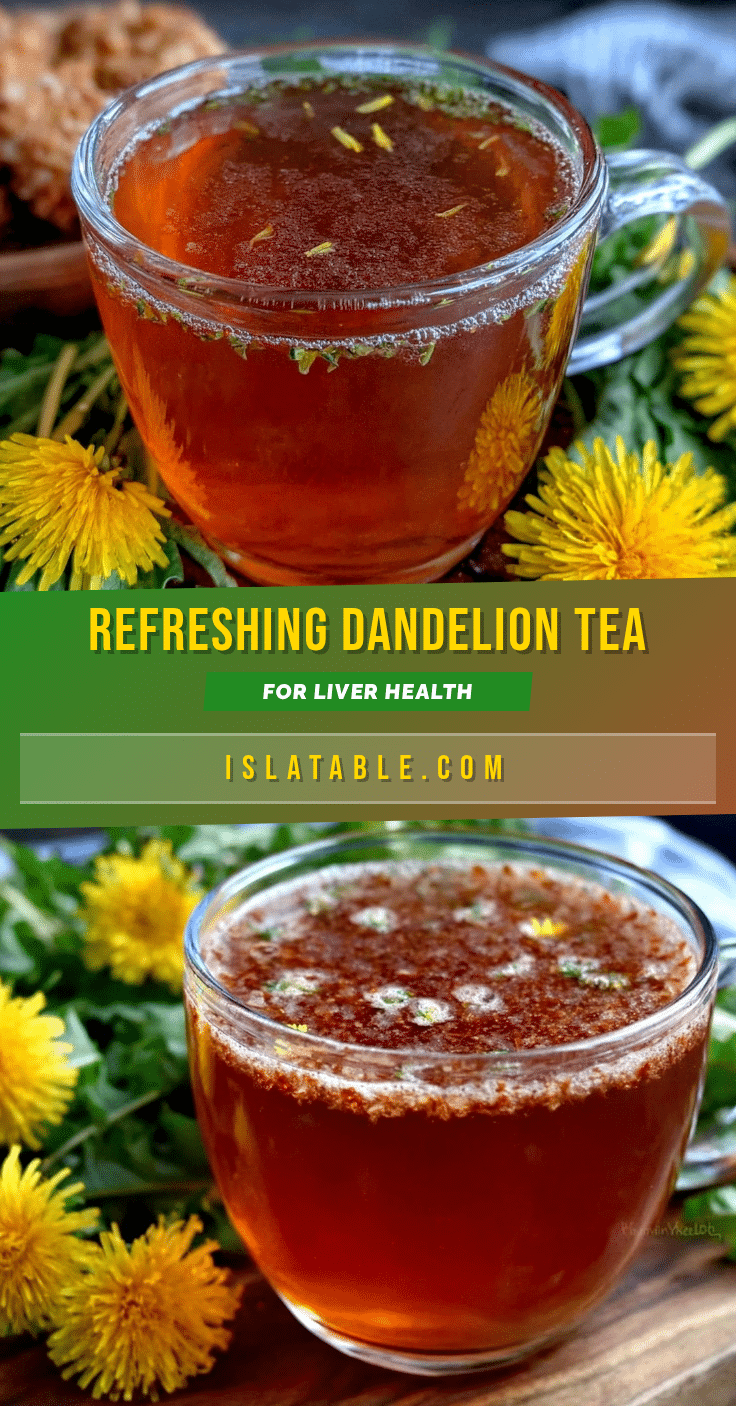
Fresh Dandelion Tea Recipe for Liver Health
A simple and soothing fresh dandelion tea recipe that supports liver health with just a few easy steps and natural ingredients.
- Prep Time: 5 minutes
- Cook Time: 15 minutes
- Total Time: 20 minutes
- Yield: 4 servings 1x
- Category: Beverage
- Cuisine: Herbal
Ingredients
- 1 cup fresh dandelion leaves, lightly packed (young leaves preferred)
- 1 small fresh dandelion root (2–3 inches long), cleaned and chopped
- 4 cups filtered water
- 1–2 teaspoons honey or maple syrup (optional)
- 1 slice lemon (optional)
Instructions
- Rinse 1 cup of fresh dandelion leaves and 1 small root thoroughly under cool water to remove any dirt or grit. Chop the root into small pieces (about ¼ inch).
- Bring 4 cups (1 liter) of filtered water to a rolling boil in a saucepan.
- Reduce heat to low and add the chopped roots and leaves to the water. Simmer gently for 10 minutes.
- Remove the pot from heat and cover it with a lid. Let the tea steep for an additional 5 minutes.
- Pour the tea through a fine mesh strainer into a teapot or mugs. Add 1-2 teaspoons of honey or maple syrup and a slice of lemon if desired. Serve warm.
Notes
Use young dandelion leaves for a milder taste. Avoid over-boiling to prevent bitterness. Fresh roots provide better flavor than dried, but dried roots can be used with a longer simmer time (15 minutes). Store leftover tea in the fridge up to 48 hours and reheat gently. Add herbs like mint or ginger for flavor variations.
Nutrition
- Serving Size: 1 cup (8 fl oz)
- Calories: 5
- Carbohydrates: 1
Keywords: dandelion tea, liver health, herbal tea, detox tea, fresh dandelion, natural remedy, caffeine-free, gluten-free, vegan