“You have to try this fresh vegan pesto pasta,” my friend texted me one chilly March afternoon, right when the last dregs of winter were hanging stubbornly around. Honestly, I was skeptical—vegan pesto? Without cheese? And with asparagus and peas? But that late afternoon light in my kitchen, the promise of something green and fresh, and the thought of a quick meal nudged me to give it a shot. I remember tossing the pasta while the pesto whirred in the blender, the bright aroma of basil filling the air and suddenly, it didn’t feel like a compromise, but a celebration of spring’s early bounty.
What surprised me most was how the simple ingredients came together with such a lively, fresh flavor—like a little garden party on my plate. The asparagus wasn’t just a side note; it added this perfect snap that paired beautifully with the sweet peas. I found myself making this recipe multiple times that week, each time tweaking it just a bit, but never straying too far from the core that made it feel like the answer to those “what’s for dinner?” moments when you want something light but satisfying. It’s the kind of dish that feels like a reset—simple, clean, and utterly comforting in a way that’s quiet but powerful.
To me, this fresh vegan pesto pasta with asparagus and peas stuck because it’s not just food—it’s a reminder that even a quick meal can feel thoughtful and nourishing. You know, the kind that makes you pause and appreciate the green flavors of the season. No fuss, no heavy sauces, just honest ingredients doing their thing. And that’s exactly why I keep coming back to it.
Why You’ll Love This Fresh Vegan Pesto Pasta with Asparagus and Peas
This recipe has earned its spot in my weekly rotation for many reasons, and I’m excited to share what makes it stand apart:
- Quick & Easy: Ready in under 30 minutes, perfect for those busy spring evenings when you want something fresh but speedy.
- Simple Ingredients: Pantry staples like dried pasta and frozen peas mix with fresh asparagus and homemade pesto, so no last-minute grocery runs.
- Perfect for Spring Dinners: The green veggies and bright basil perfectly capture the season’s vibe, making it a great dish for casual family meals or impromptu guests.
- Crowd-Pleaser: I’ve served this to both longtime vegans and skeptical meat-eaters who always come back asking for the recipe.
- Unbelievably Delicious: The creamy texture from blended cashews or walnuts in the pesto adds richness without dairy, marrying beautifully with the fresh veggies.
What sets this apart from other vegan pesto pastas is the way the asparagus and peas aren’t just tossed in—they’re cooked just right to keep their snap and sweetness, balancing the herbaceous, nutty pesto perfectly. Plus, I’ve found that lightly steaming the peas and grilling the asparagus gives this dish a subtle depth that feels almost indulgent but remains totally plant-powered. Honestly, after making this, you might start thinking of pesto pasta in a whole new light—lighter, fresher, and just as satisfying.
It’s the kind of recipe that doesn’t need a lot of tweaking to impress, but it’s flexible enough to suit your pantry and taste buds. Whether you’re pairing it with a crisp white wine for a quiet dinner or packing leftovers for a spring picnic, it delivers every time.
What Ingredients You Will Need
This fresh vegan pesto pasta with asparagus and peas relies on a handful of wholesome, straightforward ingredients that come together for bold flavor and satisfying texture without fuss. Most are pantry staples or easy to find at any grocery store during springtime.
- Pasta: 12 ounces (340 g) of dried linguine or spaghetti (gluten-free if needed). I personally like Barilla gluten-free for texture.
- Asparagus: 1 bunch (about 1 pound/450 g), trimmed and cut into 2-inch pieces (fresh and firm stalks work best).
- Peas: 1 cup (150 g) frozen peas, thawed (or fresh if in season; fresh adds a sweeter pop).
- Fresh Basil: 2 packed cups (about 50 g) leaves, washed and dried (this is the flavor star).
- Garlic: 2 cloves, peeled (for that signature pesto kick).
- Raw Cashews or Walnuts: 1/3 cup (50 g), soaked in warm water for 15 minutes (adds creaminess).
- Olive Oil: 1/3 cup (80 ml), extra virgin preferred (choose a fruity one for best flavor).
- Lemon Juice: 2 tablespoons, fresh squeezed (brightens everything up).
- Nutritional Yeast: 1/4 cup (20 g), for cheesy umami flavor (optional but highly recommended).
- Salt and Pepper: To taste, freshly ground black pepper preferred.
- Pine Nuts (Optional): 2 tablespoons, toasted (for garnish and extra crunch).
If you’re short on fresh basil, baby spinach or arugula make decent stand-ins, though the flavor will be milder. For a nut-free option, try substituting shelled sunflower seeds or hemp seeds for the cashews. And if you don’t have nutritional yeast on hand, a splash of soy sauce or miso paste can add some savory depth.
Equipment Needed
- Large Pot: For boiling pasta and blanching asparagus and peas.
- Colander: To drain pasta and veggies efficiently.
- Food Processor or High-Speed Blender: Essential for making the smooth, creamy vegan pesto. I’ve used both, but a food processor gives you more texture control.
- Measuring Cups and Spoons: For precise ingredient amounts, especially important for the pesto balance.
- Large Mixing Bowl or Pasta Serving Bowl: For tossing everything together evenly.
- Optional: Small skillet for toasting pine nuts if using.
If you don’t have a food processor, a sturdy blender can work, but you might need to stop and scrape down the sides more often to get that perfect creamy texture. And don’t worry if you only have a basic pot with a strainer insert — it makes draining pasta easier and saves a step. For budget-friendly tools, even a handheld immersion blender can get the job done with a bit of patience.
Preparation Method
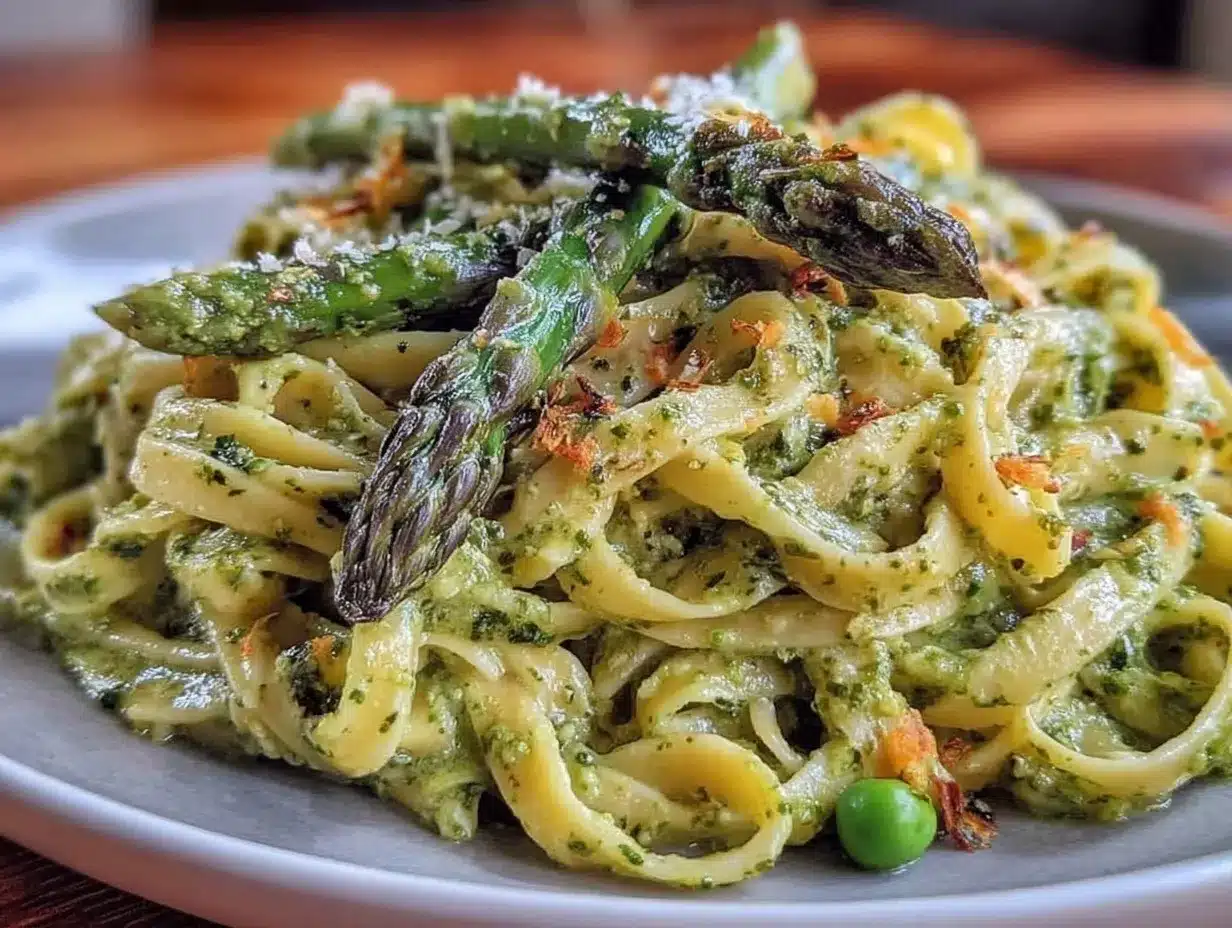
- Prepare the pasta: Bring a large pot of salted water to a boil. Add 12 ounces (340 g) of dried linguine or spaghetti and cook according to package directions until al dente (usually 8-10 minutes). Reserve about 1 cup (240 ml) of pasta water before draining. This starchy water will help loosen the pesto later. Drain and set aside.
- Cook the asparagus and peas: While the pasta cooks, bring another small pot of water to a boil. Add the asparagus pieces and blanch for 2-3 minutes until bright green and just tender. Add the peas in the last 30 seconds. Drain and immediately plunge into ice water to stop cooking and keep the color vibrant. Drain again and set aside.
- Make the vegan pesto: In your food processor, combine 2 packed cups (about 50 g) fresh basil leaves, 2 cloves garlic, 1/3 cup (50 g) soaked raw cashews or walnuts, 1/4 cup (20 g) nutritional yeast, and 2 tablespoons fresh lemon juice. Pulse to combine.
- Add olive oil: With the processor running, slowly drizzle in 1/3 cup (80 ml) extra virgin olive oil until the mixture is smooth and creamy. If the pesto is too thick, add a tablespoon or two of reserved pasta water to help achieve a saucy consistency. Season with salt and freshly ground black pepper to taste.
- Toss everything together: In a large bowl, combine the drained pasta, blanched asparagus, peas, and vegan pesto. Toss gently but thoroughly, adding a little more reserved pasta water if needed to coat everything evenly. The sauce should cling lightly without pooling.
- Toast pine nuts (optional): In a dry skillet over medium heat, toast 2 tablespoons pine nuts for 2-3 minutes until golden and fragrant. Sprinkle over the pasta just before serving for a lovely crunch.
- Final taste check: Give the pasta one last stir and adjust salt, pepper, or lemon juice if needed. Serve immediately for the freshest flavors, or at room temperature if enjoying later.
One tip I’ve learned: don’t overcook the asparagus — it should still have a bit of snap. And when blending the pesto, pulse it first to avoid overheating the basil, which can turn bitter. Using a little pasta water to loosen the sauce is a game changer — it helps the pesto cling to the noodles like a dream.
Cooking Tips & Techniques
Getting this fresh vegan pesto pasta just right is about a few key things I’ve noticed over countless attempts:
- Blanch veggies quickly: The asparagus and peas should be bright green and tender-crisp. Overcooked vegetables become mushy and dull the whole dish.
- Soak nuts for creaminess: Soaking raw cashews or walnuts softens them, allowing the pesto to blend ultra-smooth without bits. If you forget to soak, boil the nuts for 10 minutes instead.
- Use fresh basil: The herb’s freshness makes or breaks the pesto. Wilted basil leads to flat flavor, so pick bright green leaves without brown spots.
- Reserve pasta water: Don’t skip this step! The starchy water helps emulsify the pesto sauce and prevents it from being too thick or oily.
- Toast nuts carefully: If using pine nuts, keep a close eye as they toast fast and burn easily, which can add bitterness.
- Multitask: Cook pasta and blanch veggies simultaneously to save time. While they cook, blitz the pesto so everything comes together without waiting.
One kitchen slip I learned from: once tried blending the pesto too long, and it turned warm and bitter. Now, I pulse and check frequently to keep that vibrant green and fresh flavor. Also, tossing the pasta off the heat avoids overcooking the noodles in the sauce, which keeps them perfect.
Variations & Adaptations
This fresh vegan pesto pasta with asparagus and peas is a great base for creativity. Here are a few ways I’ve adapted it:
- Seasonal veggies swap: In summer, I swap peas for fresh cherry tomatoes and asparagus for zucchini ribbons, adding a sweet, juicy twist.
- Different nuts: For a twist, use almonds or pecans instead of cashews—each nut brings a slightly different nuttiness and texture.
- Protein boost: Toss in some cooked chickpeas or white beans for extra protein and heartiness without compromising the vegan vibe.
- Gluten-free: Use brown rice pasta or chickpea pasta for a gluten-free version that still holds up well with the sauce.
- Spicy kick: Add a pinch of red pepper flakes to the pesto or sprinkle on top before serving for a little heat.
Personally, I once tried adding sautéed mushrooms to this dish on a rainy day—it gave an earthiness that paired well with the fresh peas and pesto. It’s proof this pasta is a flexible canvas for your mood and pantry.
Serving & Storage Suggestions
This fresh vegan pesto pasta is best served warm or at room temperature. I like to plate it simply, garnishing with toasted pine nuts and a few extra basil leaves for color and texture.
It pairs beautifully with a light citrus salad or a crisp white wine like Sauvignon Blanc. If you want to keep it casual, a sparkling water with lemon is perfect for cutting through the richness of the pesto.
For leftovers, store the pasta in an airtight container in the refrigerator for up to 3 days. The flavors actually deepen overnight, though the asparagus may soften a bit. To reheat, gently warm on the stovetop over low heat with a splash of water or olive oil to revive the sauce’s creamy texture. Avoid microwaving if possible, as it can dry out the pasta.
If you want to prep ahead for a picnic or potluck, this pasta is also delicious cold and makes a refreshing pasta salad alternative. Just toss extra lemon juice and a bit more olive oil before serving.
Nutritional Information & Benefits
This fresh vegan pesto pasta with asparagus and peas is a nutrient-rich meal that balances carbs, healthy fats, and plant-based protein. Here’s a rough estimate per serving (serves 4):
| Calories | 420-450 kcal |
|---|---|
| Protein | 12-15 g |
| Fat | 18-22 g (mostly from olive oil and nuts) |
| Carbohydrates | 50-55 g |
| Fiber | 6-8 g |
Asparagus and peas provide vitamins A, C, and K, along with antioxidants and fiber to support digestion and immunity. The nuts and olive oil contribute heart-healthy monounsaturated fats, while the basil adds phytonutrients that have anti-inflammatory properties.
This recipe is naturally gluten-free if you choose gluten-free pasta, dairy-free, and free of common allergens like soy or eggs unless you add optional ingredients. From a wellness perspective, it’s a wholesome dish that nourishes without feeling heavy—perfect for spring and beyond.
Conclusion
This fresh vegan pesto pasta with asparagus and peas is one of those recipes that quietly wins you over with every bite. It’s a reliable, easy dish that feels like a little gift from the season—bright, fresh, and satisfying. I love how it lets the simple ingredients shine while offering flexibility to make it your own.
Whether you’re new to vegan cooking or just looking for a fresh way to enjoy spring vegetables, this recipe delivers comfort and flavor without fuss. I encourage you to play with the variations and find your perfect balance—it’s a dish that truly invites personalization.
And if you try it, I’d love to hear what tweaks you made or how it fit into your weeknight routine. Sharing food stories is my favorite way to keep the kitchen lively.
Here’s to many cozy, green meals ahead!
FAQs About Fresh Vegan Pesto Pasta with Asparagus and Peas
Can I make the pesto ahead of time?
Absolutely! The pesto can be made up to 3 days in advance and stored in an airtight container in the fridge. Just stir in a little extra olive oil before using if it thickens.
What can I substitute for cashews in the pesto?
Raw walnuts, almonds, or even shelled sunflower seeds work well. If you have a nut allergy, hemp seeds can be a good alternative, though the texture will be slightly different.
Can I use frozen asparagus instead of fresh?
Frozen asparagus can be used in a pinch but tends to be softer and less vibrant. If using frozen, add it last and cook gently to avoid mushiness.
Is nutritional yeast necessary for the pesto?
It’s not required but adds a cheesy, umami depth that really rounds out the flavor. If you don’t have it, a splash of soy sauce or miso paste can add a savory note.
How do I store leftovers to keep the pasta fresh?
Store leftovers in an airtight container in the fridge for up to 3 days. Reheat gently on the stovetop with a splash of water or olive oil to bring back the sauce’s creaminess.
For a fresh take on pasta salads to enjoy in warmer months, you might also enjoy the creamy crunchy BLT pasta salad or the bright flavors of fresh cowboy caviar salad bowl for side dishes that complement this pasta beautifully.
Pin This Recipe!
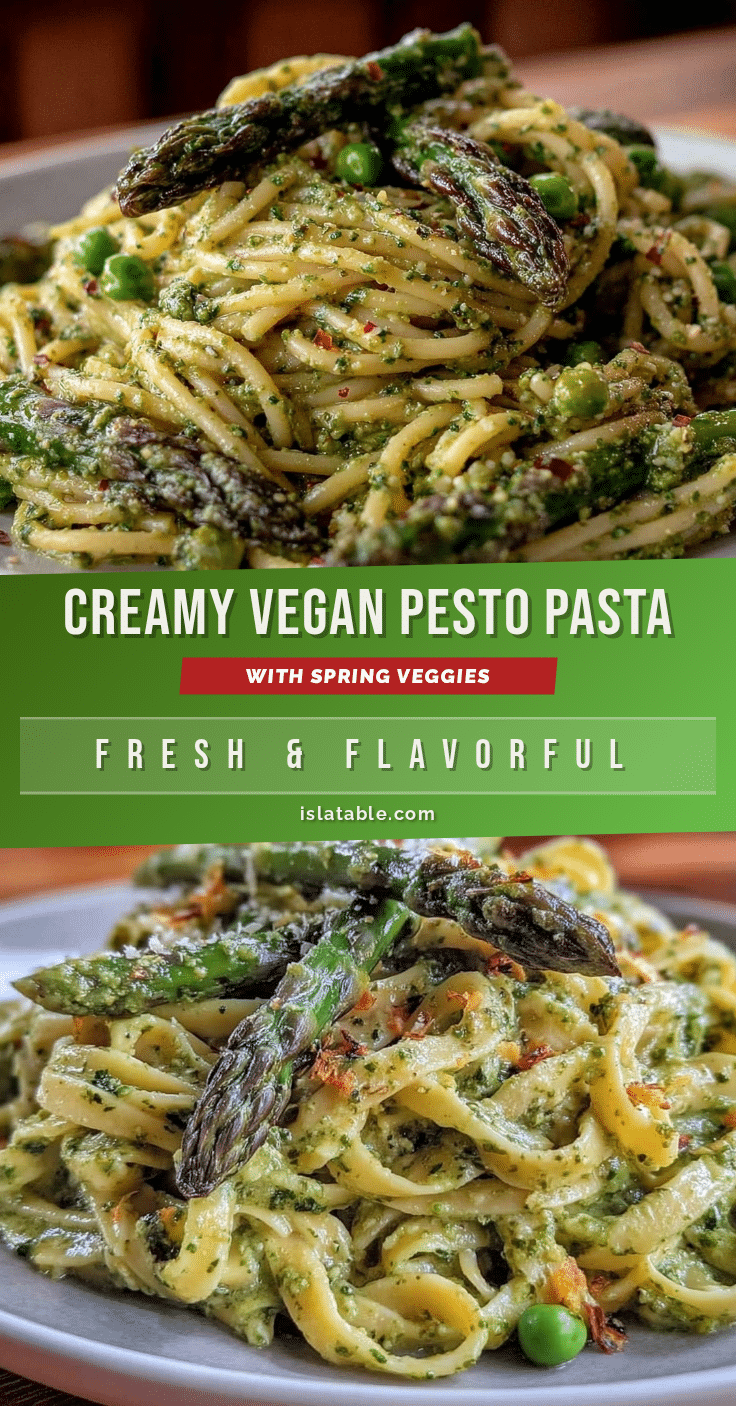
Fresh Vegan Pesto Pasta with Asparagus and Peas
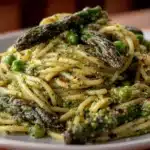
A quick and easy vegan pesto pasta featuring fresh asparagus and peas, perfect for a light and satisfying spring dinner.
- Prep Time: 10 minutes
- Cook Time: 15 minutes
- Total Time: 25 minutes
- Yield: 4 servings 1x
- Category: Main Course
- Cuisine: Italian
Ingredients
- 12 ounces dried linguine or spaghetti (gluten-free if needed)
- 1 bunch asparagus (about 1 pound), trimmed and cut into 2-inch pieces
- 1 cup frozen peas, thawed (or fresh if in season)
- 2 packed cups fresh basil leaves (about 50 g), washed and dried
- 2 cloves garlic, peeled
- 1/3 cup raw cashews or walnuts (about 50 g), soaked in warm water for 15 minutes
- 1/3 cup extra virgin olive oil (80 ml)
- 2 tablespoons fresh lemon juice
- 1/4 cup nutritional yeast (20 g), optional but recommended
- Salt and freshly ground black pepper to taste
- 2 tablespoons toasted pine nuts, optional for garnish
Instructions
- Bring a large pot of salted water to a boil. Add 12 ounces of dried linguine or spaghetti and cook according to package directions until al dente (8-10 minutes). Reserve about 1 cup of pasta water before draining. Drain and set aside.
- While the pasta cooks, bring another small pot of water to a boil. Add the asparagus pieces and blanch for 2-3 minutes until bright green and just tender. Add the peas in the last 30 seconds. Drain and immediately plunge into ice water to stop cooking and keep the color vibrant. Drain again and set aside.
- In a food processor, combine 2 packed cups fresh basil leaves, 2 cloves garlic, 1/3 cup soaked raw cashews or walnuts, 1/4 cup nutritional yeast, and 2 tablespoons fresh lemon juice. Pulse to combine.
- With the processor running, slowly drizzle in 1/3 cup extra virgin olive oil until the mixture is smooth and creamy. If the pesto is too thick, add a tablespoon or two of reserved pasta water to help achieve a saucy consistency. Season with salt and freshly ground black pepper to taste.
- In a large bowl, combine the drained pasta, blanched asparagus, peas, and vegan pesto. Toss gently but thoroughly, adding a little more reserved pasta water if needed to coat everything evenly.
- Optional: In a dry skillet over medium heat, toast 2 tablespoons pine nuts for 2-3 minutes until golden and fragrant. Sprinkle over the pasta just before serving.
- Give the pasta one last stir and adjust salt, pepper, or lemon juice if needed. Serve immediately for the freshest flavors, or at room temperature if enjoying later.
Notes
Do not overcook asparagus to keep its snap. Pulse pesto ingredients to avoid overheating basil and turning it bitter. Use reserved pasta water to loosen pesto sauce for better coating. Toast pine nuts carefully to avoid burning. The pesto can be made up to 3 days ahead and stored in the fridge.
Nutrition
- Serving Size: 1 serving (about 1/4
- Calories: 435
- Sugar: 4
- Sodium: 150
- Fat: 20
- Saturated Fat: 2.5
- Carbohydrates: 53
- Fiber: 7
- Protein: 14
Keywords: vegan pesto pasta, asparagus pasta, pea pasta, spring dinner, vegan dinner, gluten-free pasta, plant-based pesto