I figured blending roasted squash with milk would result in a smooth, velvety dream. It took about three minutes for that assumption to shatter into a lumpy, curdled nightmare. Honestly, I stood there staring into the blender like it had personally insulted my ancestors. The orange sludge looked less like dinner and more like a Halloween prop that had given up on life.
Let’s face it, I was ready to throw in the towel. I was about to scrape that disaster into the compost bin and order pizza. But then, I remembered my grandmother’s old trick about tempering dairy with hot vegetable purées. It sounded like kitchen witchery, but I was desperate. I slowly drizzled a ladle of the hot squash into the cold cream while whisking like my life depended on it.
The transformation was instant. The curdling stopped. The mixture turned into a glossy, golden ribbon that clung to the side of the bowl. It wasn’t just safe; it was beautiful. That moment changed how I approach winter cooking forever. I realized that failure is just a recipe waiting for the right technique.
Now, this creamy roasted butternut squash pasta is my go-to when the weather turns gray and my motivation turns grayer. It’s not fancy. It doesn’t require a sous-vide machine or a trip to a specialty shop. It just requires patience and a willingness to trust the process.
I’ve made this dish so many times that I can do it in my sleep. Yet, every time I take that first bite of the silky sauce coating the noodles, I’m reminded of that one disastrous night. It keeps me humble. It keeps me cooking. And it guarantees that the sauce never fails again.
Why You’ll Love This Recipe
This isn’t just another pumpkin pasta. It’s the kind of meal that feels like a warm hug on a cold Tuesday. I’ve tested this version over dozens of evenings, tweaking the ratios until the balance of sweetness and savoriness hit that perfect sweet spot. It’s not overly sweet like a dessert, nor is it bland like plain boiled vegetables. It’s the Goldilocks of comfort food.
Here is why this recipe has earned a permanent spot in my weekly rotation:
- Quick & Easy: While the squash roasts, you can prep the sauce and boil the pasta. The active time is minimal, making this perfect for busy weeknights when you’re exhausted but still want to eat something real.
- Simple Ingredients: You likely have half of this in your pantry right now. Garlic, olive oil, nutmeg, and pasta are staples. The squash is the star, and it’s usually cheap and available everywhere in the fall.
- Perfect for Cozy Dinners: This dish screams autumn. It’s ideal for those nights when you want to sit down with a glass of wine and not worry about complicated sides or messy prep.
- Crowd-Pleaser: Even the pickiest eaters who claim they “don’t like vegetables” usually ask for seconds. The texture is so smooth that people don’t even realize they’re eating a whole vegetable.
- Unbelievably Delicious: The combination of caramelized edges on the squash with the creamy, nutty sauce creates a depth of flavor that takes hours to develop, but only minutes to make.
What makes this different from other squash recipes is the roasting step. Boiling squash makes it watery and dull. Roasting it concentrates the sugars and adds a smoky depth that boiling simply cannot achieve. I also use a touch of white wine in the sauce to cut through the richness, which adds a layer of sophistication without any extra effort.
It’s the kind of recipe that makes you close your eyes after the first bite. It’s comfort food reimagined—healthy, fast, but with the same soul-soothing satisfaction as a heavy cream sauce. It’s perfect for impressing guests without the stress of standing over a stove for hours.
What Ingredients You Will Need
This recipe uses simple, wholesome ingredients to deliver bold flavor and satisfying texture without the fuss. The magic here lies in the quality of the squash and the balance of the dairy. You don’t need fancy imports, but you do need to pay attention to freshness.
Here is what you’ll need to gather:
- Butternut Squash: One medium-sized squash, peeled, seeded, and cubed. Look for one that feels heavy for its size with firm skin. (I prefer the small, hard-to-peel ones because the flavor is more intense than the large pre-cut ones.)
- Heavy Cream: One cup of heavy whipping cream. This provides the necessary fat to create a stable emulsion. (Use half-and-half if you want it lighter, but it may be thinner.)
- Garlic: Three cloves, minced. Fresh garlic is non-negotiable here. Jarred garlic tastes metallic and will ruin the delicate flavor of the squash.
- Butter: Two tablespoons of unsalted butter. I use European-style butter like Plugrá for its higher fat content and richer flavor.
- White Wine: Half a cup of dry white wine, such as Sauvignon Blanc or Pinot Grigio. (Do not use cooking wine. If you don’t drink alcohol, substitute with vegetable broth.)
- Nutmeg: One-quarter teaspoon of freshly grated nutmeg. Freshly grated makes a world of difference. Pre-ground nutmeg is dusty and weak.
- Pasta: Eight ounces of your favorite shape. Rigatoni or fettuccine work best because they hold the thick sauce well.
- Salt and Pepper: To taste. Kosher salt is my go-to for even seasoning.
- Red Pepper Flakes: One teaspoon, optional. A little heat balances the sweetness of the squash perfectly.
- Parmesan Cheese: Half a cup, freshly grated. Pre-grated cheese contains anti-caking agents that prevent it from melting smoothly.
- Fresh Sage Leaves: A small handful, for garnish. Fried sage leaves add a wonderful crunch and earthy aroma.
If you are looking for a gluten-free option, you can swap the wheat pasta for brown rice pasta or chickpea pasta. Just be aware that cooking times may vary slightly. For a vegan version, you can substitute the heavy cream with full-fat coconut milk, though the flavor will lean slightly tropical.
Equipment Needed
You don’t need a professional kitchen to make this, but having the right tools makes the difference between a struggle and a breeze.
- Sheet Pan: A large rimmed baking sheet is essential for roasting the squash. It allows the cubes to spread out and caramelize instead of steaming in their own juices.
- Blender or Immersion Blender: A standard countertop blender works great for creating a smooth purée. However, an immersion blender is much easier if you want to blend the squash directly in the pot. It saves you from transferring hot liquid, which is a burn hazard.
- Large Saucepan: You’ll need a wide pan to sauté the garlic and reduce the wine. A wide surface area helps the alcohol evaporate quickly.
- Large Pot: For boiling the pasta. Make sure it’s big enough to give the noodles room to move.
- Microplane or Fine Grater: For zesting the nutmeg and the parmesan. A microplane creates a finer powder that dissolves instantly into the sauce.
If you don’t have an immersion blender, be careful when transferring hot squash to a standard blender. Always blend in batches and leave the vent lid slightly open to let steam escape, or you will have an orange explosion on your ceiling. I learned that the hard way.
Preparation Method
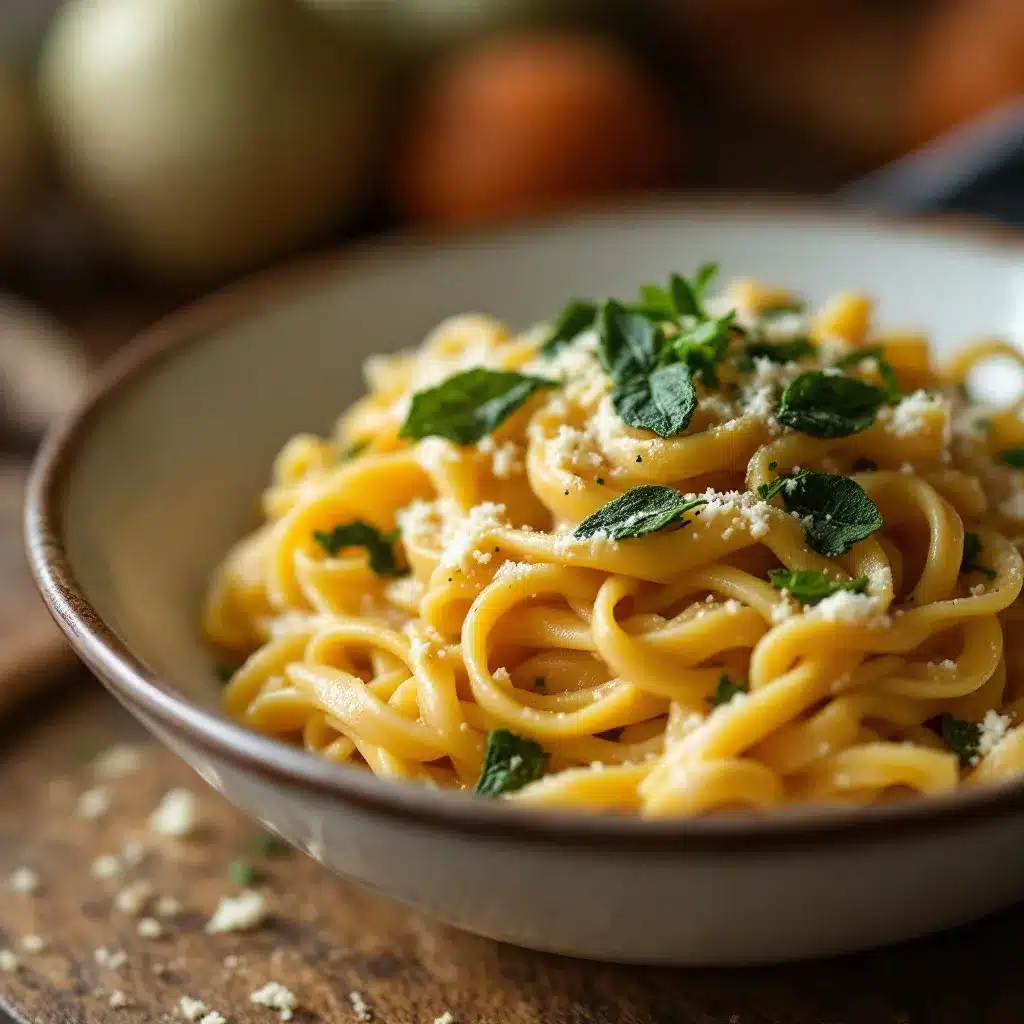
Let’s get into the nitty-gritty of making this creamy roasted butternut squash pasta. Follow these steps closely, and you’ll have a restaurant-quality meal on your table in under an hour.
- Preheat and Prep (5 minutes): Preheat your oven to 400°F (200°C). Line your sheet pan with parchment paper for easy cleanup. Peel the butternut squash and cut it into one-inch cubes. Try to keep them uniform so they cook evenly.
- Roast the Squash (30 minutes): Toss the squash cubes with two tablespoons of olive oil, salt, and pepper. Spread them out in a single layer on the sheet pan. Roast for 25-30 minutes until the edges are browned and a fork pierces through easily. You want some caramelization, not just softness.
- Start the Pasta Water (5 minutes): While the squash roasts, bring a large pot of salted water to a boil. Add a generous handful of salt—it should taste like the sea. This is your only chance to season the pasta itself.
- Sauté the Aromatics (3 minutes): In your large saucepan, melt the butter over medium heat. Add the minced garlic and red pepper flakes. Cook for about two minutes until fragrant. Do not let the garlic brown, or it will taste bitter.
- Deglaze the Pan (2 minutes): Pour in the white wine. Scrape up any browned bits from the bottom of the pan with a wooden spoon. Let it simmer until the liquid reduces by half. This concentrates the flavor.
- Blend the Squash (2 minutes): While the wine reduces, transfer the roasted squash to a blender. Add the heavy cream and nutmeg. Blend until completely smooth. If it’s too thick, add a splash of pasta water.
- Combine and Simmer (3 minutes): Pour the squash mixture into the saucepan with the wine reduction. Stir constantly over low heat. Let it simmer gently for two minutes to thicken slightly. Taste and adjust seasoning with salt and pepper.
- Cook the Pasta (8-10 minutes): Add the pasta to the boiling water. Cook according to package directions until al dente. Reserve one cup of starchy pasta water before draining.
- Toss and Serve (2 minutes): Drain the pasta and add it directly to the saucepan with the sauce. Toss vigorously over low heat, adding splashes of pasta water until the sauce clings to every noodle. Stir in the parmesan cheese until melted.
- Garnish and Eat: Plate immediately. Top with fried sage leaves and extra parmesan. Serve hot.
Cooking Tips & Techniques
I’ve made enough mistakes in the kitchen to fill a cookbook, so let me save you some time. The biggest mistake people make with butternut squash sauce is using too much liquid. Squash has high water content, even after roasting. If you add too much cream, the sauce will be thin and runny.
Always start with less cream than you think you need. You can always blend in more, but you can’t take it out. Another tip is to roast the squash until it’s deeply browned. The Maillard reaction creates complex flavors that boiling simply cannot replicate. If the squash is pale and soft, the sauce will taste one-dimensional.
When making the sauce, keep the heat low. High heat can cause the dairy to separate or curdle, especially if there is acid from the wine involved. Gentle simmering keeps the emulsion stable. Also, never skip the pasta water. The starch in the water acts as a glue, binding the fat and water together into a glossy sauce that coats the noodles.
If you are using a countertop blender, let the squash cool for five minutes before blending. Hot food expands in a sealed container, which can cause burns or leaks. Blend in short pulses, starting on low speed and gradually increasing to high. This prevents air bubbles from forming, which can make the sauce look frothy instead of smooth.
Variations & Adaptations
This base recipe is incredibly versatile. Once you master the technique, you can tweak it to suit your diet or cravings. Here are a few variations I love:
- Spicy Sausage Version: Brown half a pound of Italian sausage in the pan before sautéing the garlic. The fennel and pork fat pair beautifully with the sweet squash.
- Vegetarian Protein Boost: Add crispy chickpeas or toasted pumpkin seeds on top for crunch and protein. This makes the dish more filling without adding meat.
- Green Goddess Twist: Stir in a cup of fresh spinach or kale during the final minute of cooking. The greens wilt into the sauce, adding color and nutrients without changing the flavor profile much.
- Vegan Option: Replace the heavy cream with full-fat canned coconut milk and the butter with olive oil. Use nutritional yeast instead of parmesan for a cheesy, savory note. It’s surprisingly creamy and satisfying.
I once made this with roasted carrots instead of squash. It was good, but lacked the earthiness. However, adding a splash of apple cider vinegar at the end brightens up any version. It cuts the richness and wakes up the palate.
Serving & Storage Suggestions
This pasta is best served immediately while the sauce is warm and glossy. I like to serve it with a simple arugula salad on the side to cut through the heaviness of the cream. A glass of crisp white wine or a sparkling water with lemon pairs well too.
Leftovers can be stored in an airtight container in the refrigerator for up to three days. The sauce will thicken significantly as it cools because the starches retrograde. When reheating, add a splash of milk, cream, or water to loosen it up. Reheat gently on the stove over low heat, stirring frequently. Avoid the microwave, as it can cause the dairy to separate and become grainy.
You can also freeze the squash purée separately from the pasta. The pasta will become mushy if frozen and reheated, but the sauce freezes beautifully for up to three months. Thaw it in the refrigerator overnight and reheat with a little fresh cream to restore the texture.
Nutritional Information & Benefits
This dish is not just comfort food; it’s packed with nutrients. Butternut squash is rich in Vitamin A, which is essential for eye health and immune function. It also provides fiber, which aids in digestion. The healthy fats from the cream and olive oil help your body absorb these fat-soluble vitamins.
For those watching their carbs, you can swap the wheat pasta for cauliflower rice or zucchini noodles. This lowers the calorie count significantly while keeping the creamy texture. However, the traditional pasta adds a satisfying chewiness that many people miss.
One serving contains approximately 550 calories, with 25 grams of fat and 60 grams of carbohydrates. It’s a substantial meal that will keep you full for hours. I usually enjoy this on a chilly evening when I need something warming and nourishing. It’s a balanced mix of sweet, savory, and creamy that feels indulgent but is grounded in real food.
Conclusion
This creamy roasted butternut squash pasta is more than just a recipe; it’s a lesson in patience and technique. It teaches you that failure can lead to something better if you’re willing to adapt. I hope you try this at home and find your own moments of kitchen magic.
Feel free to customize it with your favorite proteins or greens. Make it your own. I’d love to hear how it turns out for you. Leave a comment below with your variations or questions. Share this recipe with friends who need a cozy dinner idea.
Thanks for reading. Happy cooking.
FAQs
Can I use frozen butternut squash?
Yes, you can use frozen cubes, but they will release more water during roasting. Pat them dry before tossing with oil, and roast at a higher temperature to encourage browning. The texture may be slightly softer than fresh squash.
Why did my sauce curdle?
Curdling usually happens if the heat is too high or if you add cold cream to hot acid too quickly. Always temper the cream by adding a small amount of hot sauce to it first, then whisk it back into the pan. Keep the heat low and steady.
What pasta shape works best?
Short, tubular pastas like rigatoni or penne are great because they trap the sauce inside. Long pastas like fettuccine or tagliatelle also work well because the sauce clings to the flat surfaces. Avoid small pastas like orzo, as they can become gummy.
Can I make this ahead of time?
You can prep the squash and roast it a day in advance. Store it in the fridge. When ready to eat, just blend it with the cream and finish the sauce. The pasta should be cooked fresh for the best texture.
Is this recipe gluten-free?
The base sauce is naturally gluten-free. Just ensure you use a gluten-free pasta and check that your wine and broth are certified gluten-free if you have celiac disease. Most standard white wines are safe, but always double-check labels.
Pin This Recipe!
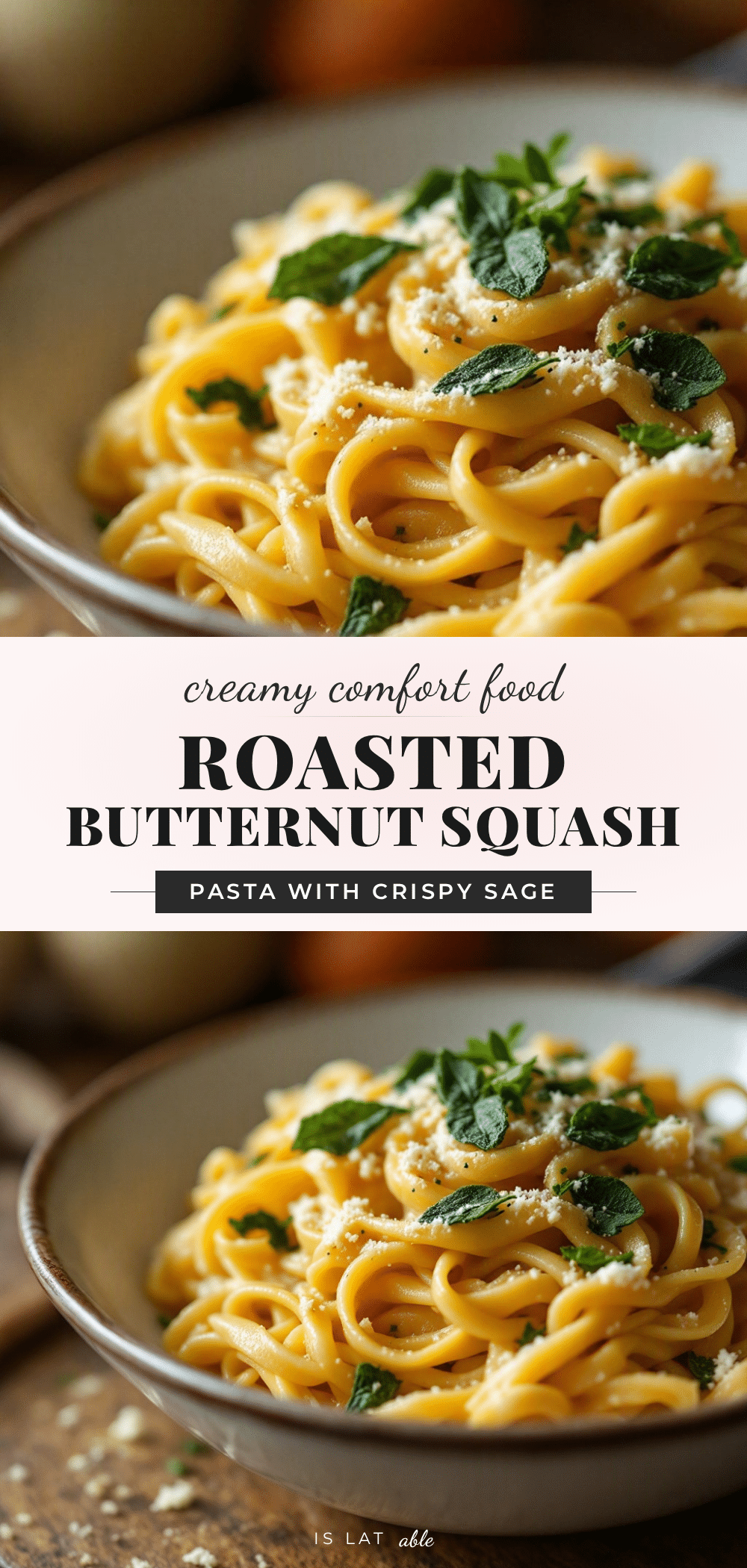
Creamy Roasted Butternut Squash Pasta
A velvety, comforting pasta dish featuring roasted butternut squash blended into a rich, creamy sauce with white wine and nutmeg, perfect for cozy weeknight dinners.
- Prep Time: 15 minutes
- Cook Time: 45 minutes
- Total Time: 60 minutes
- Yield: 4 servings 1x
- Category: Main Course
- Cuisine: Italian
Ingredients
- 1 medium butternut squash, peeled, seeded, and cubed
- 2 tablespoons olive oil
- Salt and black pepper to taste
- 8 ounces pasta (rigatoni or fettuccine)
- 2 tablespoons unsalted butter
- 3 cloves garlic, minced
- 1 teaspoon red pepper flakes (optional)
- 1/2 cup dry white wine (e.g., Sauvignon Blanc or Pinot Grigio)
- 1 cup heavy whipping cream
- 1/4 teaspoon freshly grated nutmeg
- 1/2 cup freshly grated Parmesan cheese
- Fresh sage leaves, for garnish
Instructions
- Preheat oven to 400°F (200°C). Line a large rimmed baking sheet with parchment paper.
- Toss squash cubes with olive oil, salt, and pepper. Spread in a single layer and roast for 25-30 minutes until edges are browned and fork-tender.
- While squash roasts, bring a large pot of generously salted water to a boil.
- In a large saucepan, melt butter over medium heat. Add garlic and red pepper flakes; sauté for 2 minutes until fragrant without browning.
- Pour in white wine and scrape up browned bits. Simmer until liquid reduces by half.
- Transfer roasted squash to a blender. Add heavy cream and nutmeg. Blend until smooth. If too thick, add a splash of pasta water.
- Pour squash mixture into the saucepan with the wine reduction. Stir constantly over low heat and simmer for 2 minutes to thicken.
- Cook pasta in boiling water until al dente. Reserve 1 cup of starchy pasta water before draining.
- Add drained pasta to the saucepan. Toss vigorously over low heat, adding splashes of pasta water until sauce clings to noodles.
- Stir in Parmesan cheese until melted. Season with salt and pepper to taste.
- Plate immediately and garnish with fried sage leaves and extra Parmesan.
Notes
To prevent curdling, temper the cream by adding a ladle of hot squash to the cold cream while whisking before combining. Roast squash until deeply browned for better flavor. Use fresh nutmeg for best results. For a vegan version, substitute heavy cream with full-fat coconut milk and butter with olive oil.
Nutrition
- Serving Size: 1 plate
- Calories: 550
- Sugar: 8
- Sodium: 600
- Fat: 25
- Saturated Fat: 12
- Carbohydrates: 60
- Fiber: 5
- Protein: 15
Keywords: butternut squash pasta, creamy pasta, roasted squash, winter dinner, comfort food, vegetarian pasta, easy weeknight dinner