You know that 7:15 AM feeling when your stomach is growling but your brain is still half-asleep, and breakfast needs to happen in about four minutes flat? For a long time, I just accepted that smoothie bowls meant a twenty-minute production involving frozen fruit, a high-powered blender that wakes the neighbors, and a whole sink full of parts to wash afterward. That was before this one existed.
I was standing in my kitchen last spring, staring at a half-empty jar of peanut butter and a banana that was slightly more brown than yellow, thinking there had to be a faster way to get protein in before my morning meeting. Not a shake—I wanted something I could actually chew, something with texture that felt like a real meal. So I threw some ice cubes, a scoop of protein powder, and that sad banana into the blender with a splash of milk, crossed my fingers, and hit start.
What came out was thicker than I expected. Spoonable, almost. I topped it with a handful of granola and a drizzle of extra peanut butter (because why not), and honestly, I ate the whole thing standing at the counter in under three minutes. It wasn’t pretty. But it was exactly what I had been looking for—a quick peanut butter protein smoothie bowl that actually tasted like a treat and didn’t require a chemistry degree to assemble.
That first bowl was a happy accident, but I’ve refined it since then. Now it’s my go-to on mornings when I need something substantial but don’t have the patience for a full production. It’s the kind of recipe that makes you wonder why you ever bothered with complicated breakfasts in the first place.
Why You’ll Love This Recipe
This isn’t just another smoothie bowl that looks pretty on Instagram but leaves you hungry twenty minutes later. This one actually works. Here’s why it’s become a staple in my kitchen:
- Ready in 5 minutes flat – From cabinet to spoon in less time than it takes to brew coffee. No joke.
- Simple ingredients – You probably have everything already. No fancy superfood powders or obscure nut butters required.
- Perfect for busy mornings – Great for pre-workout fuel, post-gym recovery, or those days when you just can’t face another bowl of oatmeal.
- Crowd-pleaser – Kids actually ask for this. Adults ask for seconds. It’s weirdly universal.
- Unbelievably creamy – The texture is what gets me every time. Thick enough to hold toppings, smooth enough to feel indulgent.
What makes this different from other smoothie bowls is the ratio. Most recipes use too much liquid, which gives you something closer to a thin smoothie that just sits in a bowl. This one uses less milk and more ice, plus a trick with the banana that changes everything. The result is a bowl that’s thick, creamy, and actually spoonable—not something you end up drinking through a straw out of frustration.
This is the kind of breakfast that makes you close your eyes after the first bite. It’s comfort food reimagined—healthier, faster, but with the same soul-soothing satisfaction. Perfect for impressing guests without stress, or turning a simple morning into something memorable.
What Ingredients You Will Need
This recipe uses simple, wholesome ingredients to deliver bold flavor and satisfying texture without the fuss. Most of these are pantry staples, which is exactly the point.
- 1 large ripe banana – The riper the better. Brown spots are your friend here—they add natural sweetness and a creamier texture. I peel mine, slice it into coins, and freeze them overnight for the best results. (Pro tip: keep a bag of sliced frozen bananas in your freezer at all times. Future you will thank you.)
- 2 tablespoons creamy peanut butter – Use a natural kind without added sugar or weird oils if you can. The kind that separates in the jar and you have to stir it back together—that’s the good stuff. I personally like the texture of Skippy Natural, but any creamy peanut butter works.
- 1 scoop vanilla or chocolate protein powder – About 25-30 grams. I use a vanilla whey isolate because it blends smoothly and doesn’t get gritty, but plant-based options work too. (If yours is unsweetened, you might want a tiny splash of maple syrup.)
- ½ cup unsweetened almond milk – Or any milk you have on hand. Oat milk makes it extra creamy. Regular dairy milk works great too. Just don’t use something with added sugar unless you want a dessert-level sweet bowl.
- ½ cup ice cubes – This is what gives the bowl its thick, spoonable texture. Don’t skip these. If you use frozen fruit instead of ice, adjust the liquid downward.
- 1 tablespoon chia seeds or flax seeds – Optional but recommended. Adds fiber, omega-3s, and makes the bowl even thicker as it sits. I usually throw these in for the health factor, but they’re easy to leave out if you don’t have them.
- Optional toppings – Granola, sliced banana, extra peanut butter drizzle, dark chocolate chips, shredded coconut, hemp seeds, or fresh berries. This is where you can get creative.
For a nut-free version, swap the peanut butter for sunflower seed butter or tahini, and use oat milk instead of almond milk. The flavor changes slightly, but it’s still delicious. I’ve tried it with both and honestly, the tahini version is surprisingly good—earthy and rich in a different way.
Equipment Needed
You don’t need a fancy setup for this one. Here’s what you’ll actually use:
- Blender – A standard countertop blender works fine. I use a Ninja personal blender because it’s small and easy to clean, but any blender with enough power to crush ice will do the job. If yours struggles with ice, crush it a bit first or use slightly smaller cubes.
- Spatula – A silicone one is best for scraping down the sides and getting every last bit out of the blender. Trust me, you don’t want to leave that peanut butter behind.
- Measuring cups and spoons – Nothing fancy. Eyeballing works once you’ve made this a few times, but measuring helps for consistency the first go-round.
- Bowl – A wide, shallow bowl works best for toppings. I use a ceramic pasta bowl, but any bowl you like eating from is perfect.
- Spoon – For eating. And for that final scrape of the bowl when you think you’re done but there’s still a little bit left.
If you don’t have a high-powered blender, don’t worry. I’ve made this in a $20 blender from a discount store and it worked fine. Just blend a little longer and scrape the sides a couple of times.
Preparation Method
- Prep your banana – If you haven’t frozen your banana ahead of time, peel it, slice it into coins, and spread them on a small plate or parchment-lined tray. Pop them in the freezer for at least 15-20 minutes while you get everything else ready. If you’re in a rush, you can use a room-temperature banana and add an extra ¼ cup of ice, but the texture won’t be quite as creamy. I’ve done both, and frozen banana is definitely the winner for that thick, soft-serve consistency.
- Combine ingredients in the blender – Add the frozen banana slices, peanut butter, protein powder, almond milk, ice cubes, and chia seeds (if using) to your blender. The order matters a little—put the liquid in first if your blender tends to struggle, so everything moves around more easily. I usually do almond milk first, then the banana, then everything else.
- Blend until smooth – Start on low speed for about 10 seconds, then increase to medium-high. Blend for 30-45 seconds total, or until the mixture is thick and creamy with no visible chunks of ice or banana. You’ll need to stop and scrape down the sides once or twice. The blender will sound like it’s working hard—that’s normal. If it’s struggling too much, add another tablespoon of almond milk and try again.
- Check the consistency – The mixture should be thick enough to hold its shape when you stop blending. It should look like soft-serve ice cream or a very thick milkshake. If it’s too thin, add a few more ice cubes and blend again. If it’s too thick to blend, add a tiny splash of milk. I’ve overcorrected both ways more times than I can count, so don’t stress—it’s very forgiving.
- Pour into a bowl – Use your spatula to scrape every bit of that peanut buttery goodness into a bowl. Don’t rinse the blender yet—lick the spatula first. (No judgment here. I do it every time.)
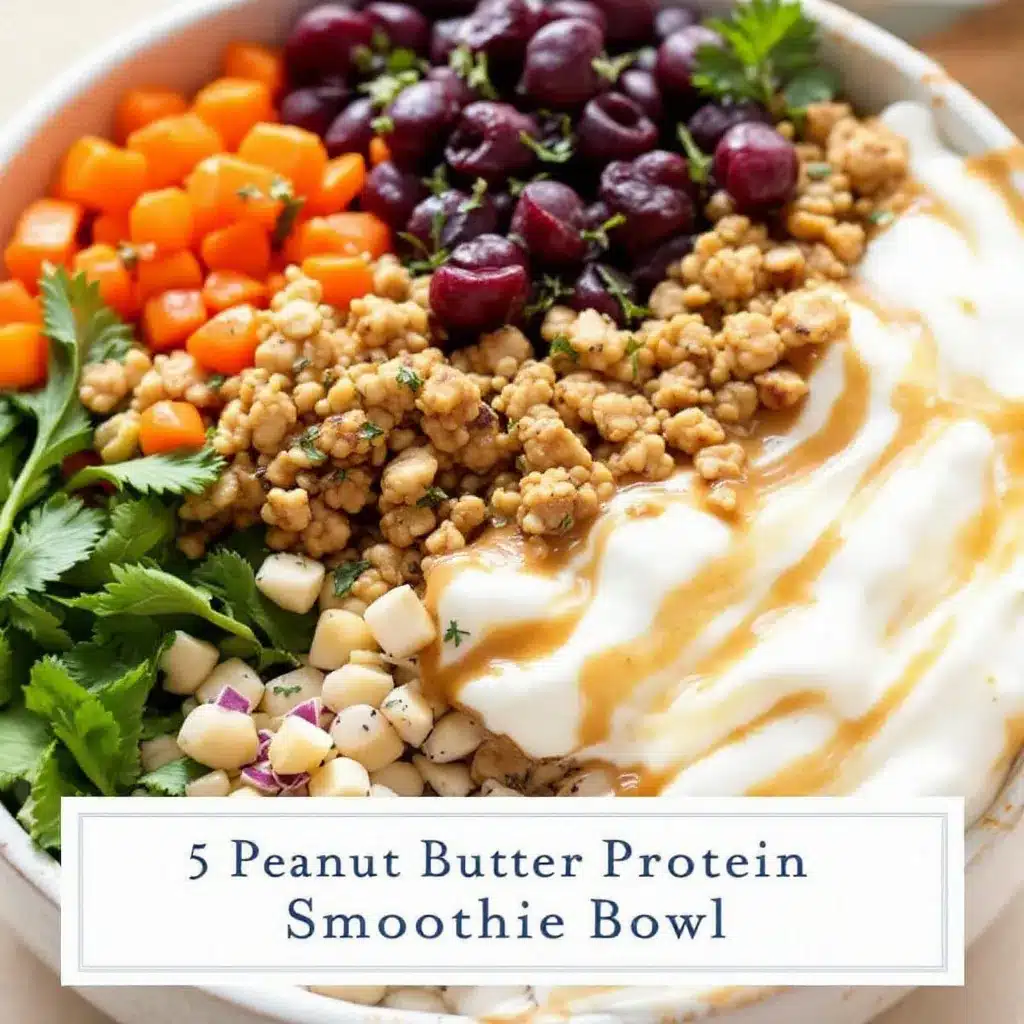
- Add your toppings – This is the fun part. I usually go with sliced banana, a generous sprinkle of granola, a drizzle of extra peanut butter, and a few dark chocolate chips. Arrange them however you like. The toppings aren’t just for looks—they add texture contrast that makes the bowl even more satisfying.
- Eat immediately – This bowl doesn’t sit well. The toppings will get soggy and the smoothie base will start to melt if you leave it too long. Grab your spoon and enjoy it right away. That’s the whole point, right?
Cooking Tips & Techniques
I’ve made this bowl probably fifty times by now, and I’ve learned a few things the hard way. Here’s what I wish someone had told me:
- Freeze your banana in slices, not whole. A whole frozen banana is basically a rock. Your blender will struggle, you’ll get uneven chunks, and you’ll end up with a lumpy bowl. Sliced coins blend much more evenly. I keep a freezer bag of sliced bananas at all times now—it’s a game-changer for any smoothie recipe.
- Don’t over-blend. I know it’s tempting to let the blender run until everything is perfectly smooth, but over-blending creates heat, which melts the ice and makes your bowl thin and watery. Blend just until it comes together, then stop. Your patience will be rewarded with a thick, cold bowl.
- Use less liquid than you think you need. Every smoothie bowl recipe I’ve ever made tastes better when I start with less liquid and add more as needed. It’s much easier to thin out a too-thick mixture than to thicken a too-thin one. Start with ¼ cup of milk and add more if the blender struggles.
- Toast your granola first. If you’re using granola as a topping, spread it on a baking sheet and toast it in a 350°F oven for 3-4 minutes before adding it to your bowl. The warmth and crunch contrast beautifully with the cold smoothie base. I discovered this by accident when I forgot I had granola in the oven, and it was a happy mistake.
- Warm your peanut butter slightly. If your peanut butter is cold from the fridge, microwave it for 10 seconds before adding it to the blender. It blends more smoothly and distributes more evenly. I learned this after too many bowls with random peanut butter chunks.
One thing I messed up early on: I used to add too much milk because I thought it would make the bowl creamier. It actually does the opposite—too much liquid makes it thin and icy. The real secret to creaminess is the frozen banana and the right ice-to-liquid ratio. Less is more here.
Variations & Adaptations
This recipe is endlessly adaptable. Here are some of my favorite twists:
- Chocolate Peanut Butter Dream – Use chocolate protein powder instead of vanilla, and add 1 tablespoon of cocoa powder. Top with chocolate chips and a drizzle of melted peanut butter. It’s basically dessert for breakfast, and I’m not sorry about it.
- Berry Peanut Butter Bowl – Replace half the ice with frozen mixed berries. The tartness of the berries cuts through the richness of the peanut butter beautifully. I’ve made this with raspberries, blueberries, and strawberries—they all work.
- Vegan Version – Use a plant-based protein powder (pea or brown rice protein works well) and swap the almond milk for oat milk or coconut milk. Skip the honey if your protein powder is sweetened. I’ve tested this with a few different vegan protein powders, and the texture varies—some are grittier than others, so you might need to blend a little longer.
- Keto-Friendly Adaptation – Use a low-carb protein powder, swap the banana for ¼ cup of avocado (trust me—it’s creamy and mild), and use unsweetened almond milk. Top with nuts and seeds instead of granola. The avocado version is surprisingly good—you don’t taste it at all, and it makes the bowl incredibly smooth.
- Extra Protein Boost – Add a tablespoon of hemp seeds or a dollop of Greek yogurt to the blender. This makes it more filling and adds even more protein. I do this on days when I know lunch is going to be late.
If you’re looking for more healthy breakfast ideas, you might also enjoy this healthy meal prep salmon bowl recipe for a savory option, or these easy nut-free protein balls for a grab-and-go snack.
Serving & Storage Suggestions
This bowl is best enjoyed immediately after making it. The texture is at its peak when it’s cold, thick, and fresh. That said, here are some serving and storage tips:
- Serving temperature – Serve cold, straight from the blender. If it sits too long, it will start to melt. I usually eat mine within 2-3 minutes of blending.
- Presentation – Arrange toppings in sections rather than mixing them all together. A drizzle of peanut butter in a spiral pattern, a cluster of granola on one side, and sliced banana on the other looks beautiful and ensures you get a bit of everything in each bite.
- Complementary dishes – This bowl pairs well with a side of scrambled eggs or a hard-boiled egg for extra protein. A cup of black coffee or green tea is my go-to drink alongside it.
- Storage – If you have leftovers (unlikely, but possible), pour the mixture into a freezer-safe container and freeze for up to 2 days. When you’re ready to eat it, let it thaw for 10-15 minutes at room temperature, then stir vigorously. The texture won’t be quite as good as fresh, but it’s still tasty.
- Reheating – Don’t microwave this. Just don’t. If you want to enjoy it later, let it thaw slightly and eat it semi-frozen like a sorbet. It’s actually pretty good that way.
- Flavor development – The flavors don’t really develop over time with this recipe. The magic is in the fresh, cold texture. That’s why I always make it right before eating.
Nutritional Information & Benefits
Here’s an approximate nutritional breakdown for one serving (without toppings):
- Calories: ~350-400
- Protein: 25-30 grams
- Carbohydrates: 35-40 grams
- Fiber: 8-10 grams
- Fat: 15-18 grams
- Sugar: 15-18 grams (natural from banana)
The peanut butter provides healthy monounsaturated fats and a good dose of vitamin E. Bananas are rich in potassium and vitamin B6, which support heart health and energy metabolism. The protein powder helps with muscle recovery and keeps you full for hours. Chia seeds add omega-3 fatty acids and extra fiber for digestive health.
This recipe is naturally gluten-free (check your protein powder label) and can be made vegan, dairy-free, or keto-friendly with simple substitutions. It’s also nut-free if you swap the peanut butter for seed butter. The only potential allergen to watch for is peanuts and tree nuts, depending on your milk choice.
For a lower-carb option, try this healthy keto Mexican cauliflower rice bowl for a savory meal that fits your macros.
Conclusion
This quick peanut butter protein smoothie bowl has become my morning secret weapon. It’s fast, it’s satisfying, and it actually tastes like something you’d want to eat—not just something you choke down because it’s healthy. The frozen banana trick, the right ratio of ice to liquid, and that generous scoop of peanut butter come together in a way that feels almost too easy.
I hope you’ll try it and make it your own. Add your favorite toppings, swap in different protein powders, or double the recipe and share it with someone. That’s the beauty of a simple recipe—it leaves room for your personality to shine through.
If you give this a try, I’d love to hear how it goes. Drop a comment below and tell me what toppings you used, or tag me in your bowl photos. Happy blending, friends!
Frequently Asked Questions
Can I use frozen fruit instead of ice?
Absolutely. Frozen berries, mango, or pineapple work great. Just reduce the milk slightly since frozen fruit adds more liquid than ice. The texture will be slightly different—a bit more fruity and less icy—but it’s delicious either way.
What protein powder works best?
Vanilla or chocolate whey isolate blends the smoothest and has the best texture. Plant-based options like pea or brown rice protein work too, but they can be slightly grittier. I’d recommend adding an extra tablespoon of milk if you go the plant-based route.
Can I make this without a blender?
Technically no—you need a blender to get the right texture. But if you have a food processor, that works too. Just be prepared to scrape the sides frequently and add a little extra liquid to help it move around.
How can I make this lower in calories?
Use a lighter protein powder, reduce the peanut butter to 1 tablespoon, and skip the high-calorie toppings like granola and chocolate chips. You can also use unsweetened almond milk and skip the chia seeds. That should bring it down to around 250-300 calories.
Can I prep this the night before?
I wouldn’t recommend blending it the night before—the texture changes significantly. But you can prep the ingredients: slice and freeze the banana, measure out the protein powder and chia seeds, and have your milk ready. Then all you need to do in the morning is blend for 30 seconds.
For more quick breakfast inspiration, check out this easy kid-friendly breakfast in bed ideas or these easy low-carb keto brunch recipes for busy mornings.
Pin This Recipe!
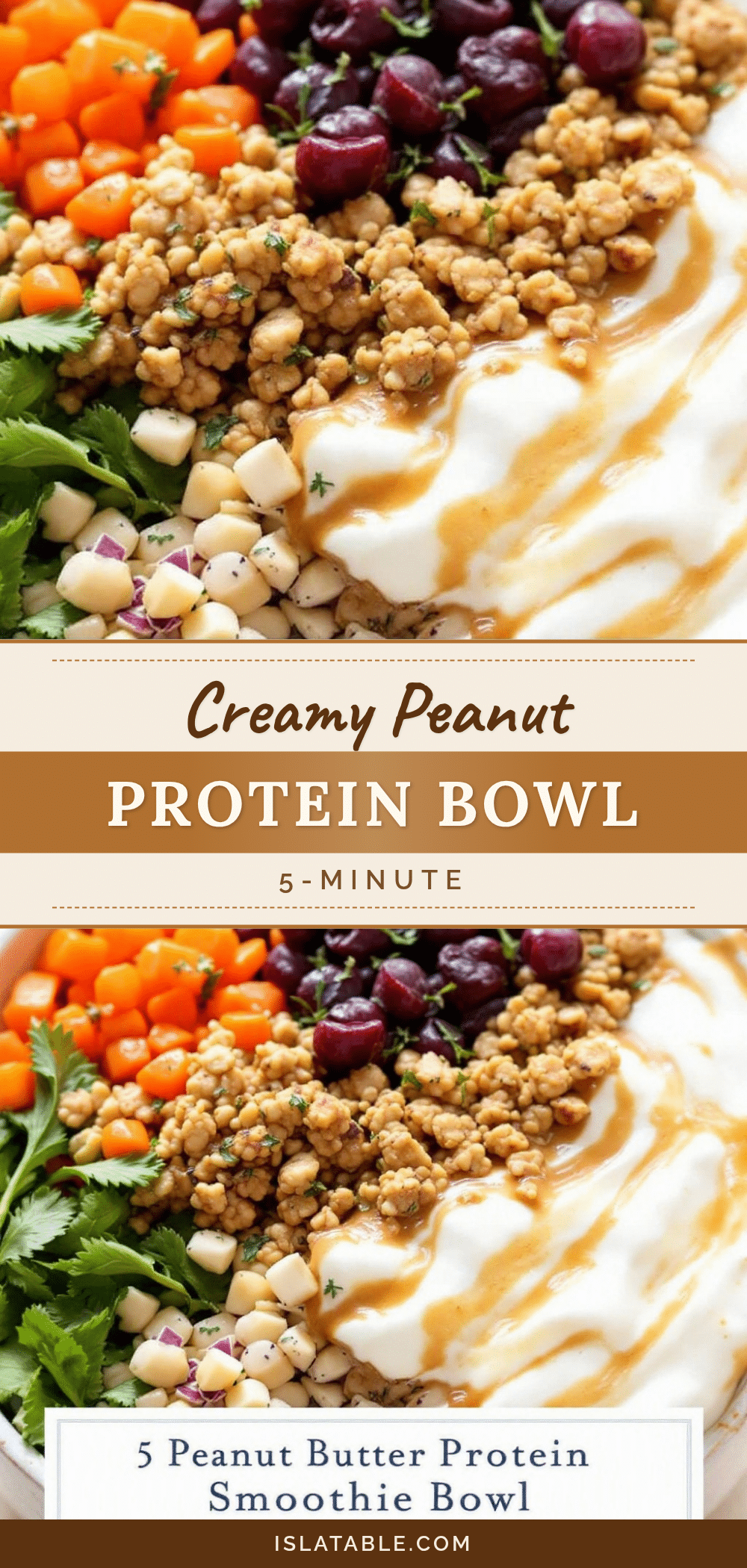
Quick Peanut Butter Protein Smoothie Bowl – Easy 5-Minute Recipe
A thick, creamy, and spoonable smoothie bowl made with frozen banana, peanut butter, and protein powder. Ready in 5 minutes, it’s the perfect quick breakfast or post-workout meal.
- Prep Time: 5 minutes
- Cook Time: 0 minutes
- Total Time: 5 minutes
- Yield: 1 serving 1x
- Category: Breakfast
- Cuisine: American
Ingredients
- 1 large ripe banana, sliced and frozen
- 2 tablespoons creamy peanut butter
- 1 scoop vanilla or chocolate protein powder (25–30 grams)
- ½ cup unsweetened almond milk
- ½ cup ice cubes
- 1 tablespoon chia seeds or flax seeds (optional)
- Optional toppings: granola, sliced banana, extra peanut butter drizzle, dark chocolate chips, shredded coconut, hemp seeds, fresh berries
Instructions
- If you haven’t frozen your banana ahead of time, peel it, slice it into coins, and spread them on a small plate or parchment-lined tray. Pop them in the freezer for at least 15-20 minutes while you get everything else ready.
- Add the frozen banana slices, peanut butter, protein powder, almond milk, ice cubes, and chia seeds (if using) to your blender. For easier blending, put the liquid in first.
- Start on low speed for about 10 seconds, then increase to medium-high. Blend for 30-45 seconds total, or until the mixture is thick and creamy with no visible chunks. Stop and scrape down the sides once or twice as needed.
- Check the consistency: it should be thick enough to hold its shape, like soft-serve ice cream. If too thin, add more ice; if too thick, add a splash of milk.
- Use a spatula to scrape the mixture into a bowl.
- Add your desired toppings (e.g., sliced banana, granola, extra peanut butter drizzle, dark chocolate chips).
- Eat immediately for the best texture.
Notes
For a nut-free version, swap peanut butter for sunflower seed butter or tahini, and use oat milk. For a vegan version, use plant-based protein powder and oat milk. For a keto-friendly adaptation, use low-carb protein powder, swap banana for ¼ cup avocado, and use unsweetened almond milk. Freeze banana in slices for best results. Don’t over-blend to avoid a thin consistency. Start with less liquid and add more as needed.
Nutrition
- Serving Size: 1 bowl
- Calories: 375
- Sugar: 16.5
- Sodium: 250
- Fat: 16.5
- Saturated Fat: 3
- Carbohydrates: 37.5
- Fiber: 9
- Protein: 27.5
Keywords: peanut butter smoothie bowl, protein smoothie bowl, quick breakfast, healthy breakfast, high protein breakfast, 5 minute breakfast